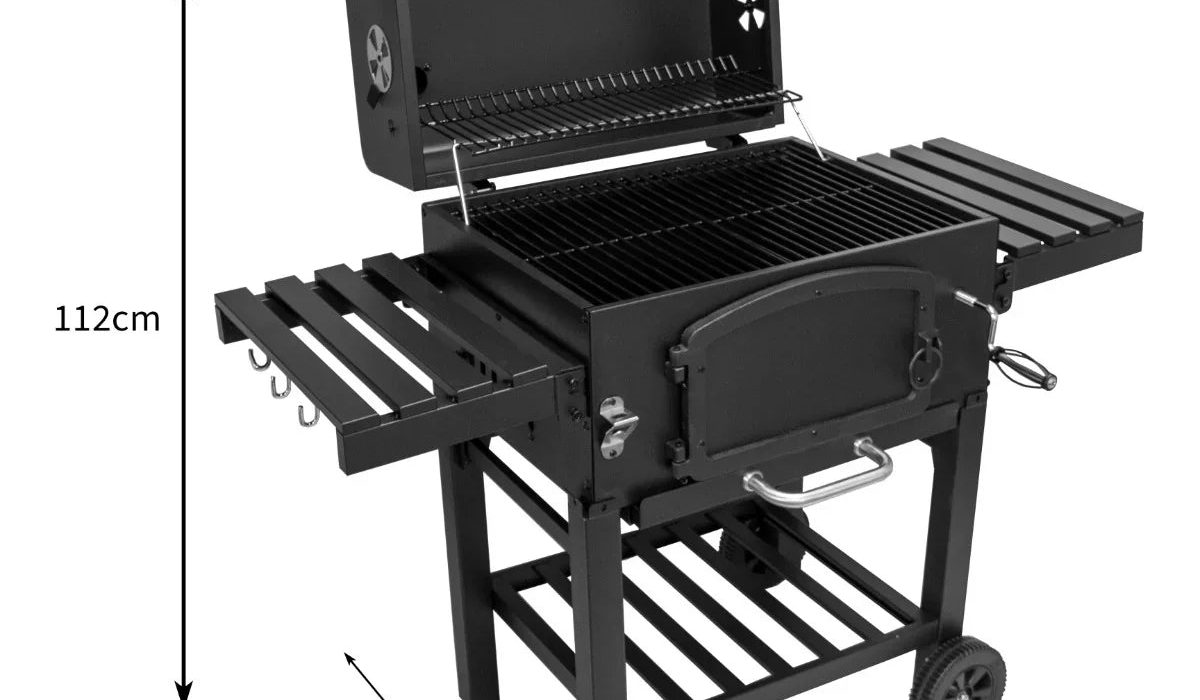
The size of BBQ smoker is measured by its size, cooking capacity, firebox size, height, width and depth. These measurements will help you determine the amount of food the smoker will hold, the amount of space required and its ease of use. Backyard BBQ smokers can be 30-40 inches wide or larger offset smokers that can be over 60 inches wide. The right dimensions will depend on how much fuel you are using, how much space you’ve got outside and how many people you are cooking for.
Understanding BBQ Smoker Dimensions
Size is a confusing factor when choosing a BBQ Smoker. The width in inches listed in the advertisement for a smoker can refer to the handles, wheels, or side shelf if present, in addition to the width of the smoker. The actual cooking chamber could be considerably smaller.
That’s why it’s best to consider a few measurements instead of just the overall size of the smoker.
The main dimensions of a BBQ smoker are as follows:
- Overall width: The width from one side of the smoker to the other.
- Overall depth: The distance from front to back that the smoker will cover.
- Overall height: The distance from base to top.
- Cooking chamber size: Acquired volume where food is prepared.
- Firebox dimensions: The size of the part of a firebox where charcoal or wood is burned.
- Grades, cooking grate size: The size of the meat and other foods that fit into the cooking grate.
- Clearing: Area of space around the smoker which must be left clear for safe and convenient use.
The importance of these measurements lies in two aspects. First of all they inform you of the quantity of food you can prepare at a time. Second, they are going to decide if the smoker is going to fit nicely in your patio, backyard, deck or outdoor kitchen.
When a smoker is shown in a photo, for instance, it can appear quite compact, but can end up needing a few inches of extra clearance all around. When you have little space to work on outside, it is best to take a look at the complete dimension measurements prior to purchase so you can avoid issues later.
Standard Dimensions Of Different BBQ Smokers
There isn’t a standard size for a BBQ smoker. Sizes are dependent on the smoker design, fuel type, cooking volume and what the smoker is used for.
The footprint of a small vertical smoker can be relatively small, but can contain multiple cooking racks stacked vertically. An offset smoker, however, generally requires more space to the side as the cooking chamber and firebox are placed next to each other.
The general guide is as follows:
| Smoker Type | Typical Width | Typical Depth | Typical Height |
| Small portable smoker | 20–35 inches | 15–25 inches | 15–30 inches |
| Compact vertical smoker | 20–30 inches | 20–30 inches | 35–50 inches |
| Medium vertical smoker | 25–35 inches | 25–35 inches | 45–60 inches |
| Medium offset smoker | 40–55 inches | 20–30 inches | 40–50 inches |
| Large offset smoker | 55–75+ inches | 25–35 inches | 45–55 inches |
| Cabinet smoker | 25–35 inches | 25–35 inches | 40–65 inches |
These figures are only general ranges and are not standards. Specific dimensions may vary between different manufacturers and models.
The cooking area is also more important than the outside dimensions when comparing smokers. Smokers with identical external dimensions can offer different cooking area.
For example, a very tall vertical smoker can yield a number of racks of cooking space while occupying minimal floor space. For patios where there is not enough horizontal space, this is where vertical designs come in handy.
How To Choose The Right BBQ Smoker Size
The size of the smoker will really vary according to the way the smoker is going to be used. It’s not always feasible to purchase the biggest one. If the smoker is too big, it may need more fuel to heat up and will use more than is needed.
The first thing to take into account is the size of your family.
If you are cooking for just 2-4 people, a small smoker might be sufficient. If you are a family or for small gatherings a medium sized smoker would be best suited. For frequent big group cooking, you can use a bigger smoker with additional racks or the longer cooking chamber might be more convenient.
The way you cook is also a factor.
Consider the size of the food you are going to smoke if you are a rib, brisket, pork shoulder or whole chicken smoker. Even if a cooking grate has a large number of square inches, it can be cumbersome to use for large cuts if the grate is too narrow or shallow.
Before deciding on a size, consider the following:
- The more people who are cooking, the more space needed.
- Food type: Whole briskets and large cuts will need longer and wider cooking areas.
- Frequency: The occasional user may not require a large commercial style smoker.
- Available space: Therefore, first measure the location before selecting the smoker.
- Wood and charcoal storage: These should also be kept in dry place.
- Mobility: A big smoker may not be easy to shift, particularly if the terrain is uneven.
- Future needs: Ask yourself if you will be having bigger events in the future.
You should have a little more room to cook than you need. But it’s not a good idea to purchase a smoker that is too big for what you typically cook.
Cooking Chamber And Grate Dimensions
One of the most crucial components of a smoker is cooking chamber. It is where food actually cooks so the size is a better indicator of the capacity of the smoker in reality.
Manufacturers will typically specify cook capacity in square inches. This figure is the surface area of the cooking grates.
A 600 sq in. smoker, for instance, can accommodate a few racks of ribs depending on what format the grates are in. If you can find a smoker with multiple racks, it can offer you more overall cooking area without needing to take up a lot of area.
But square inches don’t necessarily tell the whole story.
The form of the cooking chamber is important. If the cavity is too tight, it may be hard to fit a brisket or turkey into it. For cooking whole chickens, roasts or other tall foods, vertical clearance is also important.
When comparing sizes, remember to look:
- Grate width
- Grate depth
- Vertical clearance between racks
- Number of cooking racks
- Total cooking surface
- Cooking chamber diameter or internal height
For an offset smoker, the size of the cook-chamber, diameter and length, can make a significant difference to the space used. The longer the chamber, the more food can fit, but it will also require a larger space for the smoker.
The smoke box can be more versatile with removable or adjustable grates. Often you can take a rack out in large cuts of meat and put it back in in smaller cuts.
Dimensions Of An Offset BBQ Smoker
One of the most popular BBQ smokers is the offset barbecue. These are typically made of a large cooking chamber with a smaller firebox.
The two sections are adjacent to one another and offset smokers tend to need more width than length.
The width of a typical backyard offset smoker can be as wide as 40-60 inches, though some larger smokers can go beyond 60 inches. It can be approximately 20 to 35 inches deep with a height of 40 to 55 inches.
Other dimensions are also influenced by the firebox.
The larger the firebox the more fuel you can fit inside and longer the cooking time. But the larger the firebox, the larger the footprint of the smoker.
Don’t forget the side shelves, handles, wheels and chimney when you measure an offset smoker. These components may be outside of the body.
If an offset smoker is being installed in a permanent position, take the dimensions of the assembled smoker. Make sure to provide room around it for opening doors, adding fuel, cleaning, and getting the smoker around.
How Much Space Should You Leave Around A BBQ Smoker?
The smoker is not the only room you require for this. A space is required to safely operate it.
Check clearance recommendations on the smoker before placing the smoker on a patio or deck. All smokers are different depending on their construction and fuel type.
Generally allow ample space to:
- Open cooking chamber completely.
- Go into the firebox or fuel room.
- Securely add charcoal or wood.
- Walk around the Smoker unobstructed.
- Keep utensils within easy reach when cooking.
- Empty ash and grease from the smoker.
- Ensure that the smoker is placed away from flammable items.
A 50” wide smoker could, therefore, need over 50” of actual space.
Take into account the direction of the door openings as well. Although a smoker may fit into a tight space, if the door does not open completely, it will not be convenient to use.
If you are building a permanent outdoor kitchen, it is particularly crucial to measure the smoker prior to constructing cabinets, counters or other surrounding structures.
Final Thoughts
Knowing the size of a BBQ smoker simplifies the decision of which model to get and how much space it will require. Overall width, depth and height are not the most significant measurements. The cooking chamber size, size of grates, firebox, rack spacing, and clearance requirements should also be considered.
A small or medium sized smoker might be useful for occasional use in the backyard. For those who cook briskets, ribs, whole chickens or serve at family-style events frequently, a bigger cook box can simplify the process.
When purchasing measure your space and compare the width, height, and length of the assembled smoker. Look for shelves, handles, chimneys and other parts in the listed measurements.
Most important, use usable cooking area as opposed to outside dimensions of the smoker. The right BBQ smoker is a BBQ that allows you to comfortably prepare your food and fits safely into your outdoor space.



1 Comments