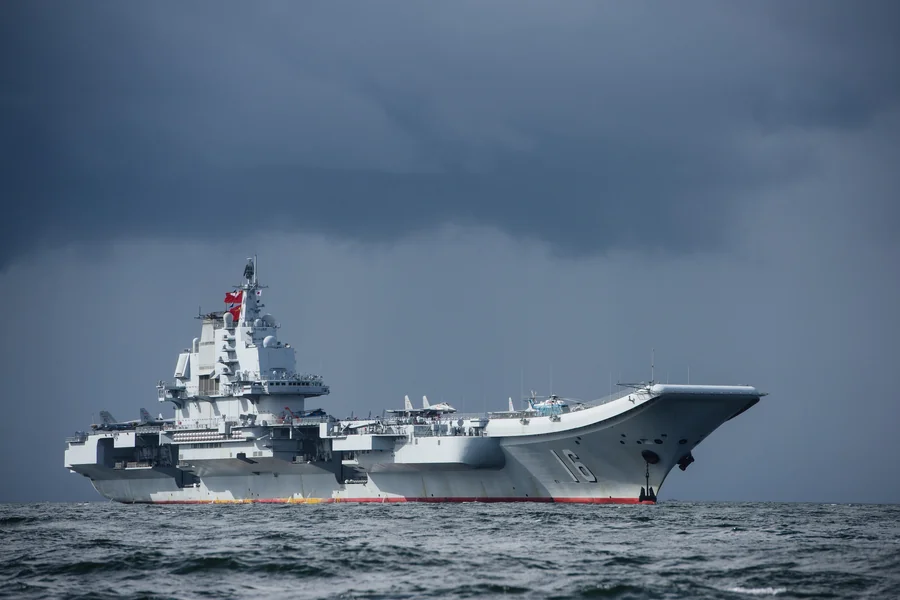
The largest in size are military ships which are meant to project force, support combat operations, transport aircraft and sail through oceans. There are more aircraft carriers in the world’s largest naval vessels because they have to have a long flight deck, a hangar, fuel, and other support facilities. They are capable of carrying dozens of aircraft and thousands of personnel and can be over 300 meters long. The countries invest in these vessels because they give them strategic reach, they give them speed to respond, and they enable them to operate a military force away from home waters.
Understanding The Biggest Navy Ships In The World
Naval vessels may be of various sizes and have various functions. These may be designed to handle combat, logistics, amphibious assault and humanitarian operations. But when it comes to the largest ships in the navy, aircraft carriers reign supreme.
Usually size is measured by some of the following:
- Overall length
- Full-load displacement
- Flight deck size
- Crew capacity
- Aircraft carrying capability
Modern aircraft carriers are floating air bases. Without the need to have land bases nearby, they can launch fighter jets, surveillance aircraft, helicopters and support aircraft. This is one of the most crucial assets in today’s naval warfare.
The biggest ships are generally used by the biggest navies, which need to be around the world. They cost a lot to operate and build, but they offer unparalleled flexibility.
Why Nations Build Massive Naval Ships
Why do nations construct large warships?Why do nations construct large warships?
Big ships aren’t designed for record breaking. Their size is utilitarian.
A larger ship will transport:
- More aircraft
- Larger fuel reserves
- Additional weapons systems
- Additional gear for extended periods of time.
- More medical and command stations.
The value of the aircraft carrier is highlighted by the fact that it can be used in almost any region of the world to project air power. In times of conflict, disaster relief or peacekeeping, carriers can rapidly deploy and provide for numerous missions.
Large ships also enhance endurance. They are able to operate at sea for long periods, carrying thousands of crew, and dozens of aircraft.
Many of the modern-day carriers use nuclear propulsion. This technology enables them to run for many years without refueling, making them more strategic.
The Largest Aircraft Carriers Ever Built
Several carriers stand out as the biggest navy ships ever constructed. These craft are the result of many decades of naval development and military spending.
Gerald R. Ford Class – United States
The Gerald R. Ford class is currently one of the largest and most modern classes of Navy ships.
Key specifications:
| Feature | Details |
| Length | About 337 meters |
| Displacement | Around 100,000 tons |
| Country | United States |
| Aircraft Capacity | More than 75 aircraft |
| Propulsion | Nuclear |
The Ford class is equipped with new and better launch systems, radar equipment, and efficiency. Designed for more flight operations than previous carriers.
Nimitz Class – United States
The Nimitz class was the standard for the large aircraft carrier class before the Ford class.
| Feature | Details |
| Length | About 333 meters |
| Displacement | Around 100,000 tons |
| Aircraft Capacity | More than 60 aircraft |
| Propulsion | Nuclear |
A large number of Nimitz-class carriers are still in service and continue to be the foundation of U.S. naval aviation.
Admiral Kuznetsov – Russia
The largest ship in Russia is Admiral Kuznetsov.
| Feature | Details |
| Length | About 305 meters |
| Displacement | Around 58,000 tons |
| Aircraft Capacity | Around 40 aircraft |
| Propulsion | Conventional |
It is one of the largest ships in the Russian navy (even if smaller than American supercarriers).
Fujian – China
The Fujian class of Chinese aircraft carriers is one of the significant milestones in Chinese naval development.
| Feature | Details |
| Length | About 316 meters |
| Displacement | More than 80,000 tons |
| Country | China |
| Aircraft Capacity | Large fixed-wing air group |
The ship is an example of China’s quest to build a modern navy with global deployment capability.
Other Huge Military Ships Beyond Aircraft Carriers
Most of the attention is paid to aircraft carriers, but other types of naval vessels are very big.
Amphibious Assault Ships
These vehicles and aircraft are transported by these ships.
Examples include:
- America-class ships
- Wasp-class ships
- Type 075 amphibious assault ships
A lot of amphibious assault ships have flight decks, which are similar to small aircraft carriers. They can accommodate helicopters and short take-off aircraft.
Expeditionary Sea Bases
There are some modern navies that have large support vessels, which act as mobile bases.
Their missions include:
- Logistics support
- Special operations
- Humanitarian assistance
- Maritime security
These vessels give mission flexibility when missions don’t call for a full aircraft carrier.
Replenishment and Support Ships
Naval fleets are supplied by large support ships.
They carry:
- Fuel
- Ammunition
- Food
- Spare parts
These vessels would be hard to maintain a long-distance naval operation without them.
How The Biggest Navy Ships Compare
There are many variations in the design and role of the largest warships. Some notable examples are highlighted below in the table.
| Ship Class | Country | Length | Approx. Displacement |
| Gerald R. Ford Class | United States | 337 m | 100,000+ tons |
| Nimitz Class | United States | 333 m | 100,000+ tons |
| Fujian | China | 316 m | 80,000+ tons |
| Admiral Kuznetsov | Russia | 305 m | 58,000+ tons |
| Queen Elizabeth Class | United Kingdom | 280 m | 65,000+ tons |
| Charles de Gaulle | France | 261 m | 42,000+ tons |
The numbers convey the massive superiority of the aircraft carrier in the world’s navies today.
The biggest and most powerful aircraft carriers in the world are those of the United States. While China is still adding to its carrier fleet, those who don’t still have large carriers fit for their strategic needs.
The Future Of The Biggest Navy Ships
Naval technology is constantly changing. Warships of the future do not necessarily have to be bigger. Rather, designers are shifting emphasis to greater efficiency, automation, and complicated combat systems.
There are several trends that are influencing the future:
Increased Automation
Automation systems are used in modern ships to minimize the requirement of crew. This will help reduce operating expenses and increase efficiency.
Advanced Aircraft Integration
Future carriers are expected to support:
- Unmanned aerial vehicles
- Next-generation fighter aircraft
- Advanced surveillance platforms
These technologies can extend the ship’s mission capability without adding appreciable size to the ship.
Improved Energy Systems
The importance of nuclear propulsion for large carriers is still there. Endurance and operational flexibility can be further enhanced with new power-generation technologies.
Enhanced Defensive Systems
Missiles, drones and cyber attacks are threats to modern warships. Newer ships will probably have more sophisticated defensive capabilities to solve these problems.
Although they are still key to naval strategy, military planners are continuing to look ahead to how new technologies will shape naval design in the years ahead.
Final Thoughts
The largest warships are amongst the most complicated machines ever constructed. They are very big, and hold hundreds of people, aircraft, and can travel for long periods across the world’s oceans.
Aircraft carriers are the biggest naval ships in the world due to their blend of mobility, air power and strategic reach. The newest designs, like China’s Fujian, continue to provide newer and more powerful examples of the ships currently in service, and the Gerald R. Ford class and Nimitz class are still the largest in service.
With the advancement of naval technology, ships of the future can be smaller or more of them, but they also can be smarter, more efficient, and better able to deal with modern warfare. Nevertheless, their contribution to global maritime operations will be an important one for years to come, especially the world’s largest navy ships.



2 Comments