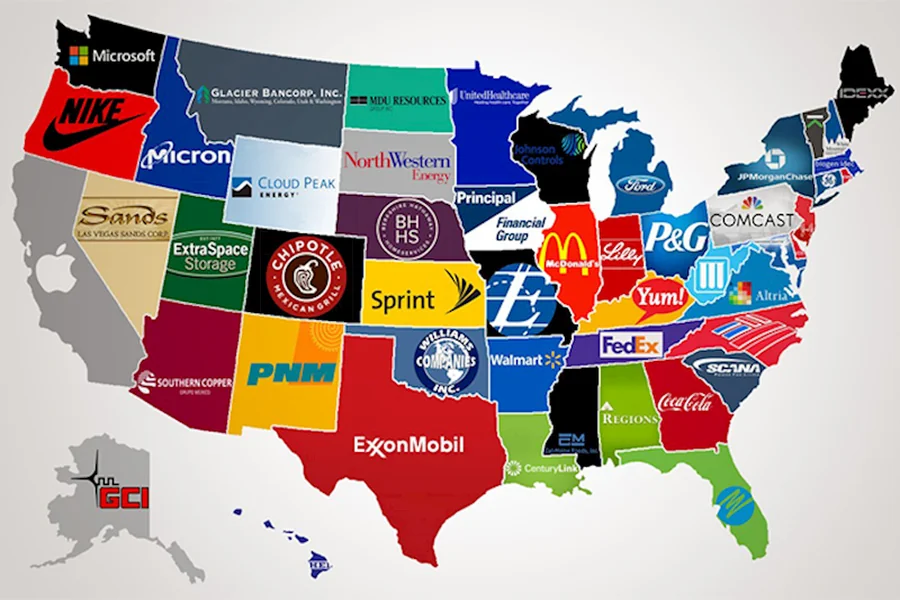
Not all companies sell a product. They create empires that will make more money in one quarter than most of the countries of the world earn in a year. The worlds most profitable brands are the businesses that have turned strong products, loyal customers, and smart strategy into consistent, massive earnings. They are usually technology giants, energy companies and financial institutions with an international presence. They are profitable because they are scaled, trusted, and they can command high prices and keep their cost down. Knowing which brands are on the top of the list and why, is a good indicator of how business works at the highest level today.
What Makes a Brand “Profitable”
Profitability isn’t the same as revenue. Sales in the billions of dollars are not enough for the company to turn a profit as the cost of doing business absorbs that amount. Profit is defined as the money left over after the business pays for materials, labor, marketing, taxes and debt.
The most profitable brands do this balance well! They either sell at high margins – very high profit on each sale – or they are so large a business that even small profit margins result in huge dollar profits. A few brands are doing both.
A few factors consistently separate highly profitable companies from the rest:
- Strong pricing power, so they can raise prices without losing customers
- Efficient operations that keep costs lower than competitors
- Recurring revenue streams, like subscriptions or repeat purchases
- Global market presence that spreads risk across regions
- Brand loyalty that reduces the need for constant discounting
The Technology Sector Dominates
For the past decade, tech companies have dominated the list of profitable companies, and the trend has continued for the past decade. Companies such as Apple, Microsoft and Alphabet are among the highest earning companies in the world in terms of net income.
Apple’s profit is primarily in its hardware business. The iPhone consumer is expected to always remain in the Apple ecosystem – buying accessories, signing up for services and eventually upgrading to the latest device. This leads to a vicious cycle of re-spending which is difficult for competitors to outspend.
Microsoft has diversified much of its product line in recent years to the cloud and software as a service. This model is a more reliable way of generating income compared with repeat purchases. Subscription revenue can be more lucrative in the long run as the cost of servicing current clients is less than the cost of obtaining new clients.
Alphabet, the parent company of Google, makes the majority of its money from advertising. It boasts large user bases for both its search engine and video platform, making its ad space very desirable to businesses seeking to target consumers.
Energy Giants Still Hold Their Ground
Even though the world is moving toward renewable energy, oil and gas companies are still among one of the most profitable businesses in the world. In times of high energy prices, these companies such as Saudi Aramco, ExxonMobil and Shell reap massive profits.
In particular, Aramco is standing out. It’s relatively inexpensive to produce oil compared to other oil producers, so it retains a larger percentage of each dollar received from crude oil sales. While oil prices fall, Aramco continues to be profitable as it has some of the lowest costs in the industry.
These firms have one undeniable advantage: The world is still powered mainly by fossil fuels. If that doesn’t change on a large scale, energy companies will continue to report some of the highest profit margins in any industry.
Financial Institutions and Banking Powerhouses
Other financial brands such as financial services and banks are at the top of the list of top-performing brands worldwide. Some firms, such as JPMorgan Chase, Berkshire Hathaway, and ICBC (Industrial and Commercial Bank of China), make money by lending and providing a variety of investment and asset management services.
For example, JPMorgan Chase makes money from interest on loans, trading and fees charged on wealth management products. It has a diversified business model, meaning that it doesn’t rely on a single source of income to generate profits, which can help to provide stability during times of economic uncertainty.
Berkshire Hathaway is special. Warren Buffett’s company is involved in dozens of companies in various business sectors, including insurance, railroads, consumer goods and others. This diversification helps to reduce risk but also provide multiple avenues for profit at the same time.
Why Some Brands Consistently Outperform Others
It’s worth asking why certain brands stay at the top year after year while others fluctuate. The answer usually comes down to a mix of structural advantages.
- Brand recognition reduces marketing costs over time, since customers already trust the name.
- Economies of scale let large companies produce goods or services more cheaply per unit than smaller competitors.
- Diversified revenue streams protect against downturns in any single market or product line.
- Strong leadership and long-term strategy help companies adapt to changing conditions without losing focus.
Smaller or newer companies often struggle to compete on these fronts, even when they offer innovative products. Building the kind of trust and infrastructure that top brands have takes years, sometimes decades.
The Role of Global Markets
Earning this kind of profit is not a common occurrence in one country. The most profitable brands are active in dozens, and sometimes over a hundred markets. This worldwide presence is more than just volume sales. It also helps companies against the economic slowdowns in the region.
If customers’ spending decreases in one part of the world because of inflation or a recession, the same brand can make up for that loss in another part of the world. That’s one reason why companies such as Apple and Microsoft have been better able to withstand economic upheavals as compared to companies with more limited geographic spread.
But it does make for a bit of complexity in a currency fluctuation. For example, a strong Dollar can raise the costs of U.S. goods in export markets, and this sometimes impacts sales in export markets. Profitable brands will often have finance teams who are responsible for managing these risks.
How Profit Margins Vary by Industry
There are certainly different profit margins in different industries and that should be taken into account when comparing brands. Software and technology firms tend to have higher margins, because, for instance, if the software app is developed, the cost of making another copy is low once it is ready.
Energy and manufacturing firms, on the other hand, have high production costs. Profits can often be more dependent on volume and price power than margin rate. If one company sells millions of barrels of oil it doesn’t require huge margins per barrel to make a huge total profit.
This is why comparing a tech company’s margin to an energy company’s margin doesn’t tell the full story. Total profit dollars matter just as much, if not more, than percentage margins when ranking the worlds most profitable brands.
What This Means for Businesses and Investors
Learning about profitable brands is not only a study but a practical application as well. It provides a blueprint for any business owner to build sustainable profitability, whether it’s through recurring revenue, operational efficiency, or brand loyalty.
Profits trends are useful for investors to identify companies with solid fundamentals. A company that takes the revenue and turns it into profit, year after year is more likely to be a solid long-term investment than a company with high sales but thin or inconsistent margins.
This is a good thing for consumers, of course, indirectly. It is possible that over time, profitable companies will reinvest profits into research, product development, and enhancements to their customer service, resulting in better products. This isn’t always the case, of course, and profitability does not necessarily translate into good customer care.
Final Thought
The worlds most profitable brands didn’t get there by accident. They make intelligent pricing, streamlined operations, international reach and customer loyalty a recipe for huge profits every time. The top industries are in the technology, energy and financial space, but the models they’re using are applicable to any business. Having a good grasp of factors that affect company profitability, and not only revenue, provides a better understanding of what truly makes a company successful in today’s economy.