Posts Tagged ‘place’

What is the size of New York?

Thursday, March 11th, 2010

Considered as the third most populous state in the U.S., New YorkNew York goes by the nickname ‘the Empire State.’ The largest city is New York City, while the capital is Albany. It is surrounded by Quebec on the north, Ontario on the west side, Vermont on the east and Pennsylvania on the south. By visiting this place, people can find beautiful state parks such as the Montauk Point State Park, Catskill Park and Adirondack Park. In addition to these highly interesting aspects, it is also good to learn the size of New York.

The Size of New York

What is the size of New York? In terms of land area covered, New York ranks 27th overall amongst the various states in the U.S. It measures 141,299 square kilometers or 54,555 square miles. It is 530 kilometers or 330 miles long and 455 kilometers or 285 miles wide. The highest point is Mount Marcy, which stands tall at 1,629 meters or 5,344 feet.

The largest cities in the state include Utica, Schenectady, Mount Vernon, New Rochelle and Albany. The other five big cities are Syracuse, Yonkers, Rochester, Buffalo and New York City. New York City is in itself comprised of five different counties, namely Richmond, Kings, Queens, Manhattan and the Bronx.

Additional Facts and Other Important Details

New York set a gross state product amounting to $1.1 trillion in 2007. This ranks third after the bigger states of Texas and California. Its agricultural outputs include apples, vegetables and cattle. In terms of industrial outputs, its economy relies heavily on tourism, chemical products and machinery. Likewise, it also receives major contributions from the electric equipment, scientific instruments as well as publishing industries.

Furthermore, the state exports an extensive selection of goods including minerals, commodities and foodstuffs. Additionally, it also exports automobile parts, cut diamonds and electronics. These products are sent to places such as Hong Kong, Israel, Switzerland, the United Kingdom and Canada. On the other hand, the state imports lumber, rough diamonds, electricity, natural gas, aluminum, gold and oil from other countries.

In the United States, New York City plays a major role in the country’s economic success by serving as the center of communication, finance and banking. Moreover, it also plays home to the New York Stock Exchange. Aside from these things, the state is also serves as reliable producer of agricultural products like maple syrup, onions, potatoes, cabbage, cherries and apples. In 2004, the state produced approximately 200 million bottles of wine from its 212 wineries and 30,000 acres of vineyards.

Baalbek Temple Size

Tuesday, March 9th, 2010

Baalbek, Lebanon

Baalbek is a historic town standing on a 1,170Baalbek Temple meter (3,800 foot) hill in the Bekaa Valley, in Lebanon. It is famous for its Roman temple ruins which have been declared a UNESCO World Heritage Site.

Baalbek’s temples are among the most magnificent in the ancient world, and today among the most preserved.

Baalbek Temple Sizes

There is no single temple in Baalbek. Rather it is a complex of temples dedicated to various gods. The Great Court built during the reign of Trajan was 135 x 113 meters in size. It housed various buildings and was nestled among 128 columns. These columns stood 20 meters high and were made from rose granite imported from Egypt. Only 6 columns have survived.

 The temple complex was protected by four retaining walls weighing hundreds of tons. Only the western retaining wall has survived, with two sets of monoliths. The first set weigh 300 tons each and the second set known as the trilithon weigh 750 tons each. Other stones in the complex weigh even heavier, believed to be about 900-1,200 tons.

Construction of the Baalbek temple of Jupiter started during the reign of Augustus. Its 104 columns were also made from Egyptian granite. In the temple were 50 more columns standing 19 meters tall.

A smaller temple built around 200 BC happens to be the most intact of all the Baalbek structures. It measures 69 x 36 meters and housed in 42 columns 19 meters tall. Some say it was dedicated to the god of wine, Bacchus. Others believe it was for Mercury/Hermes.

Origin of Baalbek Temple Complex

The ruins of Baalbek date back to ancient Rome. Back then the area was known as Heliopolis in the empire. Heliopolis means “city of the sun.” It was dedicated to the Roman deities Jupiter, Venus and Mercury whose Greek names were Zeus, Aphrodite and Hermes. However the portrayal of these gods, and the design of Baalbek temple itself, were influenced by local custom and belief. For instance, Jupiter was called Baal by the natives, Venus was Astarte.

Heliopolis got its name after the Greeks conquered the region under Alexander the Great. Later in Roman times the temple became a site of pilgrimage as well as an oracle. The emperor Trajan’s death is said to have been foretold by the Baalbek oracle.

Today the Baalbek temple complex is regarded as a World Heritage Site by UNESCO, being a great example of Roman architecture at its best.

Airport Apron Dimensions

Sunday, March 7th, 2010

What is an Airport Apron?

An airport apron is otherwise known as an airport ramp. It is an actual part of an airport and it serves its own purpose in day to day operations. Simply put, it is the part of the airport that serves as the parking area of airplanes. It is typically a lot more accessible for individuals compared to the taxiway or the airport’s runway.

The airport apron is something like a loading dock where airplanes and other aircraft are loaded and unloaded. This is also the area where airplanes are refueled. The airport ramp is also the specific area in the airport where passengers board the plane. And like much of the other places in an airport, it isn’t accessible to everyone in general. Only those who have the proper licenses and authorization may enter and work in the apron.

Talking about airport apron sizes, you would imagine it to cover a huge area since it should be able to accommodate several airplanes at any given time. An international airport can have an apron with a total area larger than 200 hectares or two million square meters.

The sizes of airport ramps generally depend on the size of the airport, its design, and its intended capacity. Remember that people also work on different aircrafts in the ramp or apron. It serves other purposes other than loading and unloading passengers and cargo.

Airport Apron/Airport Ramp Management

Every vehicle and everyone that moves in airport ramp are considered ‘apron traffic’. Take note that the apron or ramp is always to be considered a work area. There is no place for loitering in this part of the airport. Since this area is rather busy one should expect accident and other incidents to occur. Thus there is a need to manage the operations of the apron.

As per instructions of the International Civil Aviation Organization, the airport ramp should never be considered or used as an area to maneuver an aircraft. This is only one of the regulations used to ensure the protection of all who use this facility.

Ramp/Apron Safety

One of the biggest concerns regarding ramps is personnel, aircraft, and overall facility safety. It is quite sad that ramp accidents often occur since this area of an airport is a bit hazardous. Workers either walk into moving aircrafts or get hit by one. Several safety rules are being implemented in this working area.

One of the most fundamental safety regulations is that if you have no business to be in the ramp then don’t walk around in there. Enter the ramp area only when you are working on an aircraft. If not then it would be better to simply just stay away. Another important rule is to always wear hearing protection. The apron is a particularly noisy area with jet turbines generating really loud noise.

The ramp or apron area is the part of the airport where airplanes get to park, refuel, load/unload, and get boarded. Those who are not working in the area should stay away from this workplace. The size of an apron depends on the airport’s capacity, usually covering several hectares of land area for international airports.

How Big is Japan?

Thursday, March 4th, 2010

An island country nicely situated within the eastern part of Asia, JapanJapan is often called the ‘Land of the Rising Sun.’ It is surrounded by the Sea of Okhotsk to the north, East China Sea to the south and the Sea of Japan to the east. It is comprised of 6,852 islands, the biggest of which are Shikoku, Kyushu, Hokkaido and Honshu. Worldwide, it is considered the 10th largest in terms of population, with more than 128 million people. Aside from these basic facts, there are other interesting things to learn about it including the size of Japan.

The Size of Japan

How big is Japan? In terms of total land area, Japan ranks 61st in the world, which measures 145,883 square miles or 377,873 square kilometers. Its capital city is Tokyo, which is also the largest in the country, measuring 2,187.08 square kilometers. Approximately 70 percent to 80 percent of the country is not suitable for use in residential, industrial and agricultural purposes because it is mountainous and forested.

Additional Facts and Other Interesting Details

The largest city in Japan is Tokyo, with an estimated population of more than 8,483,050. It is then followed by Yokohama, Osaka and Nagoya as the second, third and fourth largest cities in the country respectively. Sapporo is the fifth, Kobe ranks sixth and Kyoto owns the seventh spot. To complete the top ten biggest cities in the country are Fukuoka on the eighth, Kawasaki on the ninth and Saitama on the tenth spot.

Although the size of Japan is not that big compared to other highly progressive countries, it boasts of a strong, stable and progressive economy. In fact, it has the second largest economy all over the globe. It has a nominal gross domestic product of more than $5 trillion. Furthermore, it comes right after the United States and China when it comes to purchasing power parity.

The major industries in the country include real estate, insurance and banking. Aside from these, its economy receives major boost from telecommunications, transportation and retailing. In addition to its strong industrial capacity, it is also considered the most technologically advanced and biggest producers of machine tools, electronic equipment as well as motor vehicles. Although it has a shrinking labor force made up of more or less 67 million workers, its unemployment rate is very low, which is only around 4 percent.

Japan plays home to some of the biggest companies in the world like NTT DoCoMo, Nintendo and Toyota. Likewise, it also has other major business enterprises such as Nippon Steel, Sony and Honda. Moreover, this country also has a very strong export market, which includes China, the European Union and the United States.

Lake Michigan-Huron Dimensions

Monday, March 1st, 2010

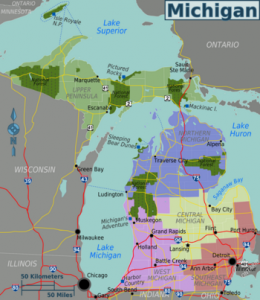
Lake Michigan-Huron is customarily Lake Michigan-Huronaccepted as two lakes that are separate from each other. The two lakes are called as Lake Huron and Lake Michigan. They belong to the Great Lakes found in North America. But based on the hydrology of the two lakes, they show that they are just one body of water. They are connected together by the Straits of Mackinac.

Lake Dimensions

When specified as a single body of water, Lake Michigan-Huron will become the largest of all the Great Lakes nearby. The area of the lake is 45,410 square miles or 117,600 square kilometers. It is the world’s largest freshwater lake when it comes to surface area. The water volume of Lake Michigan-Huron is 2,000 cubic miles or 8,300 cubic kilometers. It makes the lake the world’s fourth largest freshwater lake when it comes to water volume.

One Lake?

Both Lake Michigan and Lake Huron have similar elevation of 176 meters or 577 feet. The two lakes are connected by Strait Mackinac that has similar elevation with the two. Mackinac Strait has a depth of 120 feet. It is pretty common that rivers and streams would separate lakes from one another. However, Mackinac Strait is not considered as a river or stream. The width of the strait ranges from 3.6 miles to five miles, similar to the lengths of most lakes in the world. By nature, the strait is just a natural narrowing of Lake Michigan-Huron. It is in oppose to the long time belief that it separates the two lakes from each other.

The water flow of Lake Michigan-Huron can be reverse from one lake to the other. Due to the connecting strait, when a water level imbalance happens, the two lakes can quickly even up the water level. Hydrologically, Lakes Michigan and Huron are truly one great lake due to the facts that they have similar water level and behavior.

The Name

Changing of historical names cannot be done that easily. The individual names of Lake Michigan-Huron are already distinct parts of the history. Aside from that, the names have been institutionalized legally between the territories that they fall under. Lake Michigan is considered to be under the American territory. Lake Huron is divided by two territories and they are the Canada and United States.

History

When the last ice age occurred, Lake Michigan-Huron is just more than one water body. Lake Huron of today is called by geologists as Lake Stanley and it is separated from Lake Michigan of today which is called by geologists as Lake Chippewa. During those times, Lake Chicago was occupying the southern end of the basin of Lake Michigan where the southern mass of the glaciers is present.

How Deep is the Southern Ocean?

Monday, March 1st, 2010

Also known as the Antarctic Ocean, the Southern OceanSouthern Ocean is the fourth largest ocean in the world. It is found in the Southern Hemisphere. The ocean’s tributaries include the Ross Sea, the Cooperation Sea, the Scotia Sea, the Cosmonaut Sea, the Weddell Sea and the Drake Passage. This oceanic division merges with other large bodies of water, namely the Indian, Pacific as well as the Atlantic Oceans. One of the essential features of this ocean is the presence of the Antarctic Circumpolar Ocean. To learn more about the geography of the Southern Ocean, it is important to know the estimated depth of this body of water.

The Depth of the Southern Ocean

How deep is the Southern Ocean? The depth of this body of water ranges from 13,000 to 16,000 feet. The deepest point of the ocean is found in the South Sandwich Trench, which measures 23,727 feet. Considered as the longest ocean current in the world, the Antarctic Circumpolar Current transports 4.6 billion feet of water per second. The ice pack present in the ocean fluctuates from one million miles per second during March to 7.2 million miles per second during September.

Additional Facts and Other Interesting Details

The Southern Ocean encircles the entire continent of Antarctic. There is sea ice along the coastline of the ocean. When it comes to natural resources, there are probable giant gas and oil fields along the continental margin. Aside from these, the other resources that are present in the ocean include manganese nodules, possible deposits of placer, gravel and sand as well as freshwater. Some animal species that can be found in the ocean are whales, squids, krill and seals. Additionally, people can also find 17 penguin species in the ocean.

To preserve the marine species living in the ocean, the International Whaling Commission does not allow commercial fishing in the southern part of the Antarctic. In addition to this, the Convention for the Conservation of Antarctic Seals prohibits seal hunting in the ocean. Moreover, the Convention on the Conservation of Antarctic Marine Living Resources limits fishing activities in the place.

The ocean provides routes that are important to transport goods from one continent to another. Examples of harbors and ports in the Southern Ocean are the Palmer Station, the Esperanza Base, the Rothera Station, the McMurdo Station, the Villa Las Estrellas and the Mawson Station. Most of these ports are operated and managed by research stations of various governments.

Dimensions of a Parking Space

Sunday, February 21st, 2010

A parking space is commonly found within a parking lot or a parking garage. Of course, it can also be found along a city street as well as many other places that are designated for the primary purpose of parking vehicles. Each space is usually marked with three lines, one on the right, the other on the left and another line at the top. White paint is commonly used to mark these lines. Parking spaces may be arranged with an angle, perpendicularly or in a parallel manner. Aside from these interesting facts, it is also good to know the dimensions of a parking space.

The Different Sizes of Parking Spaces

The average size of a parking space is 320 square feet or 30 square meters. However, there are also other sizes available, one of the most common of which is 270 square feet or 25 square meters. These sizes include the landscaping or end of aisle areas, the circulation areas and the parking space. For perpendicular or angled parking spaces, the length is commonly 16 feet to 18 feet or 4.9 meters to 5.5 meters. Meanwhile, the standard width is 7.9 feet to 9 feet or 2.4 meters to 2.75 meters. Some other versions of this type of parking space measure between 7.5 feet and 10 feet or 2.3 meters and 3.2 meters.

For parallel parking spaces, the standard width is 7.9 feet or 2.4 meters while the standard length is 20 feet or 6.1 meters. They are usually marked 6.9 feet to 7.9 feet or 2.1 meters to 2.4 meters wide. Inclusive of the entry and exit maneuvering, the standard length ranges from 22 feet to 26 feet or 6.7 meters to 7.9 meters.

Additional Facts and Other Interesting Details

In the United States, details about curb markings are specified in the Manual of Uniform Traffic Control Devices. Some local highway agencies use special colors for such purposes. The main reason behind this is to supplement the standard signs for the overall improvement of parking regulation.

The state of California uses different kinds of colors for this particular purpose. For passenger drop off or pickup, the usual color is white. For parking spaces that are limited by time, the designated color is green. For loading, the assigned color is yellow. For disabled individuals using proper vehicle identification, the appropriate color is blue. For emergency vehicles, the red curb means no parking, no standing and no stopping. To indicate a no parking zone, the curb is commonly marked yellow.

What is the Size of Europe?

Saturday, February 20th, 2010

The area size of Europe is 10,180,000 sq kmSize of Europe (or 3,930,000 sq mi). Its population has been estimated to be 731,000,000. The population density is 70 sq km or 181 sq mi. Europe is the second smallest continent in the world, covering 2% of the planet’s surface.

Geographical Information

There are currently 50 countries in Europe. In terms of population, it is the third highest among all the continents. Its geographical features are varied. The southern part is known for its vast mountain ranges. The northern parts head down and features several upland hills. The lowland area is referred to as the Great European Plain.

European Countries by Area

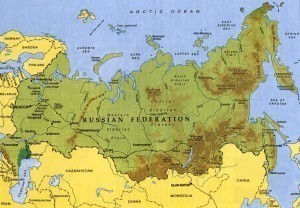
If the size of Europe’s cities is measured by area, Russia would be the biggest. Its land area is 17,075,400 sq km. It’s followed by Turkey (783,562 sq km), Ukraine (603,700 sq km), France (547,030) and at number five is Spain with an area of 504,851 sq km.

Sweden is the sixth biggest at 449,964 sq km; Germany is at seventh, measuring 357,021 sq km. Finland is at number eight with an area of 336,593 sq km. Norway is the ninth largest (324,220 sq km) and at number ten is Poland (312,685 sq km).

Italy is the 11th largest at 301,230 sq km followed by the Untied Kingdom at 244,820 sq km. Romania is the 13th largest (238,391); Belarus is the 14th largest with an area of 207,600 sq km. Greece is the 15th biggest as it measures 131,940 sq km.

European Countries by Population

If the size of Europe’s countries is measured by population, Russia would still be the largest; its population is 141,800,000 (as of 2002). Germany is the second biggest with 82,551,851 residents.

Turkey is at third with 75,886,256 and France is fourth with 65,165,983. The United Kingdom’s population has been estimated at 61,600,835 while Italy’s has been put at 60,051,711.

Spain is the seventh most populated country with 46,061,274 inhabitants. Ukraine is number eighth with 45,996,470 followed by Poland with 38,125,478. Romania is number ten with 21,398,181.

The Netherlands’ population has been put at 16,518,199. Greece is at number 12 with a population of 11,245,343 while Portugal has 10,709,995 residents. Belgium’s population has been estimated at 10,574,595.

Smallest European Territories

The smallest is the Vatican City in Rome, Italy. The size of Europe’s smallest city is 0.44 sq km. It is followed by Monaco at 1.95 sq km. Gibraltar is the third smallest at 5.9 sq km followed by San Marino at 61 sq km. Guemsey is the fifth smallest at 78 sq km.

Jersey measures 116 sq km followed by Liechtenstein at 160 sq km. Malta measures 316 sq km. Andorra has an area of 468 sq km. The Isle of Man is the tenth smallest at 572 sq km.

In terms of population the Vatican is also the smallest with only 900 inhabitants. The Mayen Islands is next with a population of 2,868. Aland is third with a population of 26,008.

While the size of Europe’s population is currently 11% of the world’s total, it’s been estimated it will dip to 7% by 2050. By contrast it had 25% of the world’s population during 1900.

How Big is The Leeds Castle?

Friday, February 19th, 2010

The Leeds castle is a famous spot for leisure – its grounds offer a maze, golf course, aviary, museum, and a grotto. But how big is the Leeds castle, anyway? How large do you think it is if it has a lot of interesting features that many tourists from all over the globe are hoping to see?

Bits of History

If you would live during the early times, particularly in the year 1119, when it was built by Robert De Crevecoeur, you would, perhaps, be too excited and enthralled by its early existence. Perhaps, you would be rushing to this place immediately.

However, your excitement to enter its doors may or may not be possible since this castle was made to be a stylish, regale, and comfortable palace in 1278 where England’s King and Queen, King Edward I and Eleanor of Castile, stayed. This was made to replace the Saxon manor of Esledes.

Improvement of the Castle’s Features

During the early existence of this castle, there were already many improvements that were done. These major changes included the changes done to the barbican area (which refers to the outer fortification or exterior area of a castle). These areas included the castle’s entrance, drawbridge (which is a type of movable bridge), gateway, portcullis (a latticed gate or grille of the castle), and driveway.

When Henry VIII lived with Catherine of Aragon in this castle, Henry VIII saw it fit to make certain transformations and changes to suit their tastes. Up to now, a painting placed during Henry VIII’s reign, which commemorated the king’s meeting with Francis I of the country of France, can still be seen in its interior area.

Remained Strong through the Years

Even during problematic times in its early period of existence, the castle was able to stay as sturdy as it was first built. In fact, according to history, this castle was able to endure the Civil War of England that had damaged most of the other places in the land.

The Castle’s Maze

The maze of the castle is one of the best areas if you want to have a bit of adventure, and see if you can easily pass through the various paths of the maze and reach the maze’s exit without any difficulty.

How big is the Leeds castle’s maze? Big enough to confuse a visitor who is hoping to solve its mystery. Just imagine… When it was built, around 2,400 of yew trees were used. So that would have to fill up a really large area.

So if you are to take everything in, how big is the Leeds castle? According to pertinent data, with all its beautiful features, this castle is said to be around four miles (which is equivalent to 6.5 kilometers) in the southeast portion of Maidstone, Kent in the country of England. Actual dimensions are not actually supplied, but just thinking of how it spans the miles or kilometers may give you a good idea of how large this castle really is.

Luxury Box Dimensions

Thursday, February 18th, 2010

When you overhear someone saying “luxury box dimensions,” that means that the person is talking about the size of a box, that is enclosed and used for sporting events in small and large stadiums.

Its Other Names

This type of box has a number of names. Aside from being called as a luxury box, it may also be referred to as a private box, a luxury suite, or a corporate box.

Its Sizes

There are many sizes of a luxury box.

You may find some with around 322 square feet or about 30 in square meters. The luxury box dimensions for these may be around 293 by 196 by 34 mm.

Others offer this corporate box for its seating capacity ranging from a sixteen-individual capacity to around 32-individual capacity. Others can accommodate a group of around sixteen to twenty guests. And there are also a number of luxury suites which can be suitable for a smaller group of around eight (8) to twenty seven (27) persons.
 
A number of these may have an average luxury box size of around 491 square feet.

There are also stadiums offering this with about 6500 for its permanent seats and around 5000 for its temporary seating accommodations.

You may also find that the number of luxury suites differ from one stadium to another. Some may have 86 luxury suites. Others may offer around 100 luxury suites.

Aside from these figures mentioned, there are still more available.

Its Uses

The main purpose of a luxury box is to provide a good view of certain sporting events in the stadiums where the competition is to be held. There are also other amenities that it offers, which are actually not open to a particular average fan of sports.

Affluent sports fans or those who could afford to get a luxury box such as corporate groups and such may find the rates pretty convenient even though it may be too steep for the average fan. Typically, small stadiums offer this for around ten thousand US dollars each year; large stadiums offer it for up to several millions in US dollars.

As aforementioned, this has several offers in its amenities. The offers may range from comfortable seating arrangements for thirty to forty people or more, bartender service, and the availability of a full bar. A leaser of the private box may also be entitled to private bathrooms instead of having to wait for hours at the regular bathrooms offered to most of the sports fans attending the event.

Aside from these things, catering is also provided. And a number of televisions in the luxury box are available for the leaser to watch the games and take note of the minute shots.

Even with various amenities offered, the choice of smaller or larger luxury box dimensions solely depends on the interested leaser looking for a more convenient and enjoyable view of the sporting games.