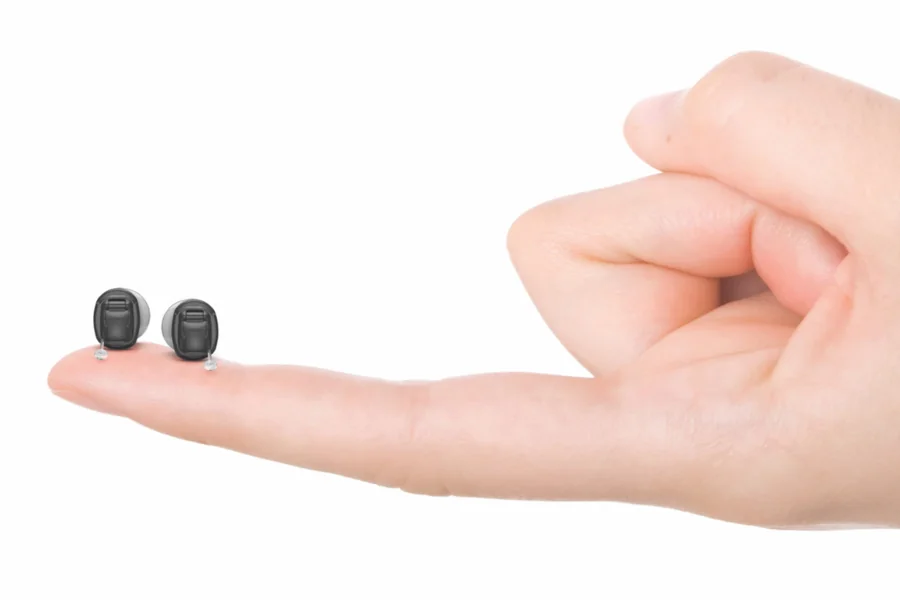
The smallest hearing aids available on the market today are completely-in-canal (CIC) and invisible-in-canal (IIC) devices, custom-built to sit deep inside the ear canal. They’re barely visible, even up close, thanks to smaller batteries and shrunken processing chips. Most work best for mild to moderate hearing loss. They’re not for everyone — smaller size usually means shorter battery life and fewer built-in features — but for people who want hearing correction without anyone noticing, they’re currently the top option.
Why Size Varies So Much Between Devices
Ask an audiologist why one hearing aid is the size of a grain of rice and another looks like a small seashell, and you’ll get a longer answer than you’d expect. It comes down to a handful of engineering trade-offs, not just marketing.
- Battery type. Rechargeable lithium-ion cells take up less room than the old zinc-air button batteries, which is part of why newer devices are noticeably smaller than models from five or ten years ago.
- Chip size. The processing chips inside hearing aids have shrunk a lot. Manufacturers can now pack more sound-processing power into less space than they could even a few years back.
- Ear canal shape. No two ears are identical. A custom mold, taken directly from your ear canal, allows a tighter and therefore smaller shell than an off-the-shelf design.
- What features get left out. Bluetooth streaming, directional microphones, manual volume dials — every added feature needs physical space. Strip those out, and the device gets smaller.
So when a tiny hearing aid costs more than a bigger one, it’s usually not just for show. You’re paying for precision manufacturing and, often, for what the device doesn’t have.
The Main Styles Worth Knowing About
Most people searching for small hearing aids run into three main styles. They look similar from the outside, but the differences matter once you’re actually wearing one.
Completely-in-canal (CIC) devices sit just inside the canal opening. A tiny removal handle usually pokes out, which is the only visible sign you’re wearing one. This style still has room for a small battery door, so it’s a reasonable middle ground if you want something discreet but not fussy to handle.
Invisible-in-canal (IIC) hearing aids go further in, past the second bend of the ear canal. Genuinely hard to spot, even in good light. The trade-off is that there’s barely any room left for controls, and getting them in and out takes a steadier hand.
Extended-wear devices are the newer option here. An audiologist places them, and you wear them continuously — sometimes for a month or more — without taking them out at all. No daily insertion, no fiddling with batteries every morning. For people who find handling small devices frustrating, this removes that problem entirely.
None of these is objectively “the best.” It really depends on how much you’re willing to trade for size.
What You Actually Gain — and Give Up
People assume going smaller is a straightforward upgrade. It isn’t, and it’s worth being clear-eyed about that before you spend the money.
On the plus side, comfort tends to be excellent once you’ve adjusted. Because these devices are custom-molded and sit deep in the canal, a lot of users say they forget they’re wearing anything after the first week or two. Phone calls also tend to sound more natural, since the mic placement mirrors how your ear normally picks up sound.
Discretion is the other obvious win. If you’ve just been diagnosed with hearing loss and aren’t ready to broadcast that, a nearly invisible device lets you get the correction without the conversation.
But here’s the part that often gets glossed over: smaller devices usually can’t handle severe hearing loss well. The speakers just aren’t powerful enough. Battery life takes a hit too — expect to charge or swap batteries more often than you would with a larger behind-the-ear model. And features like directional microphones or Bluetooth streaming are frequently missing altogether, simply because there’s no room for them.
Questions to Ask Before You Buy
Before you commit to the smallest option on the shelf, a few things are worth sorting out first.
Start with the actual degree of your hearing loss — not a guess, an actual test result. Mild to moderate loss usually works fine with CIC or IIC devices. Severe loss typically needs something larger and more powerful, fitted behind the ear instead.
Think honestly about your hands. Tiny devices can be genuinely fiddly to insert, remove, and clean. If arthritis or reduced dexterity is part of your daily reality, a slightly bigger device with easier grip points might save you a lot of frustration down the line, even if it’s less discreet.
Battery life matters more than people expect. Go smaller, and you’re likely charging or replacing batteries more frequently. If that sounds annoying, say so to your audiologist — it changes which models make sense.
And budget honestly. Custom ultra-small devices often cost more because of the precision molding involved. Ask for a full cost breakdown upfront — fittings, adjustments, warranty — before you sign anything.
Getting Fitted the Right Way
It starts with a hearing test, full stop. A licensed audiologist checks your hearing across different frequencies to figure out exactly what kind and how much loss you’re dealing with. Skip this step, and you risk ending up with a device that sounds wrong or fits worse.
If you’re going custom — which most CIC and IIC devices are — the audiologist takes an impression of your ear canal. That impression goes to a lab, where your shell gets built to your exact shape. Usually it takes one to two weeks to come back.
Once it arrives, you’ll go in for a fitting. The audiologist programs it based on your test results, then makes physical tweaks for comfort. Don’t expect perfection on day one — most people need at least one follow-up visit to get both the fit and the sound dialed in properly.
Final Thought
The smallest hearing aids available right now genuinely deliver on discretion, and for a lot of people with mild to moderate hearing loss, that trade-off is worth it. But they’re not a universal answer. If you have more significant hearing loss, or you rely on features like Bluetooth streaming for calls and media, a larger device might actually serve you better day to day.
The smartest move is a direct conversation with an audiologist about how you live, not just how you hear. Ask about dexterity, battery habits, and what you’re realistically willing to give up for size. The right hearing aid isn’t necessarily the smallest one — it’s the one you’ll actually keep wearing.