Posts Tagged ‘accessory’

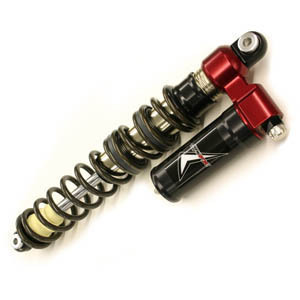
Shock Breaker Dimensions

Tuesday, February 23rd, 2010

This information is about the Enertrols shock breakers. These do not necessarily match the figures of other companies. Also keep in mind that there are many types of shock breakers and absorbers, each with their own characteristics.

Basic Factors

When figuring out shock breaker sizes, you must assess how much energy is dispersed for each cycle. The second is the amount of energy dispelled in a 60 minute operation. The application’s effective weight must be assessed also.

Kinetic Energy

The formula for determining the kinetic energy for every cycle is KE=½MV2. Remember that a moving object will be composed of inertia or inertia plus a driving force.

Effective Weight

The effective weight is crucial for getting the shock breaker correct. The general rule is this: if the impact velocities are under 1 ft/sec, choose the next highest bore size.

This is also the rule if the propelling / driving force (F x S) is beyond ½ of the E3 value (where E3 is the total energy per cycle). If you’re not sure of the shock breaker size, you must consult the shock breaker / absorber manufacturer for more information.

High and Low Effective Weight

High effective weight produces high set downforce towards the shock breaker stroke. The low effective weights generate the impact forces at the start of the stroke.

Energy Capacity of Full Threaded Body Shock Absorbers

The specs for adjustable full threaded models are the following. For model SA they are: bore: ¼ inches; stroke: ½ inches; max in/lbs cycle: 150; effective weight lbs /min/max: 5-400 lbs / 2.3-182 Kg; max in / lbs / hour 400,000 lbs; max strength: 750 lbs.

The shock breaker size and specs for model SALD are as follows: bore: 3/8 in; stroke: 1 in; maximum inch/lbs/cycle: 600 in.-lbs; effective weight lbs. min/max: 10-1,200 lbs; maximum inch-lbs/hour: 600,000 lbs; mounting strength: 1,500 lbs.

Non Adjustable Full Body Types

For the SNALD UNF Series 25 the stroke is ¼ inches; effective weight lbs: 4-12; the maximum energy capacity is 25 lbs per cycle / 750 lbs per hour. The 75 series specs are: stroke: 3/8 in; effective weight lbs: 2-36; maximum energy capacity: 75 lbs per cycle / 250,000 lbs per hour.

The specifications for the 150 are: stroke: ½ inches; effective weight lbs: 2-22; maximum energy capacity: 150 lbs per cycle / 300,000 lbs per hour.

Other Shock Breaker Sizes and Specifications

For the SNALD UNF Series 225, the stroke is ½ in; effective weight lbs: 5-55; maximum energy capacity: 225 lbs per cycle / 400,000 lbs per hour. For the 450 series, the stroke is 1 inch; effective weight lbs: 5-35; maximum energy capacity: 450 lbs per cycle / 600,000 lbs per hour.

The specs for the 600H2 are the following: stroke: 1 inch; effective weight lbs: 880-5000; maximum energy capacity: 600 lbs per cycle / 600,000 lbs per hour. These are just some of the Enertrol models; there are many more with different specifications.

Shock breaker sizes often require complex calculations to figure the one you need. Choosing the wrong one can lead to greater risks, so consulting a professional may be necessary.

Dimensions of a Crankshaft

Sunday, February 21st, 2010

A crankshaft is the engine component that sets reciprocating linear piston motion to rotation. In most cases the crankshaft is linked to a flywheel.

Crankshaft Dimensions: Ford 302

The specifications for the K1 Technologies Ford Windsor V8 5.0 L 302 crankshafts are as follows. The .030 oversize bore is 332 cubic inches (for the 3.250 stroker crank). Using the 3.400 stroker crank, the oversized bore is 347 cubic inches.

It has the 6 bolt Ford rear flange and has straight oil holes. Other features include a hardened core and stock 302 5.0 Ford (main journal size). The cranks are best used on the 302 Ford Mustang.

They can also be used on a dragster, hot rod turbo and racing engines. The cranks are also for nostalgia dragsters, supercharged engines and street cars.

Crankshaft Dimensions: Dodge 340 Crank

The 3.790 stroke crank has a 030 bore measuring 394 cubic inches. The 4.000 stroke crank has a 030 bore measuring 416 cubic inches. The cranks are forged steel, nitrided and core hardened.

They have straight oil holes. Other features include 340 main journal (size is 2.500 in), 6 bolt Chrysler rear flange and is Mag-Particle inspected. These cranks are best used with the K1 4340 Billet H beam 340 rods.

There are three stroke types: the 3.790 (340 Chrysler 4340 Forged Stroker Crank 3.790 Stroke 2.100 rod journal), 4.000 (SB Chrysler 340 4340 Forged Stroker Crank 4.000 Stroke 2.100 rod journal) and 4.000 (SB Chrysler 340 4340 Forged Stroker Crank 4.000 Stroke 2.125 rod journal).

Crankshaft Dimensions: K1 426 Hemi Engine 4340

The stock stroke is 3.750 in. The main journal size is 2.750 in, while the rod pin is 2.375 in. The crankshaft is constructed from 4340 grade steel. The crankshafts utilize 125" fillet radii to increase its strength.

The crankshafts can be used to reconstruct a hot rod, dragster, drag race 426 hemi and other projects. Another feature is the 8 bolt flange. The rod pin sizes also differ according to the crank.

For the K1 Tech. 4340 forged steel 3.750" stock 426 Hemi crank stroke, the rod pin is 2.375, while for the K1 Tech. 4340 forged steel 4.250" it is 2.200.

Crankshaft Dimensions: Small Block Mopar Eagle Cranks

The Eagle crankshaft is intended for use on Mopar small block engines. The stock is 3.310 inches for the 273 318 340 5.2 Magnum. For the 360 5.9 Magnum the stock stroke is 3.580 inches (note: the cast steel crank is for below 500 hp engines only).

For the 103403310, the stroke is 3.310" and the bobweight is 2050. For the 103404000 the stroke is 4.000" and for the 434033106123 it is 3.310". For the 434040006123 the stroke is 4.000". For the 103603580 it is 3.580" and for the 436035806123 it is 3.580". The bobweight is 2050 for all these parts. The cranks are either forged steel or cast iron.

The crankshaft dimensions and specs may be different for your building project. The type needed will depend on the vehicle you are using or trying to construct.

Dimensions of a Hockey Puck

Saturday, February 20th, 2010

Aside from the hockey stick, ice skates and protective gears, the hockey puck is also one of the primary components of hockey games. While ball games such as basketball and soccer make use of ball, this device serves the very same purpose for the different types of hockey games. Furthermore, it is also featured in less popular game variations such as underwater hockey as well as roller hockey. For a better understanding of this all-important device, it is good to know the dimensions of a hockey puck.

The Standard Size of Hockey Pucks

In terms of thickness, a standard hockey puck usually measures 25 millimeters or 1 inch. Likewise, it has a diameter of 76 millimeters or 3 inches. Its weight ranges from 160 grams to 170 grams or 5.5 ounces to 6 ounces. In some cases, pucks can be lighter or heavier than the standard weight. For the purpose of training, players can experience using pucks that are as heavy as 283 grams or 10 ounces. For younger players, a different type of puck is commonly used, which is a lighter version. This type of puck has a blue color and weighs only 113 grams or 4 ounces.

Additional Facts and Other Interesting Details

Vulcanized rubber is the basic material used to create pucks for hockey games. The standard color is black, which usually features league logos or team insignias silkscreened on both sides of every disk. Historically, ice hockey is believed to have evolved from bandy, which is a field hockey game that originated in Great Britain. This kind of game is actually played outdoors during the winter season.

When the game arrived in North America, a ball is used instead of a puck. Furthermore, its rules were called Canadian rules bandy. As the game progressed, the ball was changed into a puck by cutting the top part as well as the bottom part of it. The main reason behind this is that a wooden ball is unsuitable for a surface made out of hard ice.

Nowadays, it is a regular practice among game organizers to put the puck inside the ref for freezing, specifically a few hours before a scheduled game. By doing this, it becomes easier to control by reducing its bounciness during game time.

Besides the standard black-colored puck, other versions are available, one of which is the blue-colored variant. Because it is lighter compared to the black puck, this version is usually associated with individuals who are still undergoing training. For those who wish to strengthen wrist, game experts recommend the use of steel pucks, the weight of which is approximately 900 grams or 2 pounds.

Dimensions of a Full Size Box Spring

Friday, February 19th, 2010

Also called a bed base, a box spring is a type of frame that is commonly made out of hard and sturdy wood. It usually comes with some sort of torsion such as springs. It is commonly placed right at the top of a metal or wooden bed frame. Its size is almost the same as the mattress, which is to be placed right on top of it. Combined with the mattress and the frame, they produce a nice, relaxing and comfortable bed. For a better understanding of this all-important bed component, it is good to know the dimensions of a full size box spring.

The Standard Size of a Full Size Box Spring

The dimensions of a full size bed are 75 inches long and 53 inches wide. It features a box spring that is approximately 5 to 5.5 inches high for the low profile version, while the high profile version has a standard height of 9 inches. A box spring has three basic purposes. The first one is to create a firm and flat structure that is perfect enough to put the mattress on top. The next one is to reduce wear by serving as a shock absorber for the mattress. Third, it helps elevate the height of the mattress in order to make it more convenient to get in as well as out of the bed.

Additional Facts and Other Interesting Details

Although it is good to have a box spring in your bed, it is not that important. In fact, most beds do not need it. For instance, the Japanese-style futon mattress does not need a box spring because you can put it on the floor directly. However, it is one of the basic components of some types of beds like the four-poster or traditional western frame bed. Even without a frame under to support it, a mattress and a box spring can be combined together. This combination can then be mounted right on top of the casters.

Before, wire frames were used to support mattresses, which were then cushioned by springs. These traditional versions did not have cloth covers or wood rims. These old forms of box springs were known as bedsprings. Combining springs and wood, the folding box spring is considered one of the newest designs in this particular field. This novel form of box spring is usually covered with fabric. Courier and shipping companies can easily send such product because it can be folded right in the middle.

Gear Box Dimensions

Thursday, February 18th, 2010

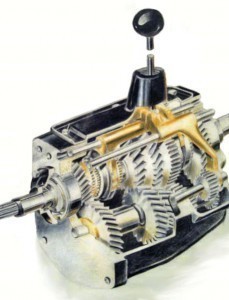
There are many types of gearboxes, like bevel, offset, planetary, sequential and worm. The following specs are for the helical gearboxes.

Gearbox Dimensions: Agnee Pump Jack (16,000 lbs Torque)

The Agnee pump jack helical gearboxes are used for oil exploration. This has a ratio of 36.7 to 1 and a center distance of 11.198". The outer dimensions are 25" x 14" x 20.25". The input is 1.375" and the output is 2.50". The net weight is 322 lbs.

The gearbox is constructed of close grain cast iron. The device is corrosion resistant and can withstand shock and vibration. The Reducer Gearing is made out of alloy steel. This material is case hardened and tempered to reach 10 AGMA quality. The result is a quieter working environment.

Gearbox Dimensions: Agnee Pump Jack (40,000 lbs Torque)

The outer dimensions are 32.5" x 19" x 30". The center distance is 16.631" and the ratio is 30:1 to 1. The input is 1.50" and the output is 3.250". The net weight is 750 lbs. The shafts are constructed of alloy steel forging. Other models have heat treated bars.

The bearings are fastened on the ground journal (taper roller type). Designed for use in oil fields, they are heavy duty and come with self oiling systems. This prolongs their life at the field.

The Agnee Pump Jack has an oil level indicator for maintenance purposes. There is also Agnee 10 for the 10,000 In lbs Pump Jacks and the Agnee 25 for the 25,000 In lbs Pump Jacks.

Gearbox Dimensions: H Series

The H Series has a transmission ratio of 1.2 – 637. The input power is 0.61 KW to 5,000 kW and the torque is up to 117,000 Nm. The gear ratios are up to 130:1. The available unit sizes are 80, 90, 100, 112, 125, 140, 160, 180, 200, 225, 250, 280, 315, 355, 400, 450, 500, 560 and 630.

The gearbox is made of close grain cast iron. The housing may also come in structural steel depending on what the project is. They are also shock resistant and can withstand corrosion. The helical pinion is constructed of EN 353 case hardening steel as are the helical gears. The teeth are case carburized and tempered.

Facts about Helical Gearboxes

Whatever the gearbox dimensions are, they remain widely used in many industrial applications. These devices possess teeth that spiral all around the gear. In terms of design they are somewhat akin to spur gears.

However, helical gearboxes are less noisy. The helical gearbox can be set up in different configurations. As indicated above, they also have different ratios.

Most of the designs today have implemented noise reduction features. The output shafts have also been modified, both on the inside and outside. Helical gearboxes can also be mounted at an output flange. The gearbox ratio is determined by dividing the teeth at the bigger gear by the teeth in the smaller gear.

It should be noted gearbox dimensions are extremely varied. The helical gears have different specifications, to say nothing of the other gear types.

Ski Boot Sizing

Wednesday, February 17th, 2010

The following ski boot guide compares the Mondopoint system with the sizes used in the United States, the United Kingdom and Europe. The Mondopoint system is the standard used for ski boots.

Ski Boot Sizing Conversion Guide

Size 15 cm in the Mondopoint system is equal to shoe size 8 in the US, size 25 in Europe and 7 in the UK. Mondopoint size 16 cm is equal to 9 in the US, size 25 in Europe and 8 in the UK.

Mondopoint size 17 cm is equivalent to 10 in the US, 27 in Europe and 9 in the UK. Size 17.5 cm is equal to 11 in the US, 28 in Europe and 10 in the UK. The 18.5 cm Mondopoint size is equivalent to 12 in the US, size 29 in Europe and 11 in the UK.

Other Sizes

In ski boot sizing, Mondopoint 19.5 cm is equal to 13 in the US, 30.5 in Europe and 12 in the UK. Size 20 is shoe size 13.5 in the US, 31 in Europe and 13 in the UK. Size 20.5 is approximate to size 1 in the US, 32 in Europe and 13.5 in the UK.

Mondopoint 21 cm is equated with size 2 in the US, 33 in Europe and 1 in the UK. Size 21.5 is equal to 3 in the US, 34 in Europe and 2 in the UK.

Those who wear US size 4 should get 22 cm ski boots. It is equal to size 35 in Europe and 3 in the UK. In ski boot sizing, US size 4.5, Europe size 36 and UK size 3.5 are relative to 22.5 cm. US size 5, Europe size 36.5 and UK size 4 are equal to 23 cm ski boots. Those who wear US size 5.5, Europe 37 and UK 4.5 should get 23.5 cm ski boots.

For Shoe Sizes 6 and Beyond

US size 6, European size 38 and UK size 5 will need ski boot size 24 cm. US size 6.5, European size 38.5 and UK size 5.5 are equivalent to Mondopoint size 24.5. Mondopoint size 25 is relative to US size 7, Europe size 39 and UK size 6.

US shoe size 7.5, European size 40 and UK size 6.5 are equal to size 26 cm. In ski boot sizing conversion, the 27 cm size is relative to US size 9, Europe size 42 and UK size 8. US size 9, Europe size 42 and UK 8 are relative to 27 cm ski boots.

27.5 cm is relative to US size 9.5, Europe size 42.5 and UK size 8.5. Size 28 cm is equivalent to US size 10, Europe size 43 and UK size 9. Mondopoint 29 cm is equal to US size 11, Europe size 44.5 and UK size 10. US size 12, Europe size 45.5 and UK size 11 are equal to Mondopoint size 30 cm.

Finally, in ski boot sizing, size 31 cm is equal to US size 13, Europe 47 and UK 12. Some manufacturers may make larger ski boots.

Flatbed Trailer Dimensions

Monday, February 15th, 2010

A flatbed trailer is an unpowered vehicle that is used to transport materials as well as goods. This trailer has different types, namely the single-axle dollies, the semi trailers as well as the tractor trailer. The trailer is commonly used to transfer materials that pass the regulations regarding load height. One of the advantages of a flatbed over the other kinds of trailer is that it has a continuous and spacious deck. To assess the load capacity of the trailer, it is important to take a look at the different flatbed trailer dimensions.

The Dimensions of a Flatbed Trailer

What are the dimensions of a flatbed trailer? The usual length of the flatbed is 48 feet while the width is 102 inches. The total height of the trailer is around 60 inches to 62 inches. The freight’s maximum height is 8 feet and four inches. The semi trailer is a flatbed trailer without axles in the front. The maximum length of this trailer is 53 feet. The dimensions of a semi trailer are 13 feet x 53 feet.

Additional Information and Other Important Details

The stability of the trailer can be defined by the tendency of vehicle to make a side-to-side movement. Aerodynamic forces like a cross wind can cause the trailer to move. The center of mass location is one of the criterion used to determine the stability of the vehicle. The vehicle will be unstable if the center of mass is found at the back of the vehicle, specifically near the wheels.

Trailers can be attached to trucks, pick-ups or buses if the materials will be transferred in far locations. To secure the trailer to the vehicles, it is important to use a trailer coupler. There are three types of couplers that can be used, namely the A-Frame coupler, the adjustable coupler and the straight coupler. The coupler should be properly attached to a trailer ball. After attaching the coupler to the ball, the ball should be mounted to the draw bar. The bar will be attached to the trailer hitch.

To lift the trailer, one of the tools that can be used is the trailer jack. The jack is used to level the unpowered vehicle to the storage. To ensure that the jack will suit the flatbed trailer that you will use, it is important to have ideas about the different kinds of jack trailers that can be used. These include the swivel jacks, the A-frame jacks and the drop-leg jacks.

Spark Plug Size Chart

Sunday, February 14th, 2010

Designed to ignite different kinds of compressed fuels like liquefied petroleum gas, ethanol and aerosol gasoline, a spark plug is a very important part of internal combustion engines. This electrical device is usually placed in the cylinder head, the purpose of which is to produce an electric spark necessary to start a vehicle. It is made up of different parts like the ribs, insulator and terminal. Furthermore, each plug comes with a side electrode, a metal case and an insulator tip. In addition to these basic facts, it can also help to know the different spark plug sizes.

The Different Spark Plug Sizes

Spark plugs are available in three common sizes. The first size is 0.8125 inch long. The second size has a length of 0.750 inch. The third size measures 0.6875 inch long. Every plug usually has a gap measuring somewhere from 0.035 inch to 0.070 inch. Aside from its use in vehicles, this electrical device can also be used to ignite combustible mixtures in furnaces. For this particular type of application, some people refer to it as flame igniter.

Additional Facts and Other Interesting Details

In order to understand how a spark plug works, it is important to know its different parts. These include the ribs, insulator and terminal. Aside from these, each plug also has a metal case, seals and an insulator tip. Furthermore, it must also have a side electrode and a central electrode.

The purpose of the ribs is to prevent the leaking of electrical energy and enhance electrical stimulation. Next, there is the insulator, the primary function of which is to supply mechanical support to the central electrode. Made from porcelain, this part also insulates the high voltage. The terminal is found at the top of the plug, which serves as its connection to the ignition system.

The primary function of the metal case of a spark plug is to eliminate heat from the insulator. It works by passing the heat right onto the cylinder head. This case has the capacity to outlast the torque of tightening the plug. Meanwhile, the insulator tip must serve as a good thermal conductor in order to prevent the electrode from overheating. It must be able to retain electrical insulation while resisting high levels of temperature.

Each spark plug features seals, the purpose of which is to prevent the combustion chamber from leaking. Made from high nickel steel, the side electrode is commonly found right at the side of the metal case. Its primary function is to enhance the heat conductivity of a spark plug. An internal wire is necessary to connect the central electrode to the terminal. This particular part of a plug features a tip that is made from a combination of chromium, nickel-iron as well as copper.

Dimensions of a Hospital Bed

Sunday, February 14th, 2010

Today’s hospital beds come with various features and accommodations. Those listed here are examples of the types of beds used in medical facilities.

Dimensions of a Hospital Bed: Century Series 835/837 Med-Surg Bed

This motor bed has an overall length of 36.5” x 88” (this without the bumpers). The sleep surface measures 36” x 80” and the bed frame clearance is 7.5” (this is with 5” casters). The Hi-Lo travel time is 21 seconds.

The low position is 17” and the high position is 30”. Additional features include steer and central brake. Other optional features of the bed are an orthopedic surface, parallelogram side rails and radio / TV. A mattress, roller bumpers, bed exit and neutral paint colors can be added too.

Dimensions of a Hospital Bed: Centra Series 850/852 & 1060/1062

The Centra Series 850/852 Med-Surg motor bed has an overall length of 36” x 82” without the bumpers. The sleep surface is 36”x 82”. The Hi-Lo travel time is 21 seconds and the bed frame clearance is 7.5” (this is with 5” casters).

The high position is 31” and the low position is 17”. This manual operation bed has central brake and steer. Other features include a night light, TV, bed exit and CPR release. Hard pan surface and mattress are also options.

The Centra Series 1060/1062 motor bed has 5” casters, with the high and low positions at 31” and 17”, respectively. The sleep surface is 36” x 82” and comes with a steer and central brake. CPR release, night light, radio, and side rails are among its other features.

Dimensions of a Hospital Bed: Century Critical Care % Advance Series

The Century Critical Care has a sleep surface of 33" X 80". The width is 38.5"when the side rails are up. When the side rails are down, it is 34". The overall length of the bed is 36" X 91" with the bumpers.

The radiolucent window is 20" W X 37" L. The low position is 22.5" and the high position is 40.5". The bed has central brake and steer, instant CPR release and hydraulic with electric asset. Optional features are sideguard communications, light paint, zone air / upgrade kit and Tente casters.

The Advance Series Med-Surg Bed has a sleep surface of 36" x 82"and overall length of 36" x 91" (minus the bumpers). The bed frame clearance is 7.5”.

Dimensions of a Hospital Bed: Affinity II & Affinity III

The Affinity II & Affinity III Birthing Bed has a sleep surface of 34” x 78” and 6” casters. The low position is 18.5” and the high position is 35.75”. It has central brake and steer and can be fitted with custom head boards. Other features are V-Cut or C-Cut mattresses, placenta pan, air sleep surface, calf and foot supports.

Note:

It should be stressed that not all hospital beds have these features. The amenities one will find depend on the hospital. The economic status of the city also determines the amenities of their hospital beds.

The dimensions of a hospital bed will continue to change and improve. As medical facilities change, so do the bed specs.

Curtain Poles Length

Sunday, February 14th, 2010

Measuring curtain pole length is not that difficult. To get the one that matches your window, use the following method.

How to Measure the Curtain Pole

First you must get a metal tape measure. If the old curtain rail is still in place, you can just measure it. This will be enough to ascertain the new pole length will be correct (note: do not include the finials when measuring the length).

If you’re measuring other windows, begin by measuring its inside recess width. Now you must add 15 cm or 6 inches for both sides. Write the figure down and buy the appropriate curtain pole length.

Keep in mind that both poles and tracks are made in set lengths. If your figures don’t match up with the standards, your order has to be the next size up. This can be cut to the right size so there’s no need to worry. If your windows are large, you’ll need to use two poles. A joiner can be used to combine the two together.

Tips and Hints

If you’re measuring a recess or between two walls (made to measure poles), 1.5 cm has to be subtracted from the figure. Also keep in mind the measurement must be where the pole is to be set.

When assessing curtain pole lengths, you’ll have the option of getting made to measure poles. You can choose from wall fixed or top fixed. With wall fixed, the brackets are fastened on the wall encompassing the recess. With top fixed, the brackets are fitted on the window recess or the ceiling.

When using the cord, make sure there’s nothing to block the way where the cord will project. The cord drop must also be the same length as the curtains you’re putting in. If taking long measurements, have someone hold the other end so the tape remains steady.

Curtain Pole Length Conversion Guide

Most of the time, the measurement has to be in centimeters. Use the size conversion guide below to convert the figure to inches and feet. Depending on your state / region, this may not be even necessary.

100 cm (3′ 3" / 39); 125 cm (4′ 1" / 49"), 150 cm (4′ 11" / 59"); 160 cm (5′ 3" / 63"); 175 cm (5′ 8" / 68"); 180 cm (5′ 10" / 70); 200 cm (6′ 6" / 78"); 225 cm (7′ 4" / 88"); 240 cm (7′ 10" / 94"); 250 cm (8′ 2" / 98"); 275 cm (9′ 0" / 108"); 300 cm (9′ 10" / 118"); 320 cm (10′ 6" / 126"); 325 cm (10′ 8" / 128"); 350 cm (11′ 5" / 137"); 375 cm (12′ 3" / 147"); 400 cm (13′ 1" / 157"); 425 cm (13′ 11" / 167"); 450 cm (14′ 9" / 177"); 475 cm (15′ 7" / 187") and 500 cm (16′ 5" / 197").

As stated earlier, it’s possible your curtain pole length won’t match the standards. If you decide to cut the pole yourself, double check the measurements to avoid making mistakes.