Mouse Trap Dimensions
Mousetrap sizes vary considerably. Some of the most common 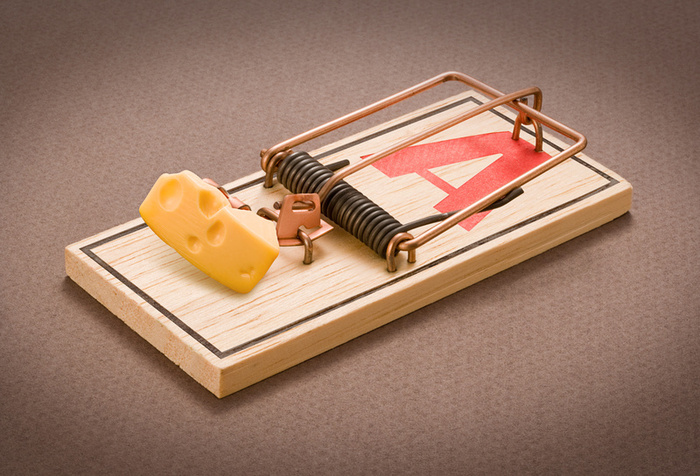 dimensions are 3” wide x 3” tall x 10” in length. Others are 5”x 5” x 16, 5”x 5” x 18 or 5”x 6” x 18”. Others come in at 8”x 8” x 15” and 8”x 8” x 30”. Besides the size, there are numerous variants available.
The Spring Loaded Bar Mousetrap
This mousetrap was created in 1894 by William Hooker in Illinois. Another popular variant of the spring loaded trap was created by Hiram Maxim (inventor of the machine gun). To this day, the workings remain practically the same.
Food is placed as bait. It doesn’t have to be cheese; it can be bread, meat, etc. The spring loaded bars comes down when the mouse goes for the bait. The mousetrap size is important, because small traps can’t handle rats. Small mousetraps will do for mice. For rats, bigger spring loaded traps are needed.
Mouth Mousetrap and Other Variants
The mouth mousetrap functions by using a coiled spring which sets off the plastic jaws. When set off, the jaws will crush the animal. The trap uses electricity to kill the rodent. In most designs, electrodes are set between the entryway and the bait. These electrodes are placed in an insulated container so people won’t get hurt.
Non Lethal Mousetraps
Some mousetraps are designed to capture mice rather than kill it. Some traps consist of a box with springs. When the mouse goes into the box, the door swings shut, trapping but not killing it. The mousetrap size varies. You’ll need to use large ones if there are big rats.
Other non lethal methods include glue traps. The material can consist of glue, flypaper or other sticky materials. The food is usually placed in the middle of the trap. Once trapped, vegetable oil can be used to set the animal free.
This trap is best used indoors. Outdoors, wind, rain etc can render the sticky substance useless. However some countries prohibit the use of glue traps because the mice can die more slowly.
The Bucket Trap and Others
Other methods include the bucket trap. Here the bait is setup so the mouse will end up falling into the water and drowning. In this case, the mousetrap size isn’t that important. An ordinary bucket can handle any rat or mouse. Other methods for getting rid of mice include inert gas. The gas acts quickly so the animal dies instantly.
For a while, strychnine grain pellets were used to kill mice. However they have fallen out of favor. One reason is its toxicity. Another reason is that small children may end up swallowing it.
The third is that the rat might swallow it and die in an inaccessible place. Sometimes, squirrel traps are used to trap the animals. Depending on the design, it can capture or kill the animal.
Besides the mousetrap size, the variant you use needs to be considered as well. Regardless of the trap used, following all the instructions is necessary to avoid accidents.