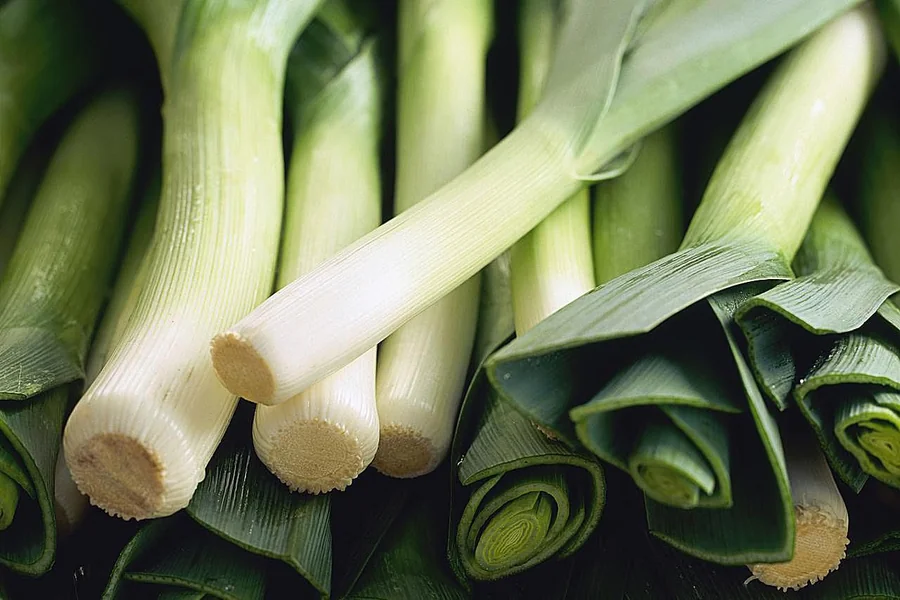
Leek sizes may range from one variety to another, depending on how long they were grown, the planting density, soil conditions and time of harvest. Some are harvested young and thin for quick cooking or salads, while others are kept longer to grow thick stems that are suitable for roasting, pies, stews and soups.
There is no universal rule on how big a leek should be. Leeks can be harvested either when small or longer in the ground to grow larger. Leeks can vary in size and have stems from 4cm to more than 4cm in diameter depending on the maturity of the variety; baby leeks can be much thinner.
Knowing the size of the leek helps when purchasing vegetables, cooking a recipe, planning garden space or determining when to harvest your homegrown leek.
Quick Answer: How Big Is a Leek?
The diameter of a mature leek stem is normally 1 to 2 inches (2.5 to 5 cm), but will depend on the variety and growing conditions.
In many varieties, the edible white and pale green stem can be 6 to 12 inches (15 to 30 cm) long.
Baby leeks are much smaller and thinner. Stems can be up to 4 cm in diameter for large varieties. For instance, according to the RHS the ‘Jolant’ leek will have stems up to c 30cm long and c 4cm across.
Leek Sizes at a Glance
| Leek Size | Approx. Stem Diameter | Typical Use |
| Baby | Under 1 inch / 2.5 cm | Salads, grilling, side dishes |
| Small | 1–1.25 inches / 2.5–3 cm | Sautéing, pasta, stir-fries |
| Medium | 1.25–2 inches / 3–5 cm | Soups, pies, everyday cooking |
| Large | 2 inches / 5 cm or more | Soups, roasting, casseroles |
| Giant | Can exceed normal mature sizes | Exhibitions, gardening competitions |
These measurements should be treated as practical cooking and gardening ranges rather than official grading standards. Variety and growing conditions can cause considerable differences.
What Are the Different Leek Sizes?
The best way to know how big a leek is is to divide it into 5 sections: baby, small, medium, large and giant.
Baby Leeks
Leeks are harvested when they are still young.
They tend to be more tender than the mature leeks and have slender stems. They are mild flavoured, so are suitable when the leek is to be left in the final product.
Leeks can be as thin as a finger when they are baby leeks.
The RHS says it is perfectly fine to harvest leeks at any size. Baby leeks can be ready in as little time as a few months, and full-sized plants in general take a lot longer.
Common uses include:
- Grilling whole
- Roasting
- Salads
- Garnishes
- Stir-fries
- Vegetable side dishes
Baby leeks, unlike large mature leeks, are tenderness and require less cooking.
Small Leeks
Small leeks are larger than baby leeks, but not as thick as mature leeks.
A small leek can be about 1” or 2.5” (2.5 cm or 6.3 cm) wide.
When a recipe calls for a soft onion taste, but no big chunks of vegetable, these leeks come in handy.
Small leeks are good for:
- Pasta dishes
- Omelets
- Quiches
- Light soups
- Sautéed vegetables
- Risotto
They are also easier to be cooked whole or cut lengthwise.
Medium Leeks
One of the most practical leek sizes for everyday use is medium sized leeks.
The stalk is large and yields good amount of usable white and pale-green material, but not overly fibrous.
The diameter of medium sized leek can be around 1.25 to 2 inches (3 to 5 cm).
Medium-sized leeks are ideal in:
This is potato and leek soup.
- Vegetable soup
- Chicken dishes
- Casseroles
- Pies
- Risotto
- Pasta
- Roasted vegetables
If the only leek requirement on a recipe is the generic “one”, unless it is stated otherwise, you should use a medium sized leek.
Large Leek Sizes
Plants grow into large leeks when they can be given sufficient room, nutrients, moisture and time.
Stems may be as to as 2 inches or larger in diameter, depending on variety.
Some varieties grow thick and short whereas some grow to be long and narrow.
For instance RHS states that ‘Bandit’ is a mid-length variety with an average diameter of about 4 cm, while ‘Jolant’ can reach a length of up to about 30 cm and a diameter of 4 cm.
Large leeks are ideal for recipes that call for much chopped leek.
They work well for:
- Bulk quantities of soups
- Stews
- Vegetable stock
- Leek pie
- Casseroles
- Roasting
- Braised leek dishes
Leeks that are very large may be tougher at the outside leaves and require additional cutting.
How Long Is a Leek?
A leek’s total length consists of the white stem, pale-green section and long dark-green leaves.
RHS plant information indicates that the leaves of cultivated leeks grow to be about 30 to 50 cm long.
But the portion that is normally used in recipes is shorter.
Most cooks use primarily:
White part of the leaf → paler green part of the leaf → young most of the leaf.
The tougher upper leaves may be removed, but can be used for stock.
Growing practice may also have an effect on the length of the white stem.
Leek Size Comparison
| Type | Diameter | Relative Size | Best For |
| Baby leek | Under 2.5 cm | Very small | Whole cooking |
| Small leek | Around 2.5–3 cm | Small | Sautéing |
| Medium leek | Around 3–5 cm | Average | Most recipes |
| Large leek | Around 5 cm+ | Large | Soup and roasting |
| Giant leek | Variable | Extra large | Growing competitions |
There is considerable overlap between these categories.
Unlike manufactured products, vegetables do not grow to perfectly uniform measurements.
What Size Leek Is Best for Cooking?
Medium leeks are best for most recipes.
They generally offer a good tenderness level and retain a good volume.
Tender leeks are smaller leeks. Larger mature leeks will yield more food per plant, but the outer leaves will be tougher.
The optimum size will thus vary according to the recipe.
| Recipe | Recommended Leek Size |
| Potato leek soup | Medium or large |
| Grilled whole leeks | Baby or small |
| Risotto | Small or medium |
| Vegetable stock | Medium or large |
| Leek pie | Medium or large |
| Salad | Baby |
| Roasted leeks | Small or medium |
| Pasta | Small or medium |
What Size Should Leeks Be Before Harvesting?
There is no need to wait until a leek reaches one exact diameter.
Leeks can be harvested while small or left in the soil to continue growing.
The RHS specifically notes that gardeners can harvest leeks at any size. Harvesting alternate plants can also create more room for the remaining leeks to grow larger.
If you want tender baby leeks, harvest early.
If you want thicker stems for winter cooking, allow the crop more time to develop.
Many gardeners transplant young leeks when they are approximately pencil thick and around 20 cm or 8 inches tall.
That should not be confused with harvest size. It is the approximate size of young plants when they are commonly moved to their final growing position.
Does Spacing Affect Leek Sizes?
Yes. Plant spacing can have a major effect on final size.
Plants competing closely for water, nutrients, light, and root space may remain smaller. Giving them more room can encourage thicker growth.
The RHS vegetable crop planner gives conventional leek spacing of about 20 cm along the row with approximately 30–38 cm between rows. Its raised-bed guidance lists closer spacing of around 10 cm between plants and 25–30 cm between rows.
Gardeners who want baby leeks can intentionally plant more closely.
Gardeners aiming for large mature leeks normally provide more space.
What Determines the Size of a Leek?
Several factors affect final leek sizes.
1. Variety
Some leek varieties naturally grow short and thick.
Others produce long stems.
Choosing the right variety is therefore important when a particular size is wanted.
2. Growing Time
Leeks grow slowly.
Leaving them in the ground longer generally allows them to become larger until they reach their natural mature size.
Full-sized leeks can take roughly six months to develop, while baby leeks can be harvested considerably earlier.
3. Plant Spacing
Closely planted leeks have more competition.
Wider spacing gives individual plants greater access to resources.
4. Soil Quality
Healthy soil supports stronger root growth.
Organic matter and suitable fertility can help plants develop thicker stems.
5. Water
Leeks require consistent moisture during active growth.
Extended dry conditions may slow growth.
6. Variety and Season
Early, mid-season, and winter leek varieties may grow differently.
Some varieties are bred to mature quickly while others remain in the ground through winter.
Baby Leeks vs Mature Leeks
Baby and mature leeks come from the same basic type of vegetable. The main difference is when they are harvested.
| Feature | Baby Leek | Mature Leek |
| Size | Thin and small | Thick and larger |
| Texture | Very tender | Firmer |
| Flavor | Mild | Stronger |
| Cooking time | Shorter | Longer |
| Best use | Whole dishes | Chopped recipes |
| Growing period | Shorter | Longer |
Baby leeks are particularly useful when appearance matters because they can often be cooked nearly whole.
Mature leeks provide more usable vegetable per plant.
How Many Leeks Equal One Cup?
The amount depends on leek size and how finely it is sliced.
As a practical kitchen estimate, one medium to large leek can often provide roughly 1 to 1½ cups of sliced usable leek after the roots and tougher leaves are removed.
A particularly small leek may provide less.
For recipes where quantity matters, measuring the sliced leek by cup or weight is more reliable than relying only on the number of vegetables.
How Much of a Leek Can You Eat?
Most people primarily eat the:
- White stem
- Light-green section
- Tender green leaves
The dark-green tops are firmer and more fibrous.
They are often removed from dishes that need a soft texture. However, they do not necessarily have to be thrown away.
Clean leek tops can be used to flavor:
- Vegetable stock
- Chicken stock
- Soups
- Broths
- Sauces
Always wash leeks thoroughly because soil can collect between their tightly layered leaves.
Are Bigger Leeks Better?
Not necessarily.
Large leeks provide more edible material, but size does not automatically mean better flavor or texture.
Smaller leeks may be more tender.
Medium leeks are convenient for most recipes.
Large leeks are helpful when cooking soup or feeding several people.
The best leek size therefore depends on how you plan to use it.
Interesting Facts About Leek Sizes
- Leeks can be harvested before reaching full size.
- Baby leeks may be ready much earlier than mature crops.
- Leaving alternate plants in the garden can give remaining leeks more space to grow.
- Variety strongly influences final stem thickness and length.
- Some leek varieties develop short thick stems while others grow longer.
- The edible white section can be lengthened through blanching techniques.
- Leek leaves may reach around 30–50 cm in length.
- Garden spacing influences final stem size.
- Mature plants may take around six months to develop.
- A leek does not have to reach a specific diameter before it can be eaten.
Final Thoughts
Leek sizes range from thin baby leeks to thick mature stems, and there is no single measurement that every leek should reach. A typical mature cooking leek may be around 1 to 2 inches in diameter, while some varieties can develop stems around 4 cm across or larger.
Size depends on variety, spacing, soil, water, growing season, and harvest timing. Smaller leeks are useful when tenderness matters. Medium leeks suit most everyday recipes, while larger leeks are convenient for soups, stews, casseroles, and other dishes that require a larger quantity.
For gardeners, the flexibility is one of the advantages of growing leeks. You can harvest a few while they are young and leave the remaining plants to continue developing into larger vegetables.



1 Comments