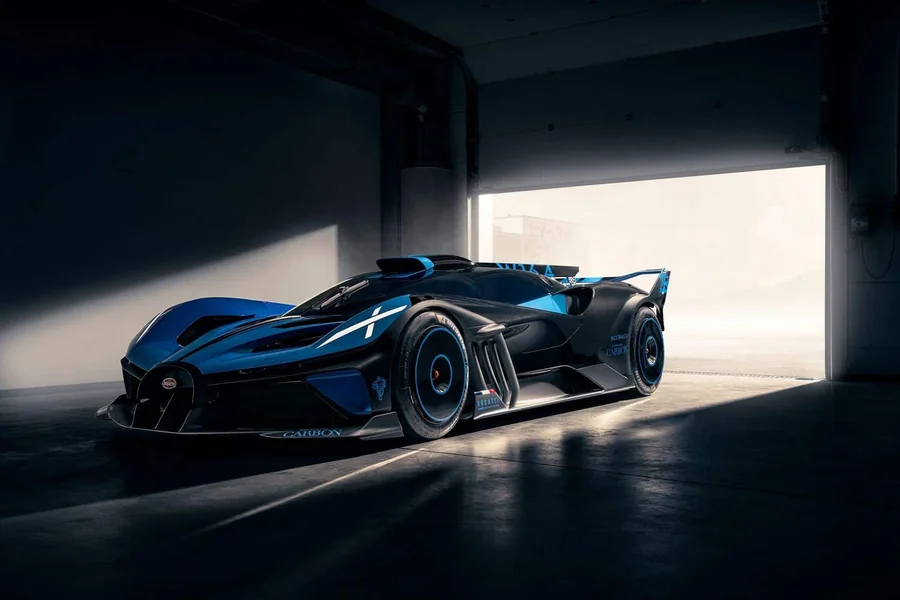
What makes the fastest car fastest really relies on the method of measurement and if it is a production car, prototype or a special record car. For production cars that are road legal, there are multiple cars vying for the title of the highest speed. The Bugatti Chiron Super Sport 304.773 mph (490.484 km/h) is a famous record that was set in 2019, and the Koenigsegg Jesko Absolut is designed to reach even faster speeds. Note that manufacturers test differently and under different conditions; so it is important to differentiate verified speed from claimed or projected top speed.
When folks ask what is the fastest car in the world, they’re typically looking for a straightforward answer. Actually, it’s a more complicated thing. Car manufacturers define the term production car in various ways, and they may employ various test conditions and/or record the speed in different ways.
Top speed is not the only aspect of a car’s performance! The acceleration, aerodynamics, engine power, gearing, tyres and stability all play a factor. The car that is able to accelerate to an amazing speed on the closed test track might not be built for the roads at that speed.
This guide discusses the top speed contenders, how top speed claims are made and why some are easier to be verified than others.
What Is the Worlds Fastest Car?
The term the fastest car in the world can be used for various types of cars. That’s why you’ll get varying winners on the internet sometimes.
The production car should be made for the customers, not just as one-off record car. But, not all manufacturers or publications will have the same criteria for qualifying.
A few noteworthy interpretations are:
- Highest Speed of a Road Car: Recorded speed of a road car that was built in production format.
- The manufacturer’s claimed top speed: The speed that the carmaker claims, but may not be verified in a public test.
- Theoretical maximum speed: A theoretical value calculated from the available power, aerodynamics, gearing and other factors.
- Absolute land speed record: These are purpose-built vehicles that are not conventional road vehicles.
The difference is important because a headline claiming a car can reach 300 mph does not necessarily mean that it has actually reached 300 mph in a test run that’s been independently documented.
The most useful comparison for most car enthusiasts is production or production-based hypercars.
Bugatti Chiron Super Sport 300+ And The 300 MPH Barrier
The Bugatti Chiron Super Sport 300+ is one of the most important cars in the modern top-speed race.
A retooled version of the Chiron test car achieved 304.773 mph (490.484 km/h) at Volkswagen’s test track in Ehra-Lessien, Germany in 2019. Bugatti said it was the first time a road-legal car has surpassed 300 mph.
The feat garnered attention from around the world because 300 mph was considered a significant threshold for road-going performance cars.
But there is an important thing to note: This was not the same car as the one that was sold as the Chiron Super Sport 300+. A few customer cars were made by Bugatti that included some of the features of the record car, but the customer record car’s speed was electronically limited.
The Chiron Super Sport 300+ comes with an 8.0-liter quad-turbocharged W16 engine. It also features a longer chassis and some changes to its shape to help stabilize very high-speed driving.
The car is a testament to the fact that you can’t just reach blistering speeds by increasing horsepower. Aerodynamic drag becomes an issue at 300 mph. Stability and energy requirements can be greatly affected by small changes in the body shape.
Koenigsegg Jesko Absolut
Another big name is the Koenigsegg Jesko Absolut, which continues to be a contender for the title of the world’s fastest car.
The Jesko Absolut is a car that is often talked about, not only for its performance, but due to its engineering as well.The Jesko Absolut is a car that has been mentioned a lot because of its engineering and performance that are projected.
The Absolut is an Absolutes special creation for high-speed use. It is more sculpted than the Jesko Attack which is geared more towards track performance and downforce.
The Jesko Absolut is powered with a 5.0L twin-turbocharged V8 engine. The engine can be expected to generate up to approximately 1,600 hp on appropriate fuel.
Its most unusual feature is the nine speed Light Speed Transmission. The transmission has been designed to offer very quick gear changes in a compact drivetrain.
According to Koenigsegg’s simulations, the Jesko Absolut could be capable of reaching speeds in excess of 300mph if necessary conditions are met. But a theoretical or simulated speed should not be accepted as an official world speed record.
This is significant for the Jesko Absolut compared to the Bugatti Chiron Super Sport 300+.
Hennessey Venom F5
Another American hot rod that’s getting into the fray of the Top Speed is the Hennessey Venom F5.
Built around a lightweight carbon-fiber chassis and a potent twin-turbocharged V8 motor, Hennessey built the car. Displacement of the engine is 6.6 liters and the engine output is over 1800 horsepower depending on configuration.
The company aims to achieve speeds of more than 300 mph for the Venom F5. But ability does not equate to a history of production car completion.
The Venom F5 is also a reflection of the evolution of the modern hypercar market. Riders are no longer being decided by only horsepower. Weight reduction, airflow, suspension control, cooling and electronic systems are all essential.
The driver needs to have a predictable driving style at very low speeds. Too much aerodynamic lift creates a problem to control a vehicle. Excessive downforce, however, results in excess drag and can decrease maximum speed.
Engineers are thus faced with a number of conflicting needs.
Other Cars In The Top-Speed Conversation
Other models have also been pushing production-car performance to unprecedented levels, making their way into the worlds fastest car category.
SSC Tuatara
The SSC Tuatara made headlines for setting very high speed runs. In 2021 SSC later recorded a two way average of 282.9 mph (455.3 km/h) during testing.
The two way method is important as it helps to minimise the influence of wind and other environmental factors. A one-way run can take advantage of a tailwind, and a return run can be influenced by a headwind.
Koenigsegg Agera RS
The previous production-car record for top speed is held by the Koenigsegg Agera RS, which averaged 277.87 mph (447.19 km/h) during two-way runs in Nevada during 2017.
Its success put Koenigsegg in the ranks of the top road-car engineers in the world.
The Agera RS had a relatively light curb weight, a potent twin-turbocharged V8 and aerodynamically designed to perfection.
Bugatti Veyron Super Sport
In the pre-Chiron days, the Bugatti Veyron Super Sport was one of the most popular names in the top-speed conversation.
During testing, it achieved speeds in excess of 267 mph, a speed that was achieved in a specially prepared version. This is because of tyre and vehicle considerations, the electronically limited speed of the customer version was reduced.
It was the Veyron that also proved that top speed performance could be matched with a high-end interior and daily usability.
How Is A Top-Speed Record Verified?
Top speed figures can be misleading since the tests are conducted in different ways.
A good record should consist of sound attention to the testing environment. The result can be influenced by wind, road surface, temperature, tyre type and condition, fuel type, vehicle configuration and measuring equipment.
A two way average is a more useful value than a one way average as it takes into account the effect of the wind.
Suppose a car is going at 300 mph in one direction and the wind is blowing in the same direction. The recorded speed might be greater than the vehicle’s capabilities in still air. Then if it returns to the same wind again, the second result will be lower than this.
The mean of the two readings is a better average.
There are other questions that are equally relevant:
- Was the car a customer production car or a special test car?
- How many units did they make?
- Did the speed have its own verification?
- Was the speed electronically controlled?
- Did both directions use?
- Were standard production tires used?
- Was the test done in a controlled environment?
These questions are a good way of understanding why two sites can provide different answers to the same question.
Why 300 MPH Is So Difficult
To achieve 300 mph, much more than a powerful engine is needed.
The amount of aerodynamic drag increases rapidly with the speed of the wind gust. The engine must therefore be powerful enough to deal with the resistance, but also have a margin for acceleration.
Another significant constraint is tires. They are subjected to very high rotational forces and temperatures at high speeds. The design of the tire must be tailored to the vehicle and the maximum speed.
Cooling is also crucial. A high-performance engine generates a lot of heat, especially when it has heavy loads at high revs, thanks to its turbochargers.
The transmission also needs to be designed for the task. The gearing should be arranged so that the engine will operate within the desired range at very high speeds without slipping out of gear too soon.
Stability is another possibility.
Aerodynamics is a major concern and at 300 mph, the aerodynamic imbalance of a small amount can cause significant consequences. A great deal of time is spent by engineers testing the flow of air around the front, rear, undercarriage and wheels of the car.
That’s why the fastest car isn’t necessarily the car with the largest engine. The whole vehicle must operate as a single system.
Final Thoughts
The world’s fastest car isn’t always a one-numberer. If you refer to the type “verified production car record,” the answer is the same as the one you gave a few minutes ago.If you mean “manufacturer claim,” the answer is the same as the one you gave a few minutes ago.
A Chiron test car has broken the 300 mph mark in 2019 which makes the Bugatti Chiron Super Sport 300+ another major benchmark. The Koenigsegg Jesko Absolut and Hennessey Venom F5 are the next generation of hypercars focused on extreme speeds — but their potential aren’t to be confused with independently verified records.
Both the most helpful and sensible comparison for those who look for one of these cars is to ignore the headline number. All of these factors are important in the testing method, the vehicle specification, the tyres, etc., the conditions and the verification process.
The competition for the fastest car in the world is all about engineering in the end. Each step up in speed brings new challenges on the aerodynamic, power delivery, cooling, tires and stability front. It’s why modern hypercars are so fascinating.


3 Comments