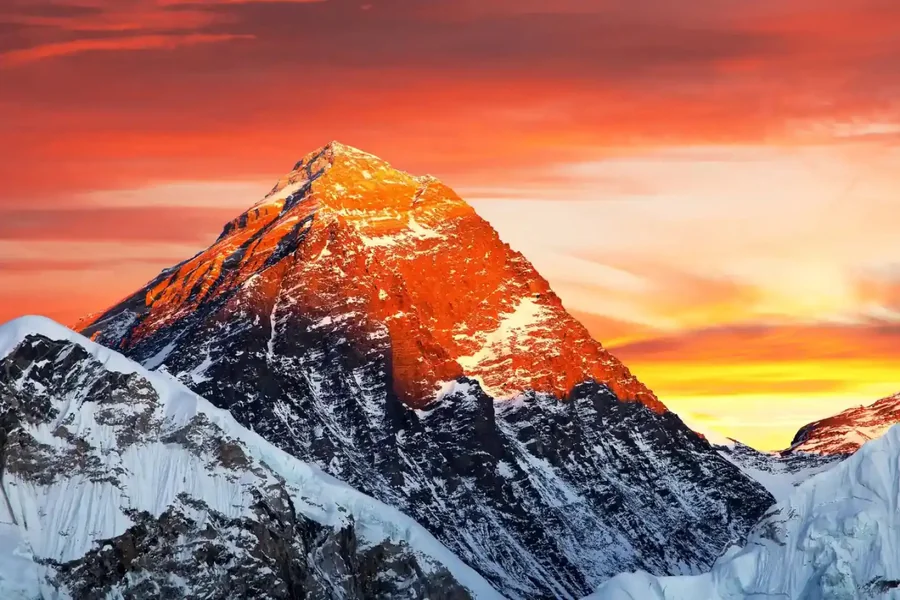
The tallest mountains are typically the ones that are measured from sea level. According to this standard, Mount Everest is the tallest mountain in the world, at 8,848.86 metres (29,031.7 feet). The highest mountains in the world are concentrated in Asia in the Himalayas and the Karakoram ranges. Other well-known peaks include K2, Kangchenjunga, Lhotse, Makalu and Cho Oyu. The mountains are famous for their high summits, challenging climbs and geologic, scientific, cultural, and mountaineering significance.
What Are The Biggest Mountain Peaks?
On a search of the largest mountain peaks, people are usually referring to the tallest mountain in the world. In most geographic rankings height is measured from the mean sea level to the top.
This is significant for the reason that there are a number of methods of defining “bigger than”. A mountain is the largest in terms of its height above sea level, its height from its base, its volume or its physical prominence.
Elevation above sea level is the most common measure used in making a typical global comparison.
The highest mountains are mostly found in Asia. Many of the peaks in the world over 8,000 metres are situated in the Himalayas, and K2, along with other high peaks, is located in the Karakoram range.
The following are some of the key interpretations of “biggest mountain peaks” as follows:
- HET: Highest elevation – from sea level to top.
- Topographic prominence: Height of a mountain above the surrounding terrain.
- Base to summit height: Distance from the base of the mountain to the summit.
- Overall size: May be used to describe the mass, area or volume of a mountain.
The focus for this article is the highest peaks above sea level.
Top 10 Biggest Mountain Peaks In The World
The top ten of the world’s mountains in height is presented in the table below.
| Rank | Mountain Peak | Height | Location | Mountain Range |
| 1 | Mount Everest | 8,848.86 m | Nepal/China | Himalayas |
| 2 | K2 | 8,611 m | Pakistan/China | Karakoram |
| 3 | Kangchenjunga | 8,586 m | Nepal/India | Himalayas |
| 4 | Lhotse | 8,516 m | Nepal/China | Himalayas |
| 5 | Makalu | 8,485 m | Nepal/China | Himalayas |
| 6 | Cho Oyu | 8,188 m | Nepal/China | Himalayas |
| 7 | Dhaulagiri I | 8,167 m | Nepal | Himalayas |
| 8 | Manaslu | 8,163 m | Nepal | Himalayas |
| 9 | Nanga Parbat | 8,126 m | Pakistan | Himalayas |
| 10 | Annapurna I | 8,091 m | Nepal | Himalayas |
Each of the ten mountains is more than 8 000 metres above sea level. They are one of the 14 eight-thousanders worldwide, which are mountains with peaks at or above 8,000 meters.
Mount Everest: The Highest Mountain On Earth
The mountain that is higher than sea level is called Mount Everest. Its official elevation is 8,848.86 meters, or about 29,031.7 feet.
The Mahalangur Himal is a sub-range of the Himalayas. The top of the mountain is in Nepal and China’s Tibet Autonomous Region.
There are two major routes to the top of the mountain. The southern route is from Nepal and the northern route is from Tibet.
The history of mountaineering made Everest popular. The first successful, documented ascent to the summit was by Sir Edmund Hillary and Tenzing Norgay in 1953.
Everest is still a popular climbing spot today. But it’s not just about fitness to climb. Challenges at high altitudes include thin air, freezing temperatures, high winds, snow and difficult terrain.
However, the amount of oxygen available is much less at high elevations than at sea level. Climbers must therefore be well prepared, acclimatised, equipped and weather planned.
K2 And Other Major 8,000-Meter Peaks
The second highest mountain in the world is K2. It’s 8611 meters above sea level.
K2 is located in Karakoram range on the border with China and Pakistan. It is known for its challenging technical climbs. It is a difficult place for the expert mountaineer due to its steep sides, variable climate and exposed nature.
Kangchenjunga, standing at 8586 meters is the third highest mountain. It is situated on the border of Nepal and India and it is the tallest mountain of India.
Lhotse at 8,516 meters is the fourth highest. Lhotse is very near to Everest and part of the same basic climbing area.
Makalu is the fifth at 8,485 meters. The top is uniquely pyramid shaped with steep ridges and exposed areas.
The other mountains in the top ten are also important:
- Cho Oyu: 8,188 meters
- Dhaulagiri I: 8,167 meters
- Manaslu: 8,163 meters
- Nanga Parbat: 8,126 meters
- Annapurna I: 8,091 meters
These peaks are not only high. They are also significant examples of the geological processes which have formed the Asian mountain systems.
Why Are The Biggest Mountain Peaks So High?
Plate tectonics is closely related to the great height of the Himalayas and nearby mountain ranges.
Indian plate has been moving towards north and colliding with the Eurasian plate. This collision started millions of years ago and is ongoing.
Convergent forces from this motion buckled earth’s crust, faulted and uplifted layers. This process took place over a very long time and led to the formation of the Himalayan mountain system.
Mountains are not formed uniformly. The elevation of some areas increases more rapidly or to a higher elevation. Mountains are also continuously being eroded by wind, rain, snow, ice and temperature changes.
This establishes a steady uplift and erosion balance.
The Himalayas are not, however, merely old mountains that ceased activity. They are still an active geologic area.
This is also because the climate is also influenced by the height of these mountains. Air circulation and precipitation are affected by high peaks. The water from snow and glaciers accumulates and flows into rivers throughout much of Asia.
This is significant not only for mountaineering, but for everyone else as well.
Biggest Mountain Peaks By Height And Geography
The highest mountains in the world are found in a small area of Asia.
The Himalayas are the highest mountains in the world and form the boundary of several countries. Further northwest there are the Karakoram mountains, including K2, very high mountains.
In a nutshell, here’s a geographical overview:
| Mountain | Height | Main Region |
| Mount Everest | 8,848.86 m | Himalayas |
| K2 | 8,611 m | Karakoram |
| Kangchenjunga | 8,586 m | Himalayas |
| Lhotse | 8,516 m | Himalayas |
| Makalu | 8,485 m | Himalayas |
| Cho Oyu | 8,188 m | Himalayas |
| Dhaulagiri I | 8,167 m | Himalayas |
| Manaslu | 8,163 m | Himalayas |
| Nanga Parbat | 8,126 m | Himalayas |
| Annapurna I | 8,091 m | Himalayas |
It should be remembered that the borders of a mountain can be complex. Several peaks lie on the border of two nations and some peaks are entirely in one country.
The mountains also have various local names and histories. Elevation is not the only measure of their importance.
Why The Highest Mountains Matter
The highest peaks of mountains are of scientific importance, environmental importance, cultural importance and economic importance.
Scientific importance:
High mountains offer high value locations for research into geology, climate, glaciers, atmosphere and snow cover change.
Environmental importance:
High mountain glaciers and snowfields feed into a river system. The quantity/quality and timing of meltwater may change with temperature variations.
Cultural importance:
The local communities have deep religious and cultural feelings towards the many mountains in the Himalayan region. Several peaks are venerated as special or have traditions associated with them.
Mountaineering importance:
Mountaineering has been greatly shaped by the world’s highest mountains. Expeditions have also helped to develop high-altitude medicine, climbing equipment, weather forecasting and rescue techniques.
Tourism and local economies:
Tourists are attracted by trekking and mountaineering. This can be beneficial for local guides, porters, hotels, transportation services, and other enterprises.
Meanwhile, well-known mountain locations are being threatened by environmental concerns. Waste management, damage to trails, overcrowding, and changes due to climate issues continue to be concerns.
Final Thoughts
The biggest mountain peaks are more than a list of impressive numbers. They are among the most significant geologic features on the planet.
The peak of Mount Everest at 8848.86m above sea-level is the highest point. Kangchenjunga, Lhotse and Makalu round out the rest in the ranking, at 8,611, 8,515 and 8,485 meters, respectively.
The majority of the highest peaks of the world lie in Himalayas and Karakoram Mountains. They are very high because of gigantic geologic activity which has been ongoing for millions of years.
If you’re new to the concept, the easiest way to think about the ranking is to keep in mind that “highest” typically refers to higher than sea level. There are other measurements that can yield a different sense of what is the largest mountain.
These peaks are also important because of their impact on ecosystems, water systems, scientific research, tourism and local cultures. Size is just one aspect of their significance.