The most expensive car in the world isn’t just a fast, shiny machine. It is often a single or a very specialised model from a high-end coachbuilding firm such as Rolls-Royce, Bugatti or Ferrari and is very expensive, in the tens of millions of dollars range. Horsepower isn’t the answer. Its rarity, hand-built craftsmanship and the fact that few people in the world have one. Many of these cars have been awarded their title at the factory. Some people find their way there at the auction, where two people just can’t stop bidding. Regardless, there is no ranking that is likely to stay the same for long.
What Actually Makes a Car This Expensive?
The first thing people get wrong is that it’s rarely about performance. The $30 million sticker could mean the same as a good Porsche and a well-tuned car may not get the thumbs up. What are consumers really buying?
- Materials that take forever to work with. Hand-stitched leather, rare wood veneer, precious-metal trim — some of these interiors eat up thousands of labor hours before a single panel gets fitted.
- Real scarcity, not marketing scarcity. We’re talking four units. Sometimes three. Sometimes one.
- A design process built around one buyer. The client sits with the design team and shapes the car from scratch, so no two examples end up alike.
- A brand name with actual history behind it — decades of racing, royal clients, or motorsport pedigree that no spec sheet can replicate.
Put those together and you get something priced more like a piece of fine art than a car. That’s really the shift to understand before anything else makes sense.
So, What’s the Most Expensive New Car Right Now?
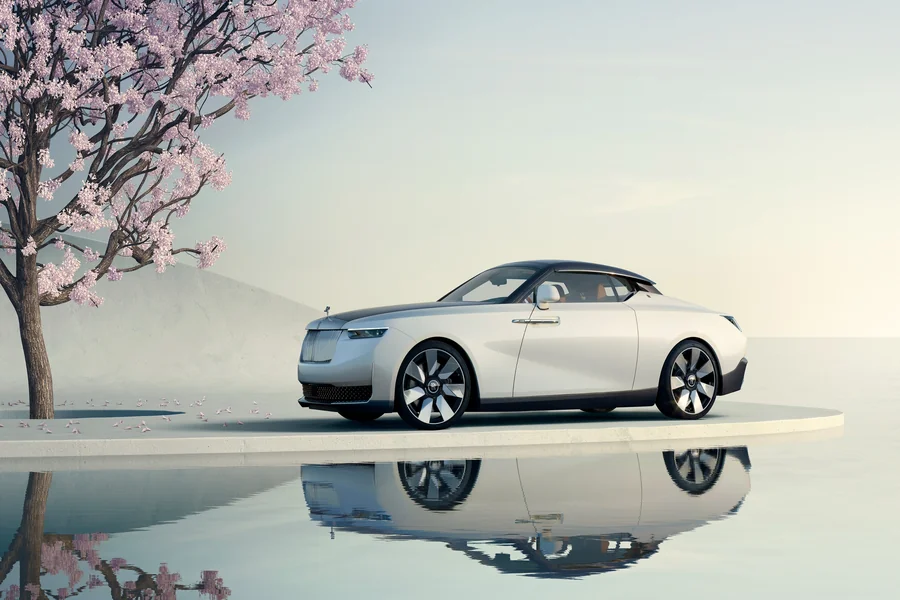
As of 2026, the title mostly goes to the Rolls-Royce La Rose Noire Droptail — a coachbuilt piece priced around $30 million, with just four ever built. The interior alone reportedly uses over 1,600 micro veneer panels, and the whole design theme traces back to the Black Baccara rose, right down to the name.
Close behind it is the Rolls-Royce Boat Tail, finished in a color called Oceanic Blue and commissioned for a client at roughly $28 million. Only three exist. And naturally, speculation about who actually owns them has been floating around for years without much confirmation from anyone involved.
Why does Rolls-Royce keep showing up at the top? Simple — the brand runs an entire division, Coachbuild, built for exactly this purpose: making a car that will never exist anywhere else again.
A Quick Look at the Priciest Cars Out There
Rankings shift constantly in this space, but here’s roughly where things stand based on factory pricing and reported commission values:
- Rolls-Royce La Rose Noire Droptail — around $30 million
- Rolls-Royce Boat Tail — around $28 million
- Bugatti La Voiture Noire — around $18 million
- Rolls-Royce Sweptail — around $13 million
- Pagani Zonda HP Barchetta — a tribute build, priced in the low millions
- Bugatti Centodieci — an eight-figure limited hypercar
- Koenigsegg CCXR Trevita — around $5 million, famous for its diamond-weave carbon fiber shell
None of this is fixed. One new Rolls-Royce commission, and this whole list reshuffles — these cars almost never trade hands in public, so a single sale can rewrite the order overnight.
What About Auction Records? That’s a Different Story.
Factory pricing is one thing. Auction results tell you what someone was actually, in the moment, willing to fight for — and that’s usually classic Ferraris.
A 1962 Ferrari 250 GTO sold for $38.5 million at a Mecum auction in Kissimmee, Florida, back in January 2026. That’s not even the first time this specific model has broken records; a different 250 GTO sold for over $38 million at Bonhams a decade earlier, in 2014.
But it’s not just vintage cars anymore. The first production Ferrari Luce, nicknamed Chassis 0, sold for $40 million at a charity auction during Monterey Car Week in 2026. That made it the most expensive electric vehicle ever sold, and the most expensive new car ever sold at auction, period. Worth sitting with for a second — a brand-new EV just out-earned decades-old racing legends in a bidding room. That’s a real shift, not a fluke.
Why Do People Actually Pay This Much?
There are really two different pricing logics running here, and mixing them up is where a lot of confusion starts.
Bespoke coachbuilt cars — think the Droptail, the Boat Tail — get priced almost like commissioned artwork. The manufacturer isn’t mass-producing anything; they’re building a single object around one person’s taste, and the price reflects design hours, hand labor, and an ironclad guarantee that it’ll never be copied.
Auction-record classics work differently. A 250 GTO isn’t rare because someone decided to make it rare — there are only a few dozen left in existence, each carrying a documented racing history. Buyers aren’t just purchasing a car there. They’re buying a slice of motorsport history that genuinely cannot be recreated, no matter the budget.
Different logic, same outcome: the sticker price stopped being about what the car does a long time ago.
Okay, But Who’s Actually Buying These?
Honestly? Almost nobody outside the deal ever finds out. Manufacturers rarely confirm buyer names, and most clients prefer it stay that way. What we do know is the pool of potential buyers has grown right alongside global wealth — there are now more than 58 million millionaires worldwide and close to 2,800 billionaires, and both figures keep climbing year over year.
For that crowd, a seven-figure supercar just doesn’t say enough anymore. A coachbuilt Rolls-Royce, or a record-setting Ferrari, offers something a showroom floor never can: total exclusivity, and often a direct line to the people who actually designed the thing.
The Brands That Keep Showing Up
A handful of manufacturers dominate these lists again and again, each for a slightly different reason.
- Rolls-Royce — leads the bespoke world through Coachbuild, consistently producing the highest-priced new cars on Earth.
- Bugatti — mixes genuine hypercar engineering with hand-finished detailing, easily clearing $10 million for its most exclusive builds.
- Ferrari — owns the auction world, especially with 1950s and ’60s race cars, while now pushing into ultra-luxury electric territory too.
- Pagani and Koenigsegg — compete purely on scarcity, often capping production under 25 units per model.
Each brand carved out its own lane here, which is exactly why the “most expensive” crown keeps bouncing between them instead of settling anywhere.
Is Any of This Actually Worth the Price?
Practically speaking? No, not really. You won’t get to the office any sooner if you drive a $30 million car than you would if you drove a $50,000 car, and most of the big horses spend their time in a private garage or a museum floor.
But this is a wrong measure! These cars are more like an asset to collectors than a means of transportation. A unique Ferrari can be appreciated significantly over the course of the decades. A Rolls-Royce commission is a guaranteed one-of-one — one that will never under any circumstances be repeated on a production line. These were the thin end of the wedge of buyers who weren’t price-driven. Rarity was the key word.
Final Thought
The “most expensive car in the world” title never really sits still. The entire ranking can change within a few months due to a new commission for Rolls-Royce, a wild night at auction or a surprise hypercar reveal. But the underlying logic remains largely the same: rarity, craftsmanship, history: these numbers are significantly higher, considerably higher than horsepower ever could be. Not a lot of this had anything to do with driving, whether it was a $30 million coachbuilt Droptail or a vintage Ferrari under the hammer for $38 million. It’s about having something that no one else has.