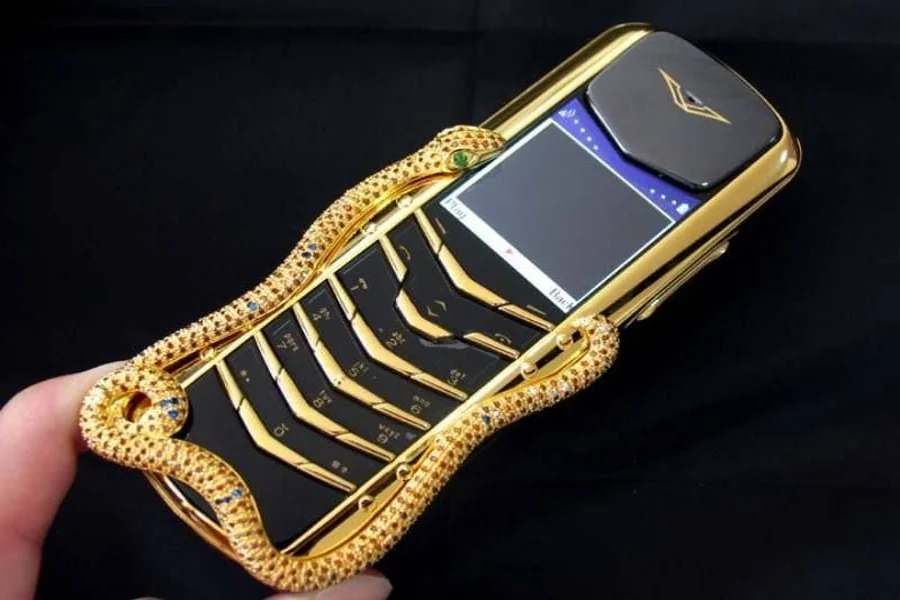
The most expensive cell phone ever made is the Falcon Supernova iPhone 6 Pink Diamond, valued at $48.5 million. This is a bit of an exaggeration, to call it a “phone” would be more than an understatement, since it is really a rare pink diamond with a functioning handset. The device is clad in 24-carat gold and adorned with a large, emerald cut pink diamond on the reverse side. It is not a matter of technology but the gemstone that is attached.
What Makes a Cell Phone the Most Expensive in the World?
The vast majority of people think that a costly phone will have a better camera, faster chip or more storage. That’s not the same when it comes to millions of dollars. You’re not getting performance for that price. You’re purchasing materials, labour and scarcity.
There are some factors that can push these prices to stratospheric levels:
- Rare gemstones – such as pink or black diamonds – that can be hundreds of thousands of dollars per carat.
- Materials such as precious metals such as 24 carat gold or solid platinum for the frame or casing
- Finished by luxury designer by hand — some are weeks in the making
- Only a few units were produced – typically one customer.
- The beginning brand, in most of these projects the brand of starting telephone is the one people are already familiar with, usually an iPhone.
You’re not paying for the software. You’re paying for the object, just like you’ll pay for a rare painting that’s hanging on a wall instead of doing anything useful.
The Most Expensive Cell Phone Ever Made
That title belongs to the Falcon Supernova iPhone 6 Pink Diamond, built by British luxury designer Stuart Hughes. When it launched in 2014, it carried a price tag of $48.5 million — still the highest ever recorded for a phone.
Almost all of that value sits in the gemstone. Exact carat weight isn’t publicly disclosed, but deep pink diamonds of comparable quality can sell for close to $700,000 per carat. Given the size of the stone on this device, it’s fair to assume the diamond alone accounts for the bulk of the price.
Strip away the diamond and the gold plating, and you’re left with the internals of a standard iPhone 6 — a phone that was already outdated by the time later models hit shelves. That gap is what makes the whole thing feel a little absurd. The hardware is ordinary. The shell around it is not.
You won’t find this phone on display anywhere, and there’s no public record of who owns it now or where it’s kept. That kind of quiet is typical for objects like this. People who buy something worth $48.5 million generally aren’t looking to advertise it.
Other Top Contenders for World’s Priciest Phones
The Falcon Supernova is in a league of its own, but a few other handsets are worth knowing about. Each one takes a slightly different route to luxury — some lean on diamonds, others on gold, one even throws in encryption.
iPhone 5 Black Diamond — $15 million. Handcrafted in 2012, this one gets its name from a rare 26-carat black diamond standing in for the home button. The chassis is solid 24-carat gold, the edges carry 600 white diamonds, and the screen is sapphire glass for extra scratch resistance. One unit took about nine weeks to build by hand.
iPhone 4S Elite Gold — $9.4 million. Another Stuart Hughes project. The bezel is handmade rose gold set with 500 individual diamonds, adding up to more than 100 carats total.
Diamond Crypto Smartphone — several million dollars. This one’s frame is solid platinum, with a rose gold logo and navigation key. It’s set with 50 diamonds, including 10 rare blue ones, and it actually has strong encryption baked in — a rare nod to function over the pure show of the others.
Goldvish Le Million — $1 million. Back in 2006, this one landed in the Guinness World Records as the priciest phone around. It’s built from 18-carat white gold, set with 120 carats of VVS-1 diamonds, and its boomerang-shaped body is still one of the more distinctive designs to come out of this whole category.
Notice the pattern. Almost every phone on this list starts as something familiar — usually an iPhone — before a designer dresses it up with precious materials. The processor stays the same. The price changes because of what’s wrapped around it.
Why Do These Phones Cost Millions?
Here’s the real question: why would anyone spend tens of millions of dollars on a phone that runs the same apps as one costing a few hundred? The answer has less to do with communication and more to do with collecting.
People buying phones like this usually care about a few things:
- Owning something no one else has — most of these are true one-offs
- Signaling wealth in a way that’s hard to fake
- Holding value in gold and diamonds, which tend to appreciate, unlike phone hardware, which is worth less the day after a new model drops
- The craftsmanship itself — weeks of hand-finishing on a single device isn’t something a factory line can replicate
None of that makes the phone work better. It just makes it worth more as an object, which is really the entire point.
How These Luxury Phones Compare to Flagship Smartphones
It helps to put these numbers next to something familiar. A flagship phone from Apple or Samsung today usually runs $1,000 to $2,000. Even the flashiest limited-edition gold phones sold through official retail channels rarely break $10,000.
The phones on this list aren’t a premium tier above that — they’re a completely different category. A $48.5 million price tag isn’t “an expensive phone.” It’s a rare gemstone that happens to include a phone as an afterthought. The technology gap between a $1,000 flagship and one of these builds is often small, and in some cases the luxury phone is running noticeably older hardware.
That’s the distinction worth remembering. Flagship phones compete on specs — camera quality, chip speed, battery life. Luxury phones compete on scarcity and materials. They’re technically the same product category, but they’re not really competing for the same buyer.
Final Thought
The Falcon Supernova iPhone 6 Pink Diamond shows how far the word “phone” can stretch once precious materials and exclusivity get involved. At $48.5 million, its value has almost nothing to do with what it does and everything to do with what it’s made of.
For most of us, this is closer to curiosity than shopping research. Few people will ever hold one of these phones, let alone own one. But they’re a good reminder of how far luxury branding can go when it’s grafted onto everyday tech. A phone can be a tool you use every day, or it can be a rare, hand-built object worth more than most houses. Apparently, both can be true at the same time.


1 Comments