Travel

What are the Dimensions of the Empire State Building?

One of the tallest skyscrapers in the world, the Empire State Building is found at the intersection of empire_state_buildingWest 34th Street and Fifth Avenue in New York City. In the Americas, it is considered the fourth highest freestanding structure. Worldwide, it is the eleventh highest. Because of these amazing feats, many people find it highly interesting. In order to become more familiar with this awesome structure, it is good to know the different dimensions of the Empire State Building.

Dimensions of the Empire State Building

What are the dimensions of the Empire State Building? In terms of height, this building stands way above the others at 1,250 feet. This measurement is only up to the 103rd floor. If you include the pinnacle, the length of which is a little more than 203 feet, the total height of this building goes up to 1,453 feet and 8 9/16 inches. From the level of the street all the way up to the 103rd floor, the total number of steps is 1,860.

In terms of total floor area, this building covers 2,768,591 square feet. The total number of faucets available inside is 9,000, while the total length of the electrical wire used is 2,500,000 feet. The height of the top floor is 1,224 feet. If you are to include the spire/antenna, the overall height goes up to 1,472 feet.

Additional Information and Other Interesting Details

The Empire State Building was constructed from 1929 to 1931. From that point in time, it was regarded as the tallest building worldwide until 1973. After that, it was surpassed by the World Trade Center. The total floor count is 102. A total $40,948,900 was spent for its construction. Floodlights were added to the building some time in 1964. These lights are highly recognizable especially during special events and other important occasions like Independence Day, Christmas and Saint Patrick’s Day.

More than 110 million people have already visited this skyscraper. One of its major highlights is the observation deck at the 86th floor. This spot in the building offers people a 360-degree panoramic view of the entire New York City. Because of the amazing view that it offers, it has been used in making literary classics, television shows as well as films.

Because of its massive and gargantuan frame, the American Society of Civil Engineers named it as part of the so-called ‘Seven Wonders of the Modern World.’ In 1986, it was considered a National Historic Landmark. In addition, the American Institute of Architects granted it the top spot of its List of America’s Favorite Architecture.

Worlds Fastest Train

The world record holder depends on the train type and specifications. Fastest TrainAmong conventional trains it is the French TGV (Train a Grande Vitesse). Its top speed is 574.8 km/h (357.18 mph), set on April 2007. Among non conventional trains it is the Japanese JR-Maglev at 581 km/h (361 mph).

The World’s Fastest Trains: Electric Multiple Units

Next to the French TGV is the SNCF TGV Atlantique Set No. 325 with speeds of up to 515.3 km/h. This was recorded on 18 May 1990. At third place is the same train. On 5 December 1989 it reached a top speed of 482.4 km/h. All three were set in France.

At number four is the SNCF TGV Sud-Est Set No. 88. Its top speed is 408.4 km/h. This speed was recorded on 12 December 1988 (France). At number five is the InterCityExperimental (ICE-V) which has a top speed of 406.9 km/h. This was set on 1 May 1988 in West Germany.

The World’s Fastest Trains: Hovertrains

At number one is the Aérotrain -80 Haute Vitesse (HV). It has a maximum speed of 430.4 km/h, set on 5 March 1974. The Aérotrain 02 is in second place. Its top speed is 422 km/h established on 22 January 1969. The Aérotrain 02 also holds the record for the third fastest at 345 km/h set on November 1967.

The Aérotrain 01 is at number four with speeds of up to 303 km/h. This was set on 23 December 1966. The Aérotrain 01 is also at number five. It was recorded traveling at 200 km/h sometime around February 1966. This took place in Gometz-la-Ville, France.

The World’s Fastest Trains: Maglev

The JR-Maglev MLX01 is at number one with speeds of up to 581 km/h. This was set on 2 December 2003 during a test drive in Japan. The JR-Maglev MLX01 also holds the record for second fastest. On 14 April 1999 it was recorded moving at 552 km/h. Both records were set in Japan.

The JR-Maglev MLX01 is also the third fastest. On 24 December 1997 it reached speeds of up to 550 km/h. On 12 December 1997 the JR-Maglev MLX01 was recorded traveling at 531 km/h, good for fourth place. The JR-Maglev ML-500R is at fifth place. Its top speed is 517 km/h established on 21 December 1979 in Japan.

The World’s Fastest Trains: by Average Speeds

The TGV is at the top with an average speed of 306.4 km/h set on 26 May 2001. The ETR 200 is at second place with 165 km/h set on 20 July 1939 in Italy. The Pioneer Zephyr is the fourth fastest at 124 km/h (established on 26 May 1934). At fifth is the LNWR No. 790 Hardwicke, reaching speeds of up to 112 km/h. This was back in 22-23 August 1895.

Rocket Sleds

An unmanned rocket sled was set on rails on 30 April 2003. It reached a top speed of 10430 km/h. This would make it the fastest vehicle (not just trains) set on rails.

The records for the world’s fastest trains can be very extensive. Other train types like electric locomotives, diesel, jet and steam trains have their own speed records.

Tallest Building in the World

The tallest building in the world is the Burj Khalifa in Dubai. It is 828 m (2,717 ft) high. The next tallest building is the Taipei 101 which stands 509 m (1,671 ft).

Burj Khalifa Vital Statistics

Construction of the building began on 21 September 2004 and was completed on 1 October 2009. It opened on 4 January 2010. The floor area is 334,000 sq m or 3,595,100 sq ft. There are 160 habitable floors together with 46 maintenance levels at the spire.

There are two parking levels at the basement. The total cost of the project is $1.5 billion. 45,000 m3 (58,900 cu yd) of concrete were used to create the foundation.

Records Held by the Burj Khalifa

Not only is it the tallest building in the world; it is also the tallest man made structure ever made. The former record holder was the Warsaw radio mast at 646.38 m or 2,121 ft. The Burj Khalifa is also the tallest extant and freestanding structure.

It has the most number of floors with 160 (the old record was held by the Willis Tower with 108). It also has the highest elevator installation. Its elevators are also the fastest, reaching speeds of up to 64 km/h (40 mph) or 18 m/s (59 ft/s).

The vertical pumping is 606 m (1,988 ft), exceeding the old record of the Taipei 101 (449.2 m/1,474 ft). The Burj Khalifa also has the highest observation deck on the planet, located at the 124th floor.

The tallest building in the world also has the highest situated mosque on the 158th floor. The glass and aluminum facade was installed at 512 m (1,680 ft), another record. The building has 24,348 windows.

Other Facts and Figures

The spire is made up of 4,000 tons (4,400 ST; 3,900 LT) of steel. The middle pinnacle pipe weighs 350 tons. The interior cladding is comprised of 142,000 sq m (1,528,000 sq ft) of aluminum, reflective glazing, and stainless steel spandrel panels.

The floor plans are as follows: B1–B2 are for parking and mechanical. The concourse, ground and floors 1–8 are for the Armani Hotel. Floors 9–16 are for the Armani Residences; floors 17–18 are
mechanical and floors 19–37 for Armani Residences.

The 38–39 floors of the tallest building in the world are for the Armani Hotel suites. 40–42 are mechanical and the 43rd floor is the sky lobby. 44–72nd floors are residential, 73–75 mechanical, 76 sky lobby and 77–108 residential.

The 109–110 are mechanical, the 111–121st floors corporate suites and the 122nd floor the At.mosphere restaurant. Floor 123 is the sky lobby, 124 the At the Top observatory and the 125–135 floors corporate suites. 136–138 are mechanical and 139–154 corporate suites. Floor 155 is mechanical, 156-159 for broadcast, 160 and above mechanical.

The tallest building in the world also has the highest swimming pool, located on the 76th floor. The Burj Khalifa also has a fountain 275 m (900 ft) long that shoots 150 m (490 ft) high water in the air.

Landing Gear Wheel Dimensions

An aircraft’s landing gear is otherwise known as the undercarriage. This is the part of the airplane which is a structure made of several parts that supports it while on the ground. With it an aircraft can land, take off, and taxi. The most common type of undercarriage everyone is familiar with is a landing gear wheel. The other types of landing gears include floats and skids.

Landing Gear Wheel Sizes

Landing gear wheels are the most common type of undercarriage and are the ones most people are aware of. Different aircrafts have different dimensions of landing gear wheels. Other than that each aircraft model has a different sized wheel as well. The size and dimensions of the wheel will depend on many factors including the size and capacity of the aircraft.

For instance, if we compare two different models we will immediately see a difference in the dimensions of each model’s nose wheel. A Boeing 747-200 will have its nose wheel dimensions as follows: ply rating 30/32; dimensions 49 x 17 tire. However, a Boeing 767 H32 X will have the nose wheel dimensions as follows: ply rating 20/22; dimensions 14-15. A Douglas DC-9-50 will have tire dimensions at 26.6 x 6.6CH and a 10 ply rating. A Douglas DC10-30 has tire dimensions as 40 x 15.5 and 26/28 ply rating.

Gear Arrangements

Depending on the type of aircraft you’re looking at, there will be different gear arrangements on the each plane. There are basically a couple of conventions regarding gear arrangement. First arrangement has a couple of main wheels at the plane’s front and a smaller wheel at the rear. This type of arrangement is called the conventional undercarriage.

The second type of arrangement is called the tricycle undercarriage. Obviously there will be three wheel assemblies for this type of gear arrangement. Two of these assemblies are located underneath the wings and the third one is under the nose. As you might have guessed, the conventional undercarriage was popular when planes only used propellers and the tricycle undercarriage are more common with today’s modern aircrafts.

Dealing with Larger Aircrafts

Dealing with larger airplanes will of course necessitate the use of larger gears. Not only would you expect that the gears on these colossal aircraft to be a lot larger than what you imagine, there will also be more gears mounted on a larger aircraft as well. The bigger the airplane the more wheels were usually added. For instance the Antonov An-225 has as many as 32 tires mounted onto it.

Another feature of new landing gears is that they are now retractable. This is quite common today since the design is now made more aerodynamic. The size and number of gears on an aircraft will depend on its overall capacity and weight.

Dimensions of a Hang Glider

Since its emergence, hang gliding has become a very popular sport. There are now numerous models available. Some of them are listed below.

Dimensions of a Hang Glider: Amour 139 and 159

The Amour 139 hang glider has a wing area of 12.5 m2 and wing span of 8.85 m. The aspect ratio is 6.3 and the minimum pilot weight is 48 kg. The maximum pilot weight is 80 kg. The nose angle is 121 degrees. The Amour 159 has a wing area of 14.6 m2 and wing span of 9.85 m.

The aspect ratio is 6.7 and the hang glider weight is 29 kg. The minimum pilot weight is 64 kg and the max pilot weight is 93 kg. The minimum speed is 24 km/h and the maximum speed is 93 km/h. The max glide ratio is 11.5 L/H. The packed length is 5.9 m.

Dimensions of a Hang Glider: Breeze and Ace

The wing area of the Breeze hang glider is 15 m2 and the wing span is 9.4 m. The aspect ratio is 5.6 and the hang glider weight is 27 kg. The minimum pilot weight is 65 kg. The maximum pilot weight is 80 kg.

The minimum speed is 25 km/h and the maximum speed is 80 km/h. The maximum glide ratio is 10 L/H. The maximum glide ratio speed is 50 km/h. The nose angle is 15 degrees.

The Ace 150 has a 13.9 m2 wing area and 9.6 wing span. The packed length short is 4.2 m. The battens are 32 and the angle is 122 degrees.

Dimensions of a Hang Glider: ASG 21

The ASG 21 AA has a 12.1 m2 wing area and 9.4 wing span. The aspect ratio is 6.4. The hang glider weight is 20 kg. The minimum pilot weight is 50 kg and the maximum pilot weight is 61 kg. The packed length is 4.88 m. The ASG 21A has a wing area of 13.5 m2 and a wing span of 8.8 m.

The aspect ratio is 6.4 and the hang glider weight is 20 kg. The minimum pilot weight is 59 kg and the maximum pilot weight is 70 kg. The packed length of the ASG 21A hang glider is 5.18 m and the nose angle is 118 degrees.

Dimensions of a Hang Glider: Archaeopteryx

The Archaeopteryx was made in 1998 and is designed only for advanced pilots. The wing area is 14 m2 and the wing span is 13 m. The aspect ratio is 12.07 and the hang glider weight is 45 kg.

The minimum pilot weight is 7 kg and the maximum pilot weight is 110 kg. The minimum speed is 29 km/h and maximum speed is 140 km/h. The maximum glide ratio of the Archaeopteryx is 24 L/H. The minimum sink rate is 0.6 m/s. The packed length is 6 m.
 
The dimensions of a hang glider as specified here are a demonstration of the different varieties you will come across. Manufacturers are continuously coming up with new designs to entice aficionados.

Ticket Machine Dimensions

The ticket machine is a vending machine that generates tickets. Whatever the size, the process is the same. The person chooses the ticket type and quantity from the display. After choosing the payment method, the ticket is generated.

Ticket Machine Dimensions: the Thomas 3004

The Thomas 3004 free standing fee collecting and ticket machine is 1690 mm high, 695 mm wide and 425 mm deep. It weighs 170 kg. Voltage is 240, 220 or 110. The power is 185 watts. The machine has a programmable layout, allowing changes to the payout denominations.

The 3004/2 model has 2 hopper payout systems while the 3004/3 has three. The capacity of the 3004/2 is 12,000 and for the 3004/3 it is. This is based on the GBP 1 coins, which measure 22.5 mm in diameter and are 3.1 mm thick. The coin size limit is 31 mm.

Other Features of the Thomas 3004

The ticket machine dimensions of the Thomas 3004 means the size of the crate when shipped is 1800 x 815 x 730 mm. The weight is 215 kg gross. In terms of security features, the machine uses a combined banknote reader with note stacker.

The note cassette can be removed and comes with a lock. Another lock may be added. Other security features include a 3 mm steel cabinet, an electronic coin system and an 8 point security lock at the main door. On the base door is a 4 point security lock. The electronic meters permit full audit.

Ticket Machine Dimensions: the Thomas 4003

The Thomas 4003 free standing ticket machine is 1690 mm high, 695 mm wide and 425 mm deep. It weighs 185 kg. The voltage is 240, 220 or 110 with 185 watts. It comes in two models, the 4003/2 and the 4003/3, 17,000.

The 4003/2 has two hopper payout systems and a banknote dispenser. The 4003/3 has 3 hopper payout systems along with the banknote dispenser. The capacity of the 4003/2 model is 12,000 and for the 4003/3 it is 17,000. This is based on the dimensions of the GBP coin. The maximum coin size is also 31 mm.

Other Features of the Thomas 4003

The ticket machine dimensions of the Thomas 4003 allow for a banknote capacity of 1,000. Among its security features are the 3 mm steel cabinet, the detachable one lock cassette and two locking systems on the door.

For the main door it uses the 8 point locking mechanism and for the base door, the 4 point mechanism. It also has a door open alarm.

In terms of operation, the machine permits the customer to choose the payout combination. The system can also be fitted with a skirt mounted printer.

Additional options are a side change logo and moving top box message display. In terms of shipping, the weight is 230 kg gross and the dimensions are 1800 x 815 x 730 mm.

The ticket machine dimensions vary. The ones used for buses, trains and tram stations all have different specifications. It all depends on the manufacturer.

Train Ticket Dimensions

The standard size of train tickets is 2-1/4 in. long and 1-3/16 in. wide. The dimensions were set down by Thomas Edmondson, who invented the Edmondson tickets back in the 1840s. Although the Edmondson ticket system is no longer used in some countries, the dimensions are still utilized.

How the Edmondson Ticket System Works

The tickets are printed on cards with numbers on them. A machine is used to date stamp each one. The tickets are stored in a cupboard where the highest number for each type can be seen. Colors are used to distinguish between the different types.

The half fare was made by putting a diagonal cut crossways on the ticket. This means the value is cut in half, regardless of the size of train tickets. The other half can be utilized as credit or on another person. The half fare is usually for children.

In other countries, half tickets were made by putting a horizontal slice a third of the ticket. As time went by, tickets for children started being issued.

At the back of the ticket are printed the terms of agreement. This varies depending on the railway that issued the ticket. In other countries, the back is filled with pictures of other travel destinations.

History of the Railway Ticket

The origin of the train ticket began when stage coaches were still the primary mode of transport. A passenger had to make reservations 24 hours ahead of time. The booking offices were inns. The George in Borough High St, London is an example.

The passenger would go to the inn and make the travel arrangements and a copy of the ticket was given to them. Note: the size of train tickets were not standardized then.

The Emergence of the Edmondson Tickets

In 1836, Thomas Edmondson became station master at Milton at the Newcastle and Carlisle Railway. Seeing the disadvantages of the then current arrangement, he designed a system wherein the passengers were identified using numbers instead of names. His system included stating down the name and class of the tickets. These were printed on cardboard and numbered.

This was followed by the creation of the ticket dating machine. There is a remnant of a ticket used by the London and Greenwich Railway Company. The cardboard ticket is 3-1/2 in. by 2-1/2 in.

Size of Train Tickets Elsewhere

The Edmondson tickets may be the standard, but other types emerged. There are some European rails that measure 1-1/2 in. by 5/8 in. In Lithuania, the tickets are 5 inches long. The tickets used in Malta are 1 sq m. In British North Borneo, some tickets are circular in shape.

In Japan, the return tickets are twice the size of the single tickets. Among the biggest tickets issued were those in Persia. The Persian State Railway issued a ticket 8 inches by 4 niches.

In certain parts of the United States, some tickets are 15 inches long. In terms of the size of train tickets, these are probably the largest.

Dimensions of a Jumbo Jet

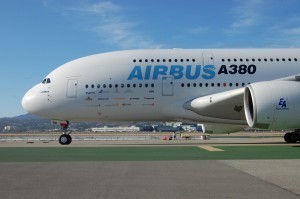
The jumbo jet is a general term used for any type of large aircraft. The following are some of the biggest aircraft ever made.

Dimensions of a Jumbo Jet: C-5 Galaxy

The length is 247 ft 1 in (75.31 m) and the height is 65 ft 1 in (19.84 m). The payload is 270,000 lb (122,470 kg) and the wingspan is 222 ft 9 in (67.89 m). The wing area is 6,200 ft2 (576 m2). The empty weight is 380,000 lb (172,370 kg) and the loaded weight is 769,000 lb (348,800 kg).

The maximum takeoff weight is 840,000 lb (381,000 kg). The top speed is Mach 0.79 (503 kn / 579 mph, 932 km/h). The cruise speed is Mach 0.77 and the range is 2,400 nmi. The ceiling is 35,700 ft (10,600 m). The rate of climb is 1,800 ft/min (9.14 m/s) and the landing roll is 3,600 ft (1,100 m).

Dimensions of a Jumbo Jet: Antonov An-124

The Antonov An-124 is 68.96 m (226 ft 3 in) long with a wingspan of 73.3 m (240 ft 5 in). The plane is 20.78 m (68 ft 2 in high. The payload is 150,000 kg (330,000 lb). The wing area is 628 m2 (6,760 sq ft). The empty weight is 175,000 kg (385,000 lb), while the loaded weight is 405,000 kg (893,000 lb).

The takeoff weight limit is 405,000 kg (893,000 lb). The maximum speed is 865 km/h (467 kn / 537 mph). The cruise speed is 800-850 km/h (430 kn / 490 mph). The service ceiling is 12,000 m (35,000 ft). The wing loading is 365 kg/m2 (74.7 lb/sq ft) and the thrust/weight is 0.41.

Dimensions of a Jumbo Jet: 747-300

The 747-300 is 231 ft 10 in (70.6 m) long with a wingspan of 195 ft 8 in (59.6 m). The tail height is 63 ft 5 in (19.3 m). The empty weight is 392,800 lb (78,100 kg). The maximum takeoff weight is 833,000 lb (377,842 kg).

The cruising speed is Mach 0.84 (893 km/h, 555 mph). The top speed is Mach 0.89 (955 km/h). The maximum range is 6,700 nmi (12,400 km). The fuel capacity is 52,410 U.S. gal. The cockpit crew is three, with a seating capacity of 496 (2-class) / 412 (3-class).

Dimensions of a Jumbo Jet: Shuttle Carrier Aircraft

The Shuttle Carrier Aircraft is 231 ft 4 in (70.5 m) and the wingspan is 195 ft 8 in (59.7 m). The wing area is 5,500 ft2 (510 m2). The height is 63 ft 5 in (19.3 m). The maximum takeoff weight is 710,000 lb (322,000 kg) while the empty weight is 318,000 lb (144,200 kg).

The cruising speed is Mach 0.6 (735 km/h, 457 mph). The range is 1,150 mi (1,000 nmi, 1,850 km) and the service ceiling is 15,000 ft (4,500 m). The crew is four (pilot, co-pilot and two flight engineers).

The dimensions of a jumbo jet continue to expand as demand for comfortable air travel increases. Along with an increase in physical size, safety features are implemented in new models.

Seat Dimensions

The following airline seat guide is for the long haul economy type. These measurements do not necessarily apply to the short haul or premium economy class.

Airline Seat Dimensions: List I

AeroMexico has a seat width of 17.9" and a seat pitch of 32.0", while Air Berlin seats are 17.0" wide with a seat pitch of 30.0". Air Canada seats are 17.84" wide and the seat pitch is 31-33.0". Air China seats are 18.0" wide with a seat pitch of 34.0".

The seats for Air France are 18.0" wide and have a 32.0" seat pitch. The seat width at Air India is 17.4" and has a seat pitch of 31-33.0". For Aer Lingus, the seat width is 17.0" and the seat pitch is 31.0".

Airline Seat Dimensions: List II

For Air New Zealand, the seat width is 17.5" while the seat pitch is 32.0". The seats for Air Pacific are 17.0" wide with the seat pitch at 32.0". For Alitalia, the seat width is 17.0" and the pitch is 32.0". For Aeroflot Russian Airlines the seat width is 18.0′ and the seat pitch is 32.0”.

The seat width at American Airlines is 17.2" and the seat pitch is 30.0". For Asiana, the seat width is 17.0" and the seat pitch is 33.0". For Delta Air Lines, the seat width is 17.0" while the seat pitch is 31-32.0".

Airline Seat Dimensions: List III

The seat width at El Al Airlines is 18.0" and the seat pitch is 32.0". The Emirates seat width is 17.5" and the seat pitch is 32.0". For Etihad Airways, the seat width is 17.0" and the seat pitch is 31.5-33.0". For EVA Air, the seat width is also 17.0", but the seat pitch is 33.0". Gulf Air seats are 18.0" wide and the seat pitch is 32.0".

The seats in Hainan Airlines are 19.0" wide and the seat pitch is 32-34.0". At Japan Airlines (JAL), the seat is 17.0" wide and the seat pitch is 30-32.0". For Jet Airways, the seat is 18.0" wide and the seat pitch is 32.0". The seats at Royal Brunei Airlines are 18.0" wide and the seat pitch is 32-34.0".

Airline Seat Dimensions: List IV

At Kenya Airways the seat is 17.0" wide and the seat pitch is 32.0". The seats at KLM are 17.5" wide and the seat pitch is 32.0". Korean Air seats are 17.2" wide and have a seat pitch of 33-34.0". At LAN Airlines, the seat is 18.0" wide and the seat pitch is 32.0". At Lufthansa, the seats are 17.5" wide and the seat pitch is 32.0".

At Malaysia Airlines, the seats are 17.0" wide and the seat pitch is 34.0". For Northwest Airlines, the seat width is 17.17" and the seat pitch is 33-34". At Philippine Airlines, the seats are 18.0" and the seat pitch is 32.0". At Qantas Airways, the seats are 17.2" wide and the seat pitch is 31.0".

When looking at seat dimensions, keep in mind that the seat pitch refers to the distances between seat rows. The seat sizes may differ slightly per aircraft.

Sled Dimensions

Sleds have a variety of uses, from agriculture to hauling stuff. As these Koenders sleds show, their functions have a direct effect on the features.

Dimensions of a Sled: Snow Tracker II

The Snow Tracker II measures 33" wide x 32" high x 72" long (without the musher section). The bottom sled size is 33" wide x 22" high x 72" long. The lid sled (which can be removed) measures 32" wide x 11" high x 58" long. With the mush bar option the sled is 31" wide x 22" long x 20" high (bar height is 42").

The musher can be attached to allow for more cargo. The cargo capacity is 26 cu ft. The swivel hitch is heavy duty and is spring loaded. The unit is comprised of tough medium density polyethylene and the lid can be inverted. There are five mold in runners set on the bottom.

Dimensions of a Sled: Trapper and Hunter Sleds

The Trapper sled measures 24" high x 24" wide x 76" long (this is with the lid). The lid dimensions are 4.75" high x 58.75" long x 21.5" wide. The sled is intended for use in hunting or outfitting. The lid can be taken off and used as another sled, allowing for transportation of more gear. There are 4 runners at the bottom and comes with a spring loaded hitch.

The Hunter 8’ model measures 96” long x 12” deep x 24” ID – 30” OD wide. The 6’ model is 81” long x 9” deep x 19” ID – 25” OD wide. The incline is 23”, making snow travel easier. The sleds have spring loaded hitches and molded in sleigh runners.

Dimensions of a Sled: Universal and Explorer Sleds

The sled is 37” wide x 10” deep x 83” long and 31" wide on bottom on the inside. The sled is designed for utilization in the farm. A spring loaded hitch is included to facilitate pulling. There are four molded in runners and the sides are ribbed.

The Explorer sled measures 14" high x 26" wide OD (22" ID) x 64.5" long. There is a 1” lip at the top for fastening the load. The back and front are sloped and it has 3 mold runners. The Explorer sled is rotationally molded and intended for use in different weather conditions.

Dimensions of a Sled: Calf and Dura Sled

This sled measures 24” wide x 11” deep x 48” long and is intended for use with cattle. The unit can be fitted with a mesh kit, useful for keeping the calf in place. The Dura sled measures 22” wide x 5” deep x 43” long. It is an all-purpose sled and can be ridden during the winter. The bottom is ribbed (for additional strength). Sled runners are 2” wide x 5/8” deep.

Sleds for strictly recreational purposes also come in a variety of designs. However, the dimensions of a sled and durability have to be the priority especially if it will be used by young people.


  • Dimensions of a Baby Monitor

    A baby monitor is one of the best ways to keep an eye on infants wherever you may be. Explore the differences in ba...

  • Stem Glass Dimensions

    People call stemware or stem glasses by many different names due to its many variants. Accordingly, stem glass dime...

  • Apricot Sizes

    The apricot is a tree that grows in areas with cold climate. Apricot fruits are rich in potassium, vitamin A and vi...

  • Umbrella Sizes

    There are various sizes of patio umbrellas available in the market today. Determining the right size of patio umbre...

  • Dimensions of a BBQ Smoker

    In choosing a BBQ smoker, the two things that you should take note of are the dimensions of a BBQ smoker and its va...