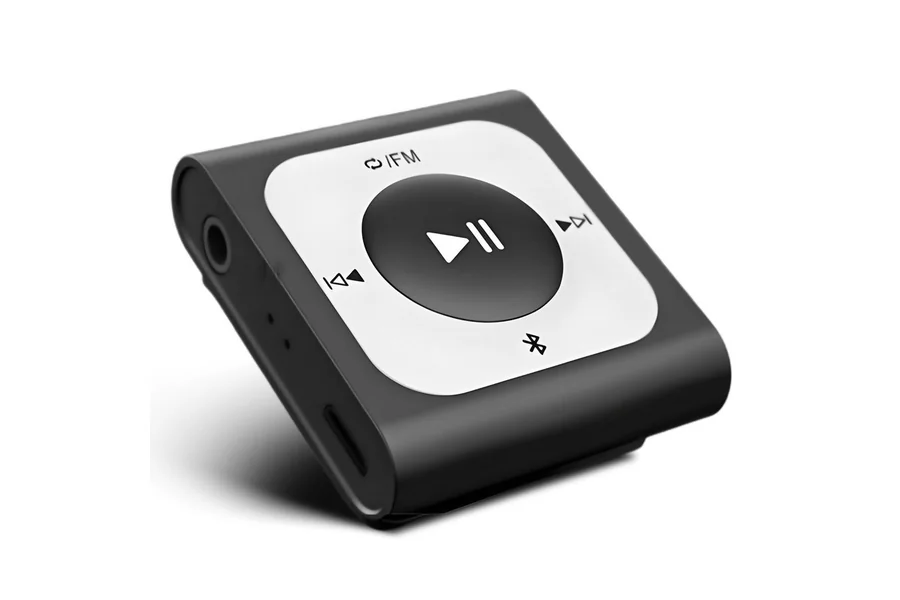
A smallest MP3 player is a compact digital audio device, sometimes no bigger than a coin, built to store and play music without the weight or distractions of a smartphone. The majority weigh less than 20 grams, and store from 4GB to 32GB of music. The reason that these are used by runners, swimmers, students and commuters is simple: they play songs and nothing else. Some models also include Bluetooth technology, waterproofing or a clip to attach to your body while exercising rather than tucking a phone in your pocket.
Why Smallest MP 3 Players Haven’t Disappeared
It seems like these should have been around long before smartphones were invented. They haven’t and there is a reason for this.
Phones are filled with notifications, text messages and apps all vying for your attention. So even if you turn off all the ringtones and vibrations, there’s a temptation to check something that’s still in your pocket. All of that is skipped by a dedicated MP3 player. Avoid looking at an inbox or opening an app by mistake. You click play and you’re done!
You’ll also find a money angle. That’s a costly mistake if you drop it while hiking or exercising in the gym. You toss a $25 MP3 player and say, “Oh well.You drop a $25 MP3 player and say, “Oh well.
Parents such as these too. A child doesn’t have to have a screen, log in, or Internet access to listen to music or a bedtime story. That’s enough reason to take a second look at these devices in 2026.
What Actually Matters When You’re Shopping
Size gets all the attention in marketing copy, but it’s rarely the only thing that decides whether you’ll like the device six months from now.
A few things worth checking before you buy:
- Storage – 4GB covers around 1,000 songs; go bigger if you also load podcasts or audiobooks.
- Battery life – Ten hours is the baseline; some models push past 20.
- Bluetooth – Handy if you already own wireless earbuds and don’t want another cable.
- Water resistance – Non-negotiable for swimmers, nice-to-have for everyone else.
- Screen or no screen – Screenless models are usually smaller but harder to navigate by feel.
- Clip attachment – Common on models built for running or cycling.
- Buttons vs. touch – Physical buttons win when you’re moving and can’t look down.
None of these is inherently better. It depends on what you’re actually going to do with the thing.
The Main Types You’ll Come Across
Small MP3 players aren’t all built the same way, and the differences matter more than they might seem at first glance.
Clip-style models are the smallest of the bunch. They attach to a waistband or shirt collar and usually skip the screen entirely, relying on a couple of buttons for play, pause, and skip. Runners and cyclists tend to gravitate toward these.
Stick-style players look a bit like a USB flash drive. They’re a little bigger than clip models but still pocket-sized, and most include a tiny screen for browsing your library.
Then there are the waterproof ones, often sold with bone-conduction headphones built in. Sound travels through your jawbone instead of your ear canal, which is why these work underwater when regular earbuds would fail.
Bluetooth models round out the list. Pair one with wireless earbuds and you get most of the convenience of a smartphone’s audio setup, minus the smartphone.
Just How Small Can These Things Get
Manufacturers keep pushing the size down, and some current models are barely larger than a large coin — lighter than a AAA battery in some cases.
To hit that size, most drop the screen completely. Navigation happens through voice prompts or button combinations you memorize after a day or two. It sounds awkward on paper, but in practice, most people are just hitting play on one playlist anyway, so the lack of a screen barely registers.
The catch is battery size. Smaller housing means a smaller battery, which means less playtime between charges. If you’d rather have six extra hours of music than shave off a few grams, check the spec sheet closely before you commit to the tiniest option on the shelf.
Who Actually Gets the Most Out of One
Some people will love these devices immediately. Others will barely notice the difference from using a phone.
Runners and gym regulars notice the weight difference right away — no phone bouncing in an armband, no risk of a $900 screen cracking on the pavement.
Swimmers get something a phone can’t offer at all: safe, underwater listening through waterproof, bone-conduction models.
Commuters who are tired of getting pulled into their phone every five minutes often switch over just to reclaim a quiet ride.
Students studying for exams sometimes use one to run through audiobooks or lecture recordings without the pull of social media sitting one tap away.
And parents buying a first music device for a child usually pick an MP3 player specifically because there’s no browser, no app store, and no camera to worry about.
Storage and Battery, in Plain Terms
These two specs decide more about your day-to-day experience than anything else on the box.
A 4GB player fits around 1,000 songs, which covers most people who just want a solid rotation of favorites. If your library’s bigger, or you’re loading in audiobooks and podcasts too, look at 16GB or 32GB instead.
Battery life swings a lot between brands. Basic clip models often land in the 10-to-15-hour range, while some Bluetooth versions stretch to 20. Charging times matter too — most take one to two hours over USB to fill back up.
If you’re using the device daily, lean toward longer battery life over extra storage. Running out of power halfway through a workout is more annoying than running out of new songs.
MP3 Player or Just Use Your Phone?
Fair question. Phones do more — streaming, synced playlists, podcasts, videos, the works.
But that flexibility comes at a cost for pure music listening. Phones are heavier, more fragile, and more expensive to replace. Battery gets split between music and everything else running in the background, so playback time often takes a hit you didn’t plan for.
A dedicated MP3 player isn’t trying to replace your phone. It’s solving a narrower problem — reliable, distraction-free music — and it tends to do that one job better than a device trying to do fifty things at once.
How to Pick the Right One for You
The right choice comes down to matching the device to how you’ll actually use it, not to whatever’s ranked highest on a review site.
Start with where you’ll wear it most. Swimmers need waterproofing. Runners want a clip that won’t slip. Commuters might care more about battery life than any of that.
Think about how you’ll load music onto it. Most connect over USB, and some support simple drag-and-drop transfers, while others need dedicated software — worth checking against your computer setup before you buy.
Skim through user reviews for battery performance specifically, since real-world numbers don’t always match the box. And check the return policy, just in case the button layout or size doesn’t feel right once it’s in your hand.
If it comes bundled with earbuds, look for reviews that mention fit and sound quality. Those details shape how much you’ll actually enjoy using it, more than any spec sheet will.
Keeping It Running for the Long Haul
A little upkeep goes a long way with these devices.
Remove it from the charger when it is charged, do not leave it on overnight. When not in use, store in a dry place, particularly if not waterproof. Periodically use a dry brush to remove dust from the charging port — dust accumulating in the port can be a frequent cause of unreliable charging.
If there are any firmware updates, download and install them. They also make little tweaks here and there, or extract a few more watts from a battery, and that’s worth something over a year of use.
Final Thought
The smallest MP3 player is proof that sometimes, smaller can be better, at least when it comes to one particular thing: playing your music without all the noise a phone brings. These devices take the frills out of all of these activities, whether it’s swimming laps, running a 5K or getting through a commute without checking your phone six times. You’ll find it will become a permanent addition to your gym bag or backpack once you select one that meets your storage needs, has a good battery life, and is in keeping with your routine.