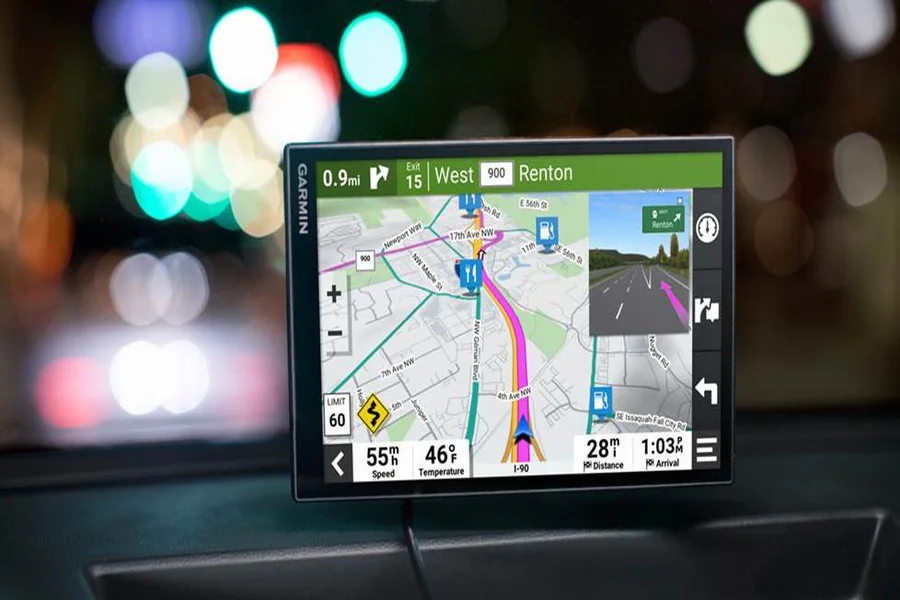
GPS navigators aren’t one standard size. Car units typically run 4 to 7 inches diagonally, with the actual device adding another half-inch or so around the edges for the casing and buttons. Handheld units, the kind you’d take hiking or out on a boat, stay smaller — usually 2 to 3 inches — because durability and battery life matter more than screen real estate out there. Then there’s your phone, which handles navigation just fine but comes in whatever size you already own. The right choice really just comes down to where the device is going to live.
Why Size Actually Matters Here
It’s easy to treat this as a minor spec, but it isn’t. A tiny screen crammed with city streets is hard to read at 45 mph. A huge screen might not even fit your dashboard, or worse, it blocks part of your windshield view.
Get the size wrong and you end up glancing down more than you should, which is exactly what you don’t want while driving. Get it right and the whole experience just feels smoother — you barely think about the device at all.
Standard Car GPS Sizes
Most dashboard units fall into three rough categories.
- Compact, 4 to 5 inches. Light, easy to stick on smaller windshields, fine for drivers who just want basic turn-by-turn without extra bulk.
- Mid-size, 5 to 6 inches. This is what most people end up buying. Big enough to show lane guidance clearly, small enough to not take over the dash.
- Large, 7 inches and up. Common in trucks and RVs, where drivers need to read alerts from farther away, and truck-specific routing is often built in.
Garmin and TomTom both sell across all three ranges, so honestly the decision usually comes down to your vehicle and how far you sit from the windshield, not availability.
Handheld and Outdoor GPS Sizes
Handheld units are built for a completely different job — surviving drops, rain, mud, whatever the trail throws at them. That means the screen shrinks so the body can toughen up.
Most sit around 2 to 3 inches. You’re trading a bigger display for something that fits in one hand and won’t die on you halfway through a three-day hike. A few outdoor models skip the screen entirely and rely on buttons, purely to stretch battery life on longer trips.
Bike and Motorcycle GPS Sizes
Cyclists need something small enough for handlebars but still readable while moving, which is a tricky balance.
Bike computers usually land between 2 and 3.5 inches — light is the priority here. Motorcycle units run a bit bigger, often 4 to 5 inches, since riders need to see the screen clearly at highway speed. These are also built tougher, with glare-resistant, waterproof displays.
Smartphone GPS: The Wildcard
Phones are the default for a lot of people now, and their “size” just depends on whatever phone you’re carrying. Compact phones sit around 5.5 to 6 inches; the bigger ones push past 6.5.
The real draw isn’t screen size, though — it’s flexibility. One device handles maps, calls, music, everything. The catch is visibility. Phone screens tend to wash out in direct sunlight in a way dedicated GPS units, built specifically for outdoor glare, don’t.
Picking the Right Size for You
This really comes down to matching the device to what you’re actually doing with it.
- Daily commuting: 5 to 6 inches hits the sweet spot between readability and dash space.
- Road trips or trucking: 7 inches or bigger, so you can read directions without squinting.
- Hiking or backcountry travel: 2 to 3 inches, rugged build, battery over screen size.
- Cycling: 2 to 3.5 inches, keeps weight off the handlebars.
- Casual, everyday use: Your phone plus a decent mount covers most of what people need.
A unit that feels perfect in a truck cab might look oversized in a hatchback. A hiking GPS that’s great on the trail would feel small and underpowered on a six-hour highway drive. Context matters more than the spec sheet.
Screen Size vs. Physical Size
These two numbers get mixed up constantly, and it’s worth clearing up.
Screen size is just the diagonal measurement of the display — that’s the number manufacturers advertise. Physical size includes the bezel, buttons, and casing around it, which adds real width and height. So a “5-inch” GPS might actually measure closer to 5.5 by 3.5 inches once you factor in the frame and mount.
That gap matters when you’re checking whether something fits a specific mount or a tight dashboard spot. Always check the full dimensions before you buy, not just the screen number.
Weight and Size Go Together (Mostly)
Bigger screens usually mean heavier devices, though materials have improved enough that a modern 7-inch unit can weigh less than a 5-inch model from ten years ago.
For car mounts, weight mostly affects how well the thing stays put over bumps. For handheld or bike GPS, you’re the one carrying it, so weight matters more directly — a few extra ounces adds up after hours on a trail.
Quick Size Comparisons
To make these numbers easier to picture:
- Compact car GPS: About the size of a smartphone, 4 to 5 inches.
- Mid-size car GPS: A touch bigger than a phone, 5 to 6 inches.
- Truck/RV GPS: Closer to a small tablet, 7 inches or more.
- Handheld hiking GPS: Around the size of a TV remote, sometimes smaller.
- Bike GPS computer: Small enough not to block your handlebar view.
Final Thought
There’s no universal “best” size here — it depends entirely on where and how you’re using the device. Drivers generally do fine with a 5 to 6 inch screen. Hikers and cyclists are better off with something smaller and tougher. Take a minute to think about your actual use case before buying, and the right size becomes pretty obvious.