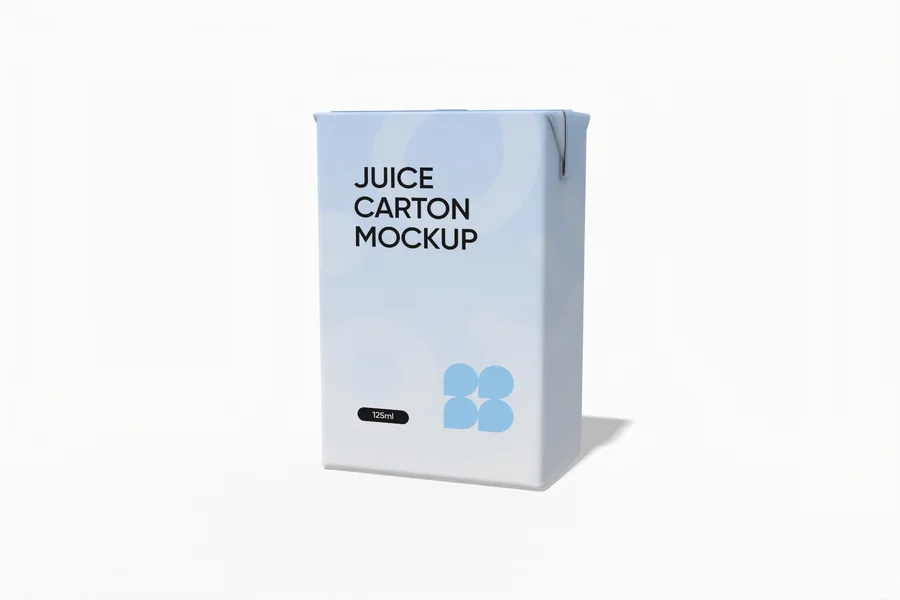
Typically, dimensions of a juice box relate to its length/width/height which influence the amount of juice it can contain, as well as make easier to store, pack and carry. The length of a small single serving box of juice is typically 3-4 inches, width is 2-2.5 inches and the height is 4-5.5 inches. The exact size will differ in various brands, carton sizes, carton designs, and packaging materials. Juice boxes are available in a variety of sizes, such as 250ml, 200ml, 180ml, and 125ml, with larger juice boxes having different proportions.
What Are The Dimensions Of A Juice Box?
A juice box is a small package, shaped in a rectangle, for holding one portion of juice or other drink. It is typically described in terms of length x width x height. These measurements give consumers, retailers, manufacturers, and shippers an idea of the actual dimensions of the package.
Juice boxes come in a variety of sizes. A 125 ml carton will be smaller than a 250 ml carton. But the volume alone is not enough to give the exact shape. The length and height of different packaging designs may be slightly different, but the volume of a milk carton is still the same as the volume of another milk carton.
For example, a typical 200 ml juice box may be approximately:
- Length: 2 to 3 inches
- Width: 1.5 to 2.5 inches
- Height: 4 to 5.5 inches
These are indicative ranges only and not industry standards. There may be some cartons that are narrower and taller, and others that are wider and shorter.
It is essential to look at the actual item for dimensions when you’re looking for a juice box. The final dimensions may be influenced by brand, capacity, packaging style and whether or not the measurements include the folded carton top.
Common Juice Box Sizes And Measurements
There are various sizes of juice boxes to meet children, adult, school lunch, events, and commercial food service requirements. The most common single-serving sizes are between 125 ml and 250 ml.
Here are some of the standard capacities of juice boxes and their approximate physical dimensions:
| Juice Box Capacity | Approximate Dimensions |
| 125 ml | 2–3 × 1.5–2 × 3.5–5 inches |
| 180 ml | 2–3 × 1.5–2.5 × 4–5 inches |
| 200 ml | 2–3 × 1.5–2.5 × 4–5.5 inches |
| 250 ml | 2.5–3.5 × 2–2.5 × 4.5–6 inches |
| 330 ml | 2.5–3.5 × 2–3 × 5–6.5 inches |
These measurements are approximate. There is no standard dimension for each volume—there are a number of different carton structures used by packaging manufacturers.
A box of 125ml juice is more likely to be used for smaller amounts or children. It is small, so it’s easy to fit in a lunch bag or school bag.
One of the more common single-serving sizes is a juice box that holds 200ml. It offers a convenient portion size without being too cumbersome to carry.
A juice box that is 250 ml will have a larger capacity and can be a bit wider or taller. Used for larger portions of food.
The actual dimensions may also vary as a result of the manufacturer changing the design of the package. The width of a carton can make a difference even if it’s a slight change.The width of a carton can make a difference even if it’s a slight change, such as fitting inside a box, a refrigerator, a vending machine or lunch bag.
Why Juice Box Dimensions Matter
The size of a juice box might appear straightforward, but there are a couple of practical scenarios that involve the dimensions. The typical consumer will be interested in the package’s size, whether it fits in a lunch bag or refrigerator. Exact measurements may be required for storage, shipment, product display, and packaging design by businesses.
For manufacturers, dimensions impact the quantity of packaging that will be needed. They are also a factor in the carton’s shape and sealing.
When products are packaged in larger quantity, retailers and distributors need to pay even more attention to the size of one juice box. A slight variation in carton sizes can influence the quantity of cartons that fit in a carton box.
Juice box dimensions have a few important uses, such as:
- Storage: Indicates the number of cartons that could be placed on a shelf or in a refrigerator.
- Lunch packing: Helps to select appropriate lunch bag or container.
- Shipping: Assists in determining carton sizes, pallet space and shipping.
- Retail display: Decides what to display on the shelves in the retail outlet.
- Packaging design: Helps manufactures design boxes more efficiently.
- Product photography: Is helpful to see what the product looks like in real life when laying out a product.
- Custom packaging: Assists businesses in creating sleeves, holders and gift packs.
In addition to the above, dimensions are also important in the design of automated packaging systems. Measuring consistency is critical for machines to move, fill, seal, label and pack cartons properly.
How To Measure The Dimensions Of A Juice Box
Juice boxes are easy to measure. All you need is a measuring tape or ruler.
Set the juice box on a level surface, without opening. Recognize length, width, and height as three of its dimensions.
The length is typically taken along the longest horizontal edge of the pack. The width is taken across the shorter horizontal. The carton’s height is the distance from the bottom of the carton to the highest point.
Simple rectangular juice box: measurements can be recorded as:
Length × Width × Height
For instance, a carton that is 2.5 inches long, 2 inches wide and 5 inches tall would be expressed as:
2.5 × 2 × 5 inches
It is important to measure the package in the same orientation each time. Otherwise, it is possible that length and width could be swapped.
Another thing you should determine is whether or not you need the main carton size or the whole package. The straw which is connected to the side, the folded top, or top that protrudes may impact overall dimensions.
To measure the shipping or storage size of a package, measure the largest exterior dimensions. This provides a more useful measure as it reflects the true space that the product takes up.
If there is a need for accuracy, repeat the measurement of the juice box. There is a possibility for small differences caused by the flexibility of paper based material used to construct cartons, and the fact that they do not necessarily have perfectly straight surfaces.
Juice Box Dimensions vs. Capacity
One would assume that a larger box of juice would be a LARGER box, right? In reality, the capacity/dimensions relationship is not so straightforward.
Capacity is the amount of liquid that a container can hold. Dimensions are the measurements of the space taken up by the container. The proportions of a carton may be altered without altering the internal volume of the carton by a manufacturer.
A 200 ml juice box might be considered taller and narrower, for instance, or shorter and wider. Both are about the same size to hold liquid.
This is possible because the volume of a rectangular box is proportional to its length, width and height. In simple terms:
The formula for volume is length x width x height.
Juice cartons, however, are not always rectangular boxes that are perfect. The folded top, closed edges, corners and inner construction may result in a capacity other than what is calculated from the exterior dimensions.
There’s also some space that’s taken up by the package itself. This is why it is crucial that the outside dimensions should NOT be used to determine an exact amount of juice in the box.
When comparing capacity, it’s typically the more useful number for consumers when they’re comparing how much juice they’re purchasing. Physical dimensions are more important for storage and distribution or packaging.
Choosing The Right Juice Box Size
It’s important to have the right juice box size depending on the use and placement. Maybe a smaller carton for kid’s serving or for shorter activities, or a larger serving for adults or longer activities.
A compact container is helpful for using in the school setting for lunch because there is space for other food items. A small lunch bag might be big enough for a 125 ml or 180 ml package.
A 200 ml carton is a convenient serving size while being portable. It can also be easily set up for groups for parties, events or school programs.
A 250ml carton provides a bigger portion, but takes up a little more space. The difference can be detected if you are packing multiple cartons together.
Don’t just think liquid capacity when selecting a juice box. Check:
- The true dimensions of length, width, and height.
- If the package has a straw or a cap.
- How many cartons must be stacked on top of each other?
- The amount of space in a lunch bag or refrigerator.
- If the dimensions are carton size, that means the outside carton, not the contents.If the dimensions are carton size, that’s the carton size, not the contents.
- The quantity of individual items in a case of goods shipped or delivered.
Use manufacturer’s published measurements for a specific purpose – such as designing a box insert or shipping container – instead of general measurements.
Final Thoughts
The size of a juice box is primarily determined by the type of size, shape and packaging design. Single-serving cartons are typically around 125 ml to 250 ml and are 4-6” tall, 2-3” wide. These numbers are just guidelines, however.
The most significant thing is that there is no standard size for juice boxes. Variations in carton proportions may be used for different brands, but would yield equal amounts of juice.
For general purposes, approximate dimensions will suffice if necessary. If you need to send products out, design them to fit the actual size of the juice box, or consult manufacturer specifications, or if they are custom packaging, measure the exact size you are working with.
When selecting a juice box, it’s easier to select the right box size and dimensions, plan storage space and compare different products. When it comes to packing a lunch or creating packaging for a beverage company, it’s important to understand the difference between capacity and physical dimensions.