plane
Landing Gear Wheel Dimensions
An aircraft’s landing gear is otherwise known as the
undercarriage. This is the part of the airplane which is a structure made of several parts that supports it while on the ground. With it an aircraft can land, take off, and taxi. The most common type of undercarriage everyone is familiar with is a landing gear wheel. The other types of landing gears include floats and skids.
Landing Gear Wheel Sizes
Landing gear wheels are the most common type of undercarriage and are the ones most people are aware of. Different aircrafts have different dimensions of landing gear wheels. Other than that each aircraft model has a different sized wheel as well. The size and dimensions of the wheel will depend on many factors including the size and capacity of the aircraft.
For instance, if we compare two different models we will immediately see a difference in the dimensions of each model’s nose wheel. A Boeing 747-200 will have its nose wheel dimensions as follows: ply rating 30/32; dimensions 49 x 17 tire. However, a Boeing 767 H32 X will have the nose wheel dimensions as follows: ply rating 20/22; dimensions 14-15. A Douglas DC-9-50 will have tire dimensions at 26.6 x 6.6CH and a 10 ply rating. A Douglas DC10-30 has tire dimensions as 40 x 15.5 and 26/28 ply rating.
Gear Arrangements
Depending on the type of aircraft you’re looking at, there will be different gear arrangements on the each plane. There are basically a couple of conventions regarding gear arrangement. First arrangement has a couple of main wheels at the plane’s front and a smaller wheel at the rear. This type of arrangement is called the conventional undercarriage.
The second type of arrangement is called the tricycle undercarriage. Obviously there will be three wheel assemblies for this type of gear arrangement. Two of these assemblies are located underneath the wings and the third one is under the nose. As you might have guessed, the conventional undercarriage was popular when planes only used propellers and the tricycle undercarriage are more common with today’s modern aircrafts.
Dealing with Larger Aircrafts
Dealing with larger airplanes will of course necessitate the use of larger gears. Not only would you expect that the gears on these colossal aircraft to be a lot larger than what you imagine, there will also be more gears mounted on a larger aircraft as well. The bigger the airplane the more wheels were usually added. For instance the Antonov An-225 has as many as 32 tires mounted onto it.
Another feature of new landing gears is that they are now retractable. This is quite common today since the design is now made more aerodynamic. The size and number of gears on an aircraft will depend on its overall capacity and weight.
Glider Wing Dimensions
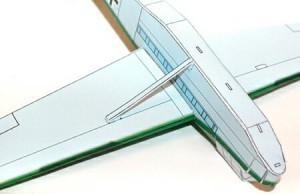
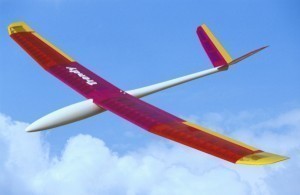
Also referred to as a sailplane, a glider is a special kind of aircraft designed
primarily for the sport called gliding. It is classified into various types, the most popular of which include the paragliders, hang gliders and motor gliders. Aside from recreation, it also serves other important functions including for research and military applications. Moreover, there are other interesting things to find out about it including the different glider wing dimensions.
The Dimensions of a Glider Wing
The wings of gliders vary in size depending on the competition class. The FAI or Federation Aeronautique Internationale has set these standards. Likewise, this international body is also responsible for governing the world records in astronautics, aeronautics as well as other air sports.
A standard-class glider comes with a 15-meter wingspan, with water ballast and no flaps. Under the 15-meter class, a glider must have a 15-meter wingspan with water ballast and flaps. For the 18-meter class, it must possess a wingspan of no more than 18 meters, with water ballast and flaps. For the open class, the wingspan is not limited as long as the glider does not exceed the maximum weight of 850 kilograms.
Aside from these basic types of gliders, there is also the two-seater class. It is commonly referred to as the Doppelsitzer, which is actually its German name. The maximum wingspan for this particular class is 20 meters. For the ultra-light class, any glider is allowed as long as it does not go beyond the 220-kilogram limit.
Additional Facts and Other Interesting Details
Gliding is a sport that is highly popular in Germany as well as in many other countries. The top German manufacturers of high quality gliders are Alexander Schleicher GmbH & Co., Schempp-Hirth GmbH and DG Flugzeugbau GmbH. Aside from Germany, other manufacturers can also be found in different eastern European countries such as Poland.
A majority of gliders do not need engines although some requires at least one to operate, such as the case of motor gliders. Sailplanes or gliders can be launched using two common methods, which are either by winch or by aerotow. Because of their low long wings, gliders commonly create a high ground effect.
To make things very convenient, gliders are equipped with a number of different technical aids and instruments. The most basic items include the airspeed indicator, compass and altimeter. Additionally, you can also find other items such as an airband radio, a turn and bank indicator as well as a variometer in many gliders. In case of accidents, the time for search and rescue can be reduced significantly with the help of an Emergency Position-Indicating Radio Beacon.
What is the size of a Boeing 767?
Like other Boeing airliners, the size of the Boeing 767 will depend on the models.
The following are some of the Boeing 767 variants that have been released.
Dimensions of the Boeing 767 200
The 767 200 has a passenger capacity of 181 for 3 class and 224 for 2 class. For 1 class it is 255. Its cargo capacity is 2,875 sq ft (81.4 m3). The length of the 767 200 is 159 ft 2 in (equal to 48.5 m).
Its wingspan is 156 ft 1 in or 47.6 m. The wing area is 3,050 sq ft (283 m2). Its fuselage height is 17 ft 9 in (5.41 m), with the width being 16 ft 6 in (5.03 m).
The cabin width is 15 ft 6 in (abut 4.72 m). The size of the Boeing 767 gives it an empty operating weight of 176,650 lbs (80,130 kg). The maximum takeoff weight is 315,000 lbs (142,880 kg).
The range of the 767 200 is 3,950 nmi (7,300 km). The cruise speed is Mach 0.80 (530 mph or 861 km/h). This is at 35,000 ft. The maximum cruise speed is 913 km/h or Mach 0.88 or 493 knots.
Dimensions of the Boeing E 767
The flight crew of the Boeing E 767 is two. Its length is 159 ft 2 in (48.5 m). The 767 has a height of 52 ft (15.8 m) and a wingspan of 156 ft 1 in (47.6 m). The size of the Boeing 767 gives it an empty weight of 188,705 lbs (85,595 kg). The loaded weight of the E 767 is 284,110 lbs (equivalent to 128,870 kg).
The E 767 has a maximum take off weight of 385,000 lbs (175,000 kg). The highest speed possible is Mach 0.85. The cruise speed is Mach 0.80 (equal to 530 mph or 851 km/h).
The range is 5,600 nmi (10,370 km) The E 767’s service ceiling is 40,100 ft (about 12,200 m). It has an endurance of 9.25 hours on station (at 1,000 nautical miles radius). If the nautical mile radius is 300, the endurance is 13 hours.
Dimensions of the Boeing 767 300
The size of the Boeing 767 allows for a passenger capacity of 218 for three class, 269 for 2 class and 350 for 1 class. Its cargo is good for up to 3,770 sq ft (106.8 m3). The length of the 767 300 is 160 ft 3 in (54.9 m). The wingspan is 156 ft 1 in (47.6 m) with a total wing area of 3,050 sq ft (283 m3).
Its fuselage height and width is similar to the 767 200 (that is 17 ft 9 in and 16 ft 6 in). The cabin width is 15 ft 6 in (4.72 m). Its empty weight is 189,750 lbs (86,070 kg).
The maximum take off weight is 350,000 lbs (158,760 kg) with a maximum range of 3,850 nmi or 7,300 km. The cruise speed is Mach 0.80 or 851 km/h. The maximum cruise speed is Mach 0.88 or 913 km/h.
The size of the Boeing 767 will vary a bit with respect to other variants. However, most other 767 models have the same cabin width and fuselage dimensions.
Glider Dimensions
There are numerous types of gliders out there, each with their own particular specs.
These models should serve as an example of their diversity.
Glider Dimensions: Marsden Gemini
The span is 18.5 m / 60.75 ft and the area is 11.52 sq. m / 124 sq ft. The aspect ratio is 29.8 and the empty weight is 356 kg. / 785 lb. Its payload is 220 kg. / 455 lb and the gross weight is 576 kg. / 1,240 lb.
The wing loading is 50.0 kg. / sq. m. / 10.0 lb. / sq. ft and the L / D max is 40 119 kph /64 kt / 74 mph. There are two seats and this glider was developed in Canada. This was first flown in 1973. Except for the GFRP forward fuselage, the whole structure is composed of metal.
Glider Dimensions: Caproni A-21
The span is 20.38 m / 66.9 ft and the aspect ratio is 25.65. The area is 16.19 sq. m / 174.3 sq ft and the empty weight is 436 kg. / 961 lb. (529 kg / 1,167 lb. The gross weight is 644 kg. / 1420 lb. (810 kg / 1,786 lb and the payload is 208 kg. / 459 lb. (281 kg / 619 lb.).
The wing loading is 39.8 kg. / sq. m / 8.16 lb. / sq. ft and the engine is A-21 SJ. The L/D max is 43 105 kph/ 56 kt / 65 mph. This glider was designed by Carlo Ferrarin and Livio Sonzio in Italy.
There are two seats and 100 models exist. The minimum sink is 0.61 m/s / 2.0 fps / 1.18 kt and the structure is composed of metal and fiberglass.
Glider Dimensions: Explorer PG-1 Aque Glider
The span is 4.87 m / 16 ft and the empty weight is 83 kg. / 180 lb. The area is 14.28 sq. m. / 95 sq ft. The aspect ratio is 5 and the payload is 100 kg. / 220 lb. The wing loading is 20.61 kg. / sq m. / 4.5 lb. / sq. ft and the gross weight is 182 kg / 400 lb.
The glider was designed by Bill Skliar and made in the United States. This glider is a biplane and first flew the skies in 1959. The components are made of fabric and wood.
Glider Dimensions: Mechta AC-4
Its aspect ratio is 20.5 and the span 12.60 m / 41.3 ft. The area is 7.7 sq. m. / 82.9 sq. ft and the empty weight is 130 kg. / 286 lb. The payload is 120 kg. / 265 lb and the wing loading is 32.46 kg. / sq. m. / 6.66 lb. /sq. ft. The gross weight is 250 kg. / 551 lb.
The L / D max is 31 at 83 kph / 45 kt / 52 mph. The minimum sink is 0.66 m/s / 2.16 fps / 1.28 kt. This was designed in Russia by Vladimir Federov. It has one seat and 30 have been built.
Glider dimensions are subject to change. As models improve, their specs may be altered.
Airline Seat Pitch
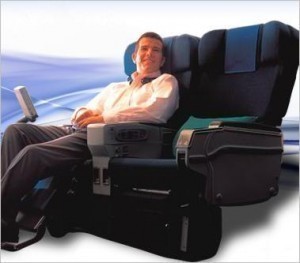
The airline seat pitch size differs as do their services.
The following dimensions specified here may change over time as airline companies upgrade and change their equipment.
Airline Seat Pitch Dimensions: the Americas
US Airways has a seat pitch of 94” for first class, 55” for business class and 33” for the economy class. For United Airlines it is 88” for first class, 55” for business class, 35” for premium economy class and 31” for economy class. In Northwest Airlines it’s 60” for business class and 31” for economy class.
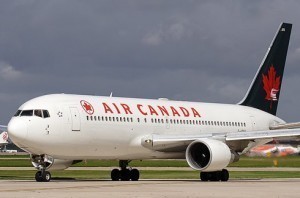
Hawaiian Airlines has a 54” airline seat pitch size and 31” for economy. Delta Airlines on the other hand, has a seat pitch of 60” for business class and 32” for economy. At AirTran it is 36” for business class and 31” for the economy class. For Air Canada it is 58” for business class and 32” at the economy class.
Airline Seat Pitch Dimensions: Europe
The seat pitch for Virgin Atlantic business class is 79”; 39” for premium economy class and 30 to 31” for economy class. Turkish Airlines has 54” business class and 32” for the economy seats.
Thos Cook has a 38” airline seat pitch size for premium economy and 30” for economy. At Swiss, it is 83” at first class, 48” for business and 31” for economy class. Olympic Airlines has 58” for business class and 33” at economy.
At Lufthansa it is 32” for economy, 60” for business and 90”at first class. For Cyprus Airways the economy seat pitch is 31 to 32” and 41 to 42” for business class.
At British Airways the economy seat is 31”, 38” for premium economy, 73” business and 78” for first class. At Alitalia the seat pitch is 32” at the economy and 55” for business.
Airline Seat Pitch Dimensions: Asia
The airline seat pitch size at Air Nippon Airways is 83” (first class), 65” (business class), 38” (premium economy) and 32” for economy. At China Airlines it is 83” for first class, 50” for business, 34” at premium economy and 32” at the economy. At EVA Air the pitch is 33” for economy, 38” for premium economy, 47 to 61” at business and 80” for first class.
For Vietnam Airlines, the pitch is 52 to 59” at business class, 38” at premium economy and 33” at economy. For Singapore Airlines, the seat pitch is 78” (first class), 58” (business) and 32” for economy. For Korean Air, the first class pitch is 83”; for business 60” and economy 33”.
At Cathay Pacific, the pitch is 79” (first class), 60” (business class) and 32” at economy class. For Asia Airlines it is 83” (first class), 50” at business class and 34” for the economy class. At Air Asia it is 29” for economy class. At Air India it is 78” at first class, 48” for business and between 31 to 33” at economy.
The airline seat pitch size is one of those things that passengers need to check out. As you can see, the disparity between them can be great among airlines.
Worlds Biggest Airplane
It was once a bit of a fantasy for people in
ancient times to hear of huge chunks of metal to fly into the air. The idea was simply impossible for them at the time until now when technology has paved new possibilities. Today we do not only have airplanes, large chunks of steel, flying in the air, they also carry passengers and cargo. Here are the world’s biggest airplanes starting from the very largest one.
An-225 Mriya – World’s Biggest Airplane
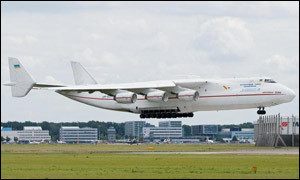
You might have thought that the Airbus A380 is the world’s biggest airplane. That plane may be huge but it definitely isn’t the largest one out there. The largest airplane in the world is not a passenger plane but a cargo plane, the An-225 Mriya. Technically, it is a strategic airlift plane that was built by the Antonov Design Bureau. It was awarded by Guinness Book of Records as the world’s biggest airplane in 2004.
The An-225 Mriya was built during the days of the Soviet era. By far, it is still the largest fixed wing airplane built by man. It’s ancestor is the An-124 Ruslan which enjoyed successful commercial usage in Ukraine, Russia, Libya, and the UAE. This plane has a wingspan of 88.4 meters. Its dimensions are as follows: length 73 meters, height 24.1 meters. It was built in 1988 and was outfitted with six engines. Its maximum weight during take off was 600,000 kilograms. Unfortunately, there is only one An-225 in operation today.
Other Large Aircraft
Here are some of the biggest planes in the world. Some may even be considered as the world’s biggest airplane in fields other than cargo.
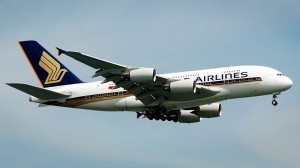
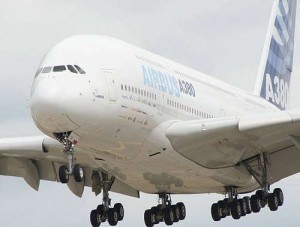
Airbus A380: This may yet be the world’s biggest airplane among passenger aircraft. The Airbus A380 has a wingspan of 79.8 meters. Its dimensions are as follows: length 72.75 meters, height 24.08 meters. It was built in 2005 and outfitted with four engines. Its maximum weight during take off is 560,000 kilograms.
H-4 Hercules: The Hughes H-4 was dubbed "Spruce Goose" though it wasn’t entirely made of spruce at all. The Hughes H-4 is the biggest flying boat ever built. Sad to say it was only H-4 ever built in history way back in 1947. It has a wingspan of 97.5 meters. Its overall height is at 24.1 meters and length is 66.6 meters. It was outfitted with eight engines and was intended to carry 115,000 kilograms at take off. Its production ended when it was unable to fly properly.
Boeing 747: This is one of the biggest commercial airliners that were ever built. Its original version was built in 1966. However, records show that the ones we see in the air today were designed and built in 1985. It has four engines with a wingspan of 64.44 meters. Its length is at 70.65 meters and height at 19.41 meters. Its maximum takeoff weight is at 181,485 kilograms.
Balikbayan Box Dimensions
A balikbayan box refers to a box made from cardboard that is used to send packages from overseas
Filipino workers to their families and friends in the Philippines. This box is also used by the workers to pack things for their loved ones and they bring this with them when they return to the country. Some of the items that are commonly stored in the box are canned goods, toiletries, electronics, clothes as well as toys. To send it to the Philippines, it should follow the regulations concerning the dimensions of the box. Below are the standard Balikbayan box dimensions.
Dimensions
There are three types of balikbayan box, namely the medium box, the large or the regular box and the extra large box. The width and height of the medium box is 18 inches while the depth is 16 inches. The standard width of the large box has a width and depth of 18 inches while the height is 24 inches. The extra large box has a width of width and height of 24 inches while its depth is 18 inches.
Additional Information and Other Important Details
One of the primary reasons why overseas Filipino workers send balikbayan boxes to their friends and loved ones is because it is economic. If the workers will send the items individually, the shipment will cost them too much. Unlike when they send all the items at once, they can save money for the shipping of the items. The delivery of the boxes may take several weeks or a month.
Another reason for sending the boxes is for the workers to keep in touch with their families. During Christmases many Filipino overseas workers send packages to their loved ones to let them feel that they think of them even if they are not present with their families for the holiday. According to reports, approximately 300,000 balikbayan boxes are sent to the Philippines every year from the United States alone.
Balikbayan boxes are important to the families of the workers because overseas Filipino laborers usually spend months to gather items that they will include in the box. In most instances, the workers wait for shopping malls to give discounts to customers to buy loads of merchandises that they will add to the box. Other Filipinos abroad include used clothes from their friends in the box. The shipping rates for the boxes usually range from $50 to $100. The rates vary on the location where the package will be shipped as well as on the size of the box.
Boeing 777 Dimensions
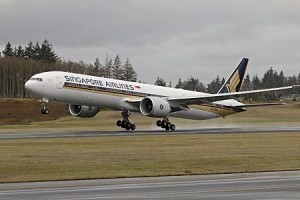
The size of the Boeing 777
will depend on the model being measured. The following are some well known variants of the airliner.
Dimensions of the Boeing 777 300ER
Its seating capacity is 365 for 3-class, 451 for 2-class and 550 for the maximum. The 300ER’s length is 242 ft 4 in (73.9 m). The wingspan is 212 ft 7 n (equal to 64.8 m) with a wing sweepback of 31.64 degrees.
The tail height is 61 ft 5 in (18.7 m) and a cabin width of 19 ft 3 in (that’s about 5.86 m). The fuselage width of the 300ER is 20 ft 4 n (6.19 m).
The size of the Boeing 777 300ER gives it an empty weight of 366,940 lbs (166,881 kg). The maximum takeoff weight of the 300ER is 775,000 lbs (or 351,534 kg). The cruising speed is Mach 0.84 (equivalent to 905 km/h, 490 knots or 560 mph).
This is at an altitude of 35,000 ft (11,000 m). The maximum Mach speed is 0.89 (equal to 590 mph or 905 km/h and 512 knots). The max payload range is 5,500 nmi or 10,190 km. its service ceiling is 43,000 ft (13,140 m).
Dimensions of the 777 300
The maximum seating capacity is 550. Its length is 242 ft 4 in (73.9 m) with a wingspan of 199 ft 11 in (60.9 m). The size of the Boeing 777 300 gives it a wing sweepback of 31.64 degrees.
The 777 300 possesses a tail 60 ft 8 in tall (18.5 m). The cabin width is 19 ft 3 in (5.86 m) and the empty weight is 353,600 lbs (or about 160,120 kg).
The maximum take off weight is 660,000 lbs or 299,370 kg. The cruising and maximum speed is the same as that of the 300ER (905 km/h and 950 km/h respectively).
The payload range is 3,800 nmi and the take off run is 11,200 ft (3,410 m). The fuel capacity is 45,220 US gallons (171,160 l). The service ceiling is also 43,100 ft (13,140 m).
Dimensions of the 777 200LR
The size of the Boeing 777 200LR and its other specifications are as follows: the seating capacity is 301 (3 class), 400 (2 class) and 440 (maximum). The length is 209 ft 1 in (63.7 m) with a wingspan of 212 ft 7 in or 64.8 m. The wing sweepback is 31.64 degrees.
The tail height is 61 ft 9 in (18.8 m). The cabin width is the same as the others (19 ft 3 in) as is the fuselage width (20 ft 4 in or 6.19 m). The empty weight of the 777 200LR is 326,000 lbs (148,181 kg).
The cruising speed is Mach 0.84 (560 mph or 905 km/h). The highest speed is Mach 0.89 (950 km/h or 560 mph). Its fuel capacity is 53,515 US gallons. The service ceiling is 43,100 ft (13,140 m).
The size of the Boeing 777 is always evolving. With competition heating up, expect more variants of the 777 to appear.
What is the Biggest Airport?
What is the biggest airport in America? What is the biggest airport in the world?
There are several interesting facts to know about these airports.
Denver International Airport
What is the biggest airport in America? Popularly called DIA, many deem Denver International Airport as the most spacious airport in America. It is the third biggest in the world after Montreal- Mirabel International Airport. Worthy of mentioning are also Atlanta Hartsfield Jackson and Chicago O’Hare. These latter airfields are known not just for their vast areas but most especially for their busy activities. Atlanta once handled 76.7 million passengers in the year 2002. Chicago handled 66.6 million in the same year.
King Fahd International Airport
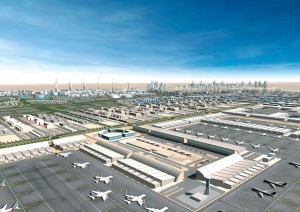
Located in Dammam in Saudi Arabia, this airport occupies 780 square kilometers of land and gives people an idea of what is the biggest airport in the world. This international airport is even bigger than some cities in the world. To get an idea, the biggest airport in London, London Heathrow, is only a small fraction of this most spacious airport.
London Heathrow
London Heathrow was once thought to be the best description of what is the biggest airport in the world. It occupies 4.7 square kilometers of area. But then Saudi Arabia came up with the gigantic King Fahd International Airport which dwarfed the one in London. However, another international airfield was built in Asia in 2008 out-sizing the one in Saudi Arabia. Some experts observe that more travelers are going to Asia, and at the same time, there is a growing number of Asian travelers seeing the world. Asian migrant workers are partly the reason.
Gigantic Dragon
In 2008, the biggest airport was sprawled out on a 501-square mile airfield in China. It was finished in time for the Beijing Olympics. It is said to be able to cater to 50 million passengers annually. Thus, to date, China’s giant and hi-tech dragon airport best answers what is the biggest airport in the world. Being the most spacious airport globally, it has 5 levels, 2 of which are underground. It has three main parts: the Domestic Hall, Olympic Hall, and the International Hall. The edifice is a single structure housing everything under one roof.
This huge airport is environment friendly, using natural lighting in several ways to enhance its interior. The designer is very conscious about energy efficiency and has taken this in the building design of this most spacious airport in the world.
Flight Seat Dimensions
Flight seat sizes are measured by the seat pitch.
This isn’t the legroom; this refers to the space between two rows of seats. Usually it’s measured from the back of the seat in front of you to the back of the seat you’re on.
Flight Seat Dimensions in the Americas
In Air Canada the seat pitch for business class is 58” and for economy 32”; for Air Jamaica, it is 84” for first class, 60” for business class and 32” for economy.
For American Airlines, seat pitch for first class is 89”, 59” for business class and 32” for economy class. For Continental Airlines, the seat pitch is 55” for business class and 31” for economy.
The flight seat size pitch for Delta Airlines is 60” for business class and 32” for economy class. For LAN it is 83” for first class, 55” for business class and 32” for economy. Northwest Airlines has 60” for business and 31” for economy.
For United Airlines the pitch for first class is 88”, 55” for business, 35” for premium economy and 31” for economy. For US Airways it is 94” for first class, 55” for business class and 33” for economy.
Flight Seat Dimensions in Europe
Air France has a seat pitch of 82” for first class, 51” for business and 31” for economy. For British Airways, it is 78” (first class), 73” (business), 38” (premium economy) and 31” (economy). The flight seat sizes for Estonian Airways are 33” for business and 33” for economy.
Lufthansa has seat pitches of 90” for first class, 60” for business and 32” for economy. For SAS Scandinavian, it is 60” for business class, 37” for premium economy and 32” for economy. For Virgin Atlantic, the business class seat pitch measures 79” for business class, 38” for premium economy and 30” for economy.
Flight Seat Dimensions in Asia
First class seat size in Air China is 62”, 42” for business, and 34” for economy. For Air Nippon it is 83” (first class), 65” for business class, 38” for premium economy and 32” for economy class.
China Airlines has an 83” flight seat size for first class, 50" for business, 34" for premium economy and 32” for economy.
Business class in Hong Kong Airlines is 50” and 32” for economy.
For Korean Air it is 83” for first class, 60” for business and 33” for economy. For Thai Airways, it is 80” for first class, 50” for business and 34” for economy. V Australia business class measures 77”, 38” for premium economy and 32” for economy.
Flight Seat Dimensions in Africa and the Middle East
For Egyptair, first class measures 82”, 48” for business and 33” for economy. For El Israel Airways (55” for business class and 32” economy); for Emirates, it is 69” (first class), 58 to 62” (business) and 33” (economy). For African Airways it is 83” (first class), 78” (business) and 32” (economy).
These flight seat sizes are for international flights. Dimensions for domestic seats may be different. Airlines are always trying to improve their service, so the seat specifications are always subject to change.