Bunsen Burner Dimensions
The Bunsen burner is a type of laboratory equipment 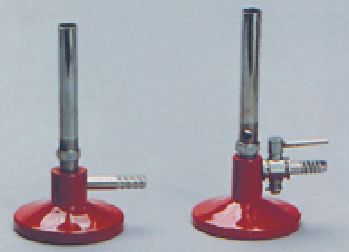 utilized for combustion and sterilization. It does this by generating a solitary gas flame. It is named after its inventor, Robert Bunsen.
Bunsen Burner Dimensions
There are slight variations in the size depending on how the equipment was designed. For example, there are Bunsen burners that measure 4.1" W x 1.9" H x 5.1" D (103 x 49 x 130 mm).
Others measure 5.1" W x 2.9" H x 6.1" D, and still others 4.5" W x 2.5" H x 5.5" D. The burner shaft cover also varies, with some coming at 23 mm and others at 25 mm, 28 mm and other sizes. The burner usually weighs anywhere from a pound to two pounds.
Features and Usage
While the Bunsen burner dimensions vary, they will use either natural gas (methane) or LPG (liquefied petroleum gas). In some instances, the burner will use a combination of the two. The hose barb is hooked to the gas nozzle at the lab bench which has rubber tubing.
Majority of these benches have several gas nozzles linked to a central gas source, steam nozzles, nitrogen and vacuum. The gas goes through the base via a small opening. The opening is at the barrel’s bottom. This is pointed upward. Open slots are on the tube’s side bottom. This is to allow air to get to the stream.
Lighting Methods and Combustion Reaction
Whatever the Bunsen burner dimensions are, the most wisely used techniques for lighting is a spark lighter or match. The oxygen amount combined with the gas influences the combustion reaction.
Less air means an incomplete and cooler reaction. The airflow can be managed by the closing or opening of the slots at the barrel’s base. In many ways this is a lot like the choke in the carburetor.
Safety and Blue Flames
An adjustment of the collar at the tube will let more air into the gas. This will result in a hotter flame. This will be apparent by the blue color. Closed holes mean gas mixes with ambient air during combustion. This generates a brighter but cooler yellow.
This is known as a luminous or safety flame. The luminous color is brought about by the soot particles. The yellow flame is regarded as dirty since it leaves behind carbon on anything it is heated on.
If the Bunsen burner is set up to generate blue flame, keep in mind that it can be difficult to see in some backgrounds. The hottest component of the flame is the inner flame’s tip. The coolest portion is the entire inner flame.
By boosting the fuel gas flow the dimensions of the flame will go up. Unless the adjustment is correct however, the flame may get cooler because the flame is losing oxygen. The blue flame’s hottest part is over the unburned gas.
Whatever the Bunsen burner dimensions used, it is imperative that the burner be set on a heat resistant mat prior to lighting it. This will prevent the lab bench from burning up.