Ever see a recipe say, “#303 can” and wondered what that meant? Ever read a recipe that says #303 can and wondered what this meant? You are not alone. The food can dimensions are not altogether common on the label, but they do play a role in cooking, shopping, and storage.
This guide gives you an understanding of the numbers in plain English. You will learn how size codes work, which sizes are more common and how you can apply this knowledge in your kitchen or business.
What Dimensions are Food Cans?
The dimensions of food cans are called food can dimensions. In the U.S., canned food is sold by size numbers. It has been in use by manufacturers, grocers and cooks for many years.
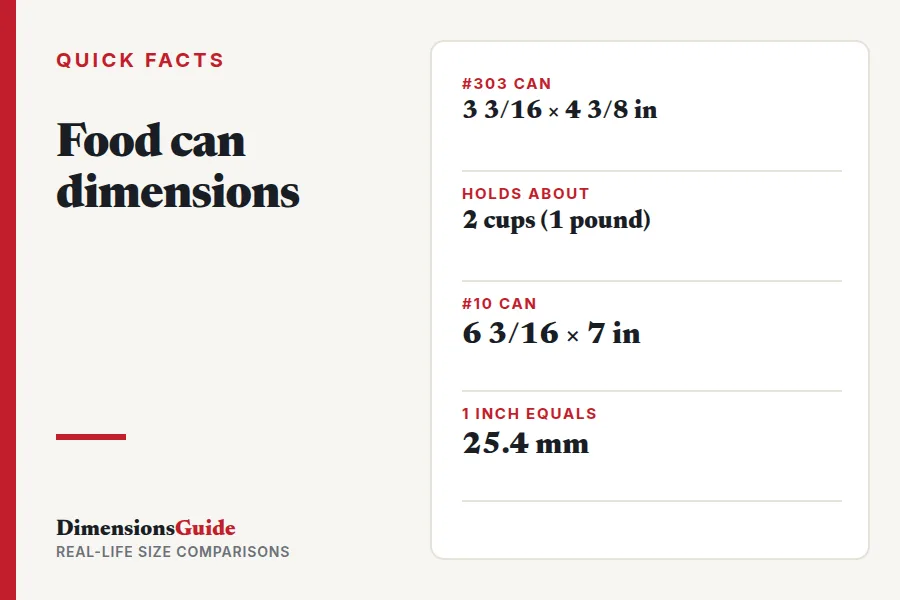
The sizes are available the majority of the time in inches. The diameter is first. The second is the height.
A few cans also have a volume or net weight designation. These numbers vary by product; use them as a guideline, not a rule.
How to Read a Can Size Code
Typically, a can size code is a double-digit code of three digits. The first number indicates whole inches. The last two numbers represent 16ths of an inch. For more context, see how to read can size numbers.
Here is an example. A 303 x 406 can is 3 3/16 inches wide and 4 6/16 inches tall. That is 4¾ inches.
The width is measured between the outside edges of the seamed end of the can. After this rule, all dimensions of food in a food can are easy to read.
The #303 Can: The Everyday Standard
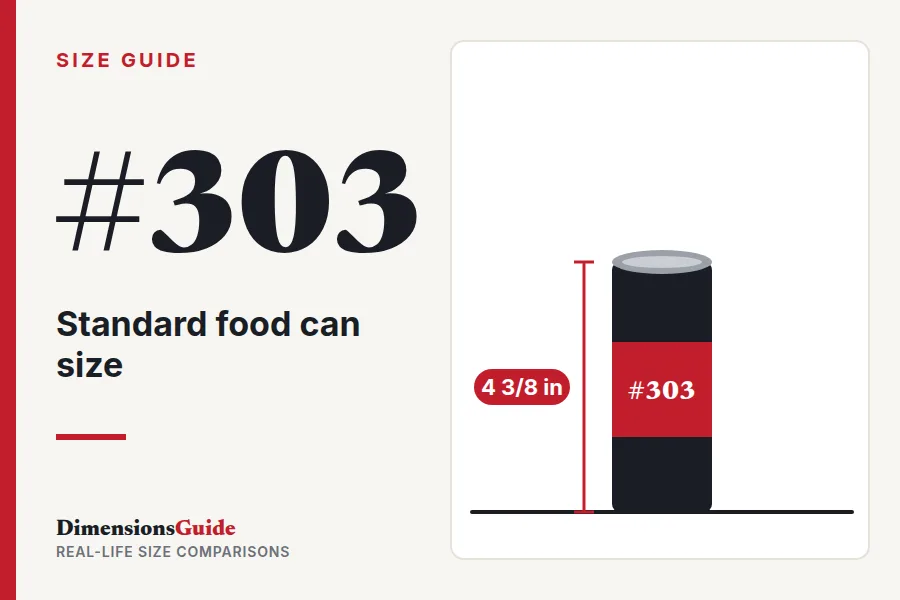
The #303 size is one of the most popular sizes you will find in the grocery store. The dimensions are approximately 3 3/16″ wide by 4 3/8″ high. You may also like our guides on how tall a can of soup is and how tall a can of beans is.
It can store approximately 2 cups of food. It’s frequently used on vegetables and fruits, and it’s typically referred to as a 1-pound can.
The #2 and #2.5 Cans: Mid-Size Options
A #2 can is about 3 7/16 inches wide and 4 9/16 inches tall. It can hold approximately 2 1/2 cups or about 20 ounces. It’s commonly used for vegetables, fruits, and tomatoes. Another useful comparison is 12 oz can dimensions.
The #2.5 can is a little larger. It is about 4 1/16 inches wide and 4 11/16 inches tall, and it holds around 3 1/2 cups. These are common sizes for tomatoes, fruits, pumpkin and sauerkraut.
The #10 Can: Built for Bulk
The #10 can is the largest size available and is used in restaurants, warehouses and emergency food storage. Approximately 6 3/16″ wide and 7″ high.
Approximately 3 quarts (12 cups). The contents typically have a weight of about 6.5-7 lbs per product. This is 7” tall, so make a bit of extra shelf space for it.
Food Can Dimensions vs. Soda Can Dimensions
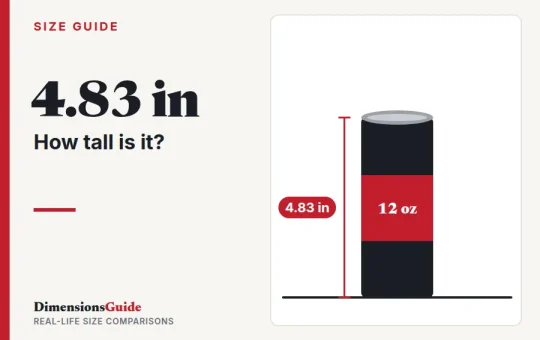
Cans of drink are on a different system. A regular 12 oz. soda can measures approximately 4.83 inches in height and 2.6 inches at the widest point. A thin 12 ounce can is taller at 6.125 inches.
Food cans have numbers on them such as #2 or #303. When comparing sizes, don’t mix the two systems.
How to Convert Food Can Dimensions to Metric
Most foreign readers will require millimeters or centimeters. The conversion is straightforward: 1 inch is equivalent to 25.4mm.
For a #303 can, 3 3/16 inches is about 81 mm and 4 3/8 inches is about 111 mm. For a #10 can, 6 3/16 inches is about 157 mm and 7 inches is about 178 mm.
The metric measures are already listed above, and rounded to the nearest millimeter. Actual cans may vary as a result of manufacturing tolerances.
Why Ounces Can Confuse You: Volume vs. Weight
The Code on a can can have differing meanings. Volume indicates the amount of space the food occupies. Weight indicates weight of food.
The weight of two cans of the same shape can be different. A can of dense beans has a greater mass than a can of light fruit pieces. That’s why there are ranges of ounces on the charts for the various sizes.
If you want a precise measurement, follow the net weight listed on the label. The size of the can is just the beginning.
Why Food Can Dimensions Matter
A knowledge of the size of a can saves both time and money. It also keeps errors to a minimum.
Cooking: Old recipes frequently use can numbers. A #2 can, for example, is about 2 1/2 cups.
Height and width assist in making the most of pantry shelves, racking and stacking.
Shopping: Use size to make comparisons between small and large cans when shopping for price per ounce.
Packaging: The size of the packages is determined by the food producers and consumers according to their product and equipment.
Practical Tips for Using Food Can Dimensions
Here are some handy tips to use these numbers easily all the time.
Always first check the net weight on the label.
When no size code is provided, use the outside diameter and height to be measured using a ruler.
Make a comparison between your measurements and the chart above.
With an old recipe, use cups as a general reference.
Allow for additional space on shelves for #10 cans.
Keep in mind that the weight is related to the food, not the can size.
Final Thoughts
The system for food can dimensions can initially be baffling, but it’s really straightforward. The first number is the width (this varies). The second number will be the height. They are measured in inches and sixteenths of an inch.
Knowing the common sizes, #303, #2, and #10 will help you read old recipes, make plans for storage and even make a more informed choice when shopping. The same can size may be used for different amounts of food; always check the label for exact weight.
You can use Food Can Dimensions to help you select the right can for cooking, keeping in a pantry, or purchasing for your business.
FAQs
1. What are the standard food can dimensions?
There is no single standard size. Canned food comes in a set of numbered sizes. The #303, at 3 3/16 x 4 3/8 inches, is one of the most common.
2. What does 303 x 406 mean on a can?
It is a size code. The first number shows the diameter, and the second shows the height. Each number gives inches first, then sixteenths. So 303 x 406 means 3 3/16 inches wide and 4 6/16 inches tall.
3. How big is a #10 can?
A #10 can is about 6 3/16 inches wide and 7 inches tall. It holds about 12 cups, or 3 quarts, and is common in food service and bulk storage.
4. Do food can dimensions tell me how much food is inside?
Not exactly. They show the size of the can. The amount of food can change by product, so check the net weight on the label.
5. Are soda cans and food cans the same size?
No. A standard 12-ounce soda can is 4.83 inches tall and about 2.6 inches wide. Food cans use a separate numbered system, such as #303 or #10.